Lifetime Citizen Portal Access — AI Briefings, Alerts & Unlimited Follows
State Parks highlights leadership program; Parks Foundation underwrites student participation
Loading...
Summary
Washington State Parks officials and alumni described the agency's new ongoing participation in the National Association of State Park Directors leadership school, crediting the Parks Foundation and small grants for covering tuition and travel and framing the program as a tool for succession planning and retention.
Vice Chair Holly Williams opened the Washington State Parks and Recreation Commission's Jan. 28 work session with an introduction to the State Parks Leadership School presentation from Director Diana Dupuis.
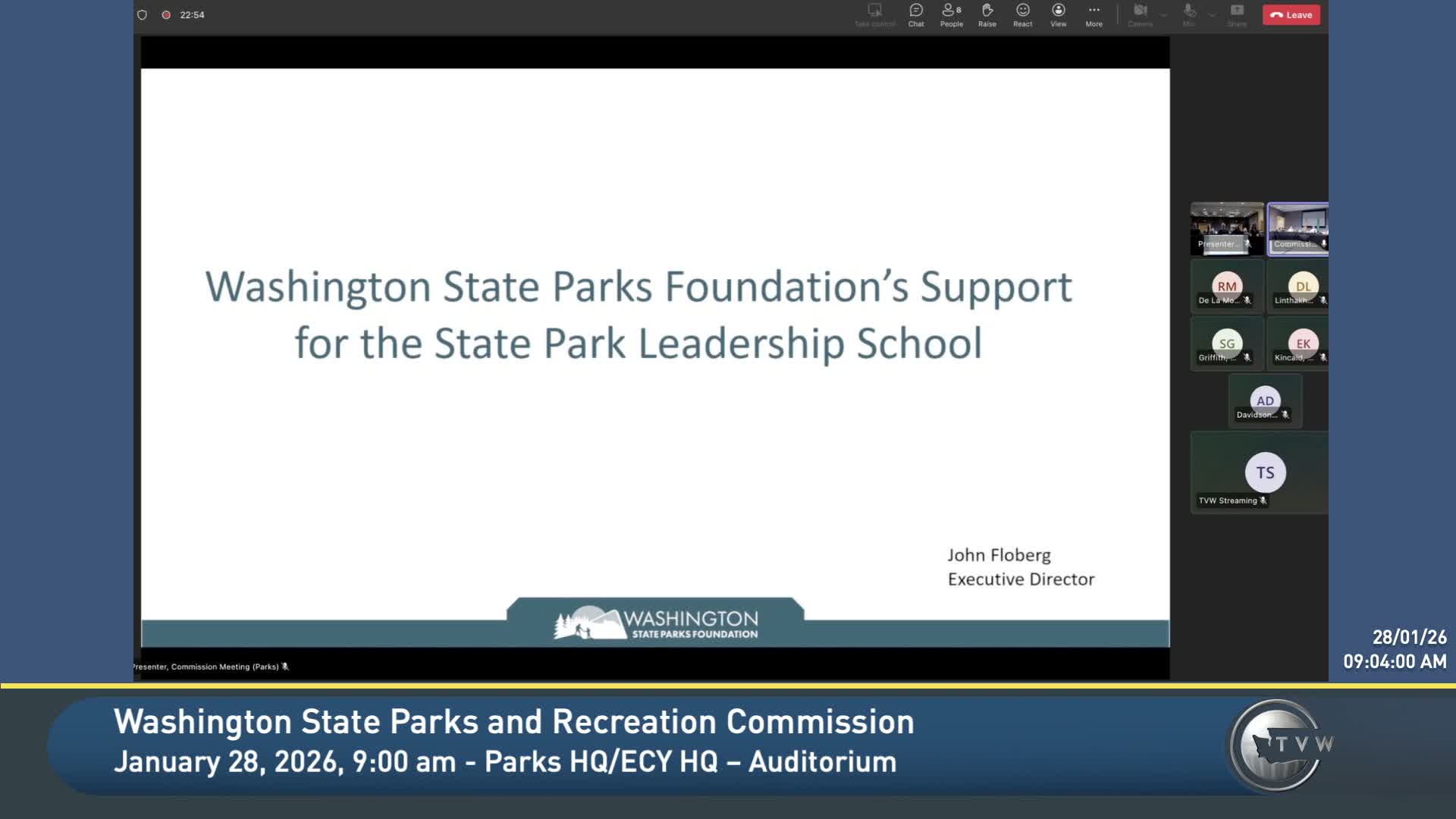
Dupuis framed the agency's recent, intentional participation in the National Association of State Park Directors (NASPD) Leadership School as part of a broader succession plan to prepare staff for impending retirements. She introduced superintendents who led the agency's participation and the Parks Foundation's executive director, John Sloberg, who described the foundation's role as a funding partner.
"We know'excellent parks depend on excellent people," Sloberg said, explaining that the Parks Foundation supported a joint funding model that pairs scholarships, mentor programs and other supports to encourage retention. He said the foundation's involvement was driven by donor and visitor feedback and a desire to shore up the pipeline of future park leaders.
State Parks staff and alumni who attended the two-year program described concrete benefits during a panel. Renee Delamora, construction and maintenance project lead, summarized the school's impact on mindset: "Leadership is not about the position you hold. It's about the influence, responsibility, and how you support others." Other participants emphasized network-building, mentorship, and training that translated into practical skills for field operations and management.
Director Dupuis told commissioners the foundation's support, combined with small grants described in the presentation as "STILL grants," fully covered recent student participation and made the program feasible despite a state travel freeze and tight budgets.
Commissioners asked how candidates are recruited and how the agency plans to retain and deploy alumni skills. Area managers and superintendents said recruitment is expanding beyond rangers to administrative and maintenance staff, and that program alumni will be expected to mentor future cohorts. The commission praised the cross-agency partnership model and the focus on bringing leadership opportunities to a broader set of job classifications.
Next steps identified in the session included continuing the mentorship structure, tracking outcomes from alumni placements, and working with the foundation to sustain funding for future cohorts.