Get Full Government Meeting Transcripts, Videos, & Alerts Forever!
Get email alerts on the Policy Reform topic
No spam. Unsubscribe anytime.
Board debates hold periods and 80/20 split for estimated-savings awards
Summary
Board members debated a staff proposal to formalize when cases can be reopened and whether to delay payments. Staff recommended a single policy covering clerical errors and omissions; members expressed support for a short administrative hold (30 days) and a proposed 80% upfront/20% holdback for awards based on estimated savings, with staff directed to draft formal language.
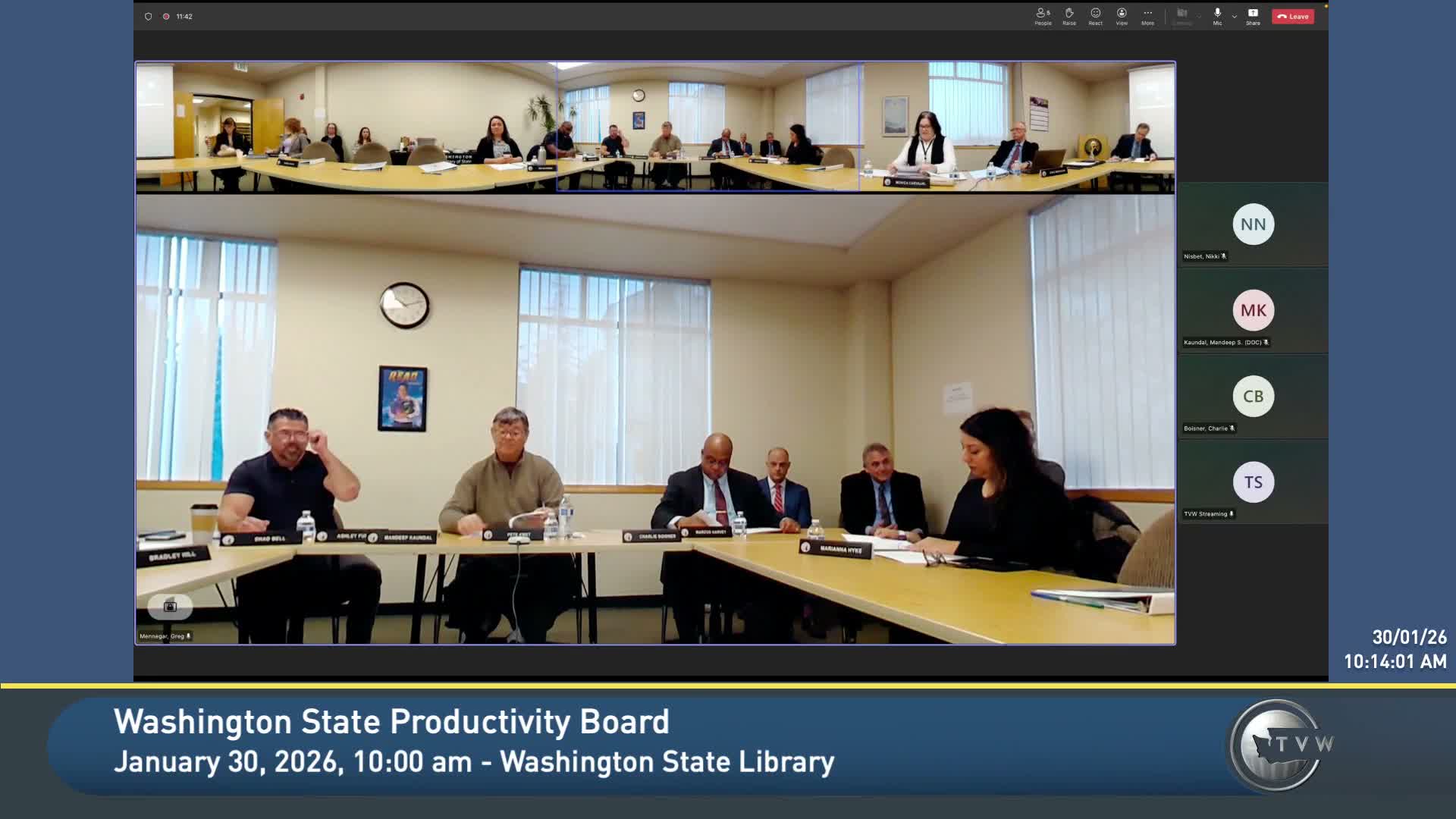
The Productivity Board spent the bulk of its Jan. 30 meeting discussing how to handle reopened cases and payments based on estimated savings.
Staff recommended a single policy to address situations that may arise after board action (clerical errors, verifiable miscalculations, omitted eligible team members) and to guard against overuse of reopening procedures. Members debated timing: one board member proposed a 30-day administrative hold after approval to allow corrections before disbursement, while others noted the board’s quarterly meeting cadence (about every 90 days) and the practical difficulties agencies may face when reconciling fiscal cycles.
A recurring concern was whether awards should be authorized on estimated savings or only on realized, verified savings. To balance incentive and fiscal protection, one board member proposed an 80% upfront payment and 20% holdback for awards based on estimates, followed by a one-year measurement window during which agencies would report final results and the board would authorize remaining payments. Staff agreed to consult with the Attorney General’s representative and fiscal offices (including OFM) about edge cases such as payments when recipients retire or when fiscal-year timing affects payments. Staff also said they would add application checks (authorization forms and agency checkboxes) and build reminders into their tracking system.
Board members asked staff to bring draft policy language to the next meeting (Feb. 26), including analysis of agency impacts and potential alternate hold periods (30, 60, 90 days) for the board to consider.