Lifetime Citizen Portal Access — AI Briefings, Alerts & Unlimited Follows
Board of Natural Resources adopts NPV baseline for East Side SHC, sets 1.7% discount rate
Loading...
Summary
The Board of Natural Resources directed staff to use net present value as the objective for the East Side sustainable harvest calculation (no-action alternative) and adopted a default 1.7% discount rate tied to current forest growth; the NPV decision was unanimous and the discount-rate vote passed 5–1.
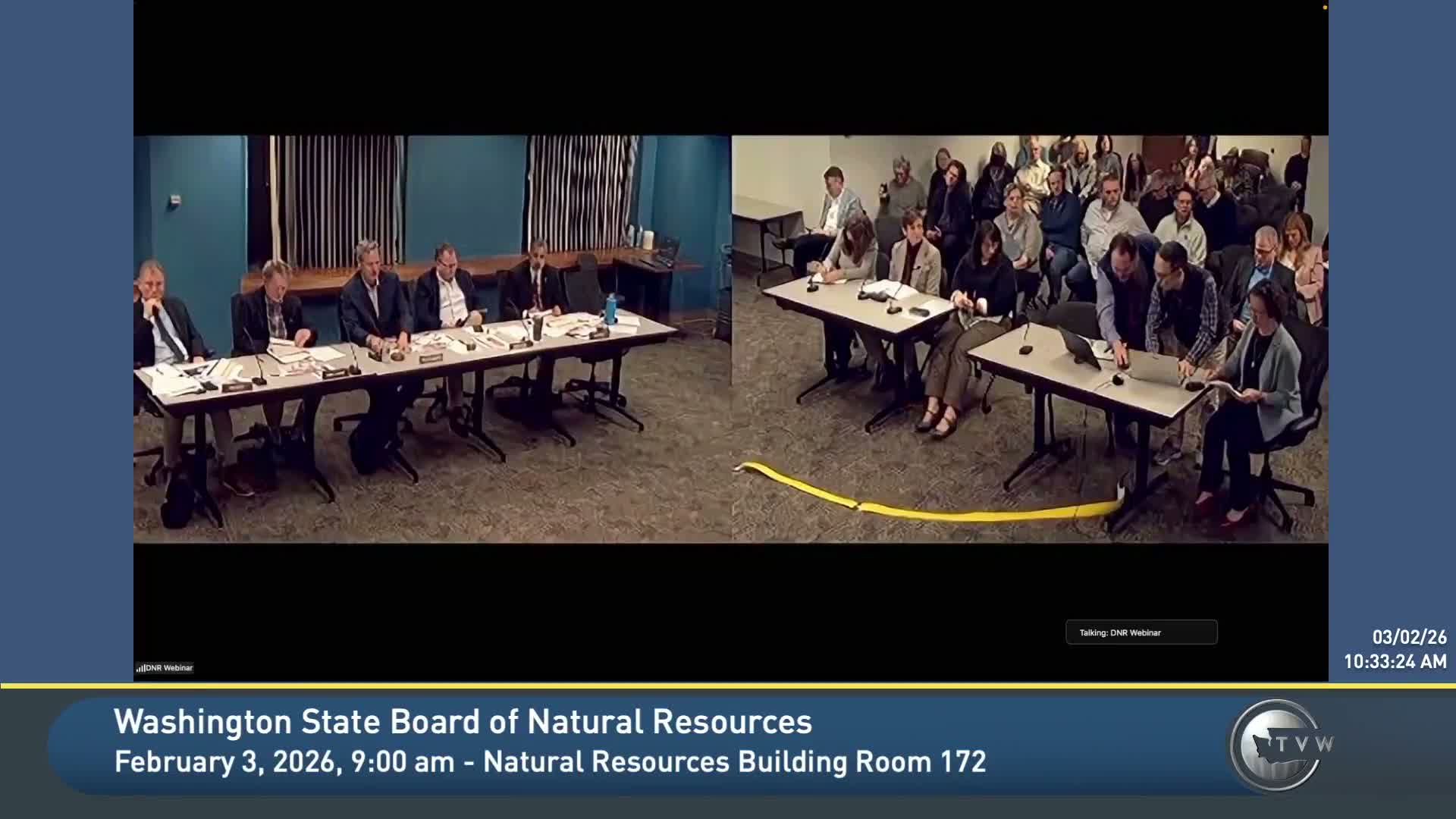
The Board of Natural Resources on Feb. 3 directed agency staff to set net present value (NPV) as the objective function for the East Side sustainable-harvest calculation (SHC) no-action alternative and adopted a default discount rate of 1.7%, the board heard.
The motion to use NPV as the objective was moved by Vice Chair Brown and approved by voice vote. Sarah Ogden, assistant division manager, framed the decision as grounded in the department’s “policy for sustainable forests,” which directs staff to analyze financial characteristics and optimize economic value when calculating sustainable harvest levels.
Dale Yee, a DNR economist, told the board that NPV best matches the PSF guidance. “NPV is the gold standard in financial analysis,” Yee said while describing how the model translates future timber volume and prices into a present-day value.
The board then debated the appropriate discount rate to apply to the NPV calculation. Yee noted the East Side forest growth rate averages roughly 1.7% over decadal time steps and said that number represents an upper bound for the average asset’s financial performance. Vice Chair Brown moved that the board default the discount rate for the no-action alternative to 1.7% and the motion carried with Board member Johnson recorded as the lone no vote.
Board members asked staff to run sensitivity analyses around the discount rate and other model inputs. Commissioner Reykdal said he was comfortable using the NPV baseline as a starting point for comparison while acknowledging the broader policy debate over how to value forest health and intergenerational benefits.
What it means: The board’s direction creates a single, statute‑aligned baseline — an NPV-optimized no-action alternative — that staff will use to compare other SHC alternatives. Staff will produce sensitivity runs to show how different discount rates and other parameters affect decade-by-decade harvest levels. The board did not adopt any policy changes to the operating environment in this meeting; it set modeling defaults for the SHC process.
Next steps: Staff will complete the requested sensitivity analyses and return additional technical documentation to the board in upcoming study sessions and in the SHC environmental review process.