Rules team outlines heavy workload, APA process constraints and statutory gaps in cannabis rulemaking
Loading...
Summary
The rules team told the board a small rules staff is producing many APA filings and handling frequent petitions; staff warned that sparse statutory language for some cannabis issues forces consequential rulemaking that is legally risky and time‑consuming.
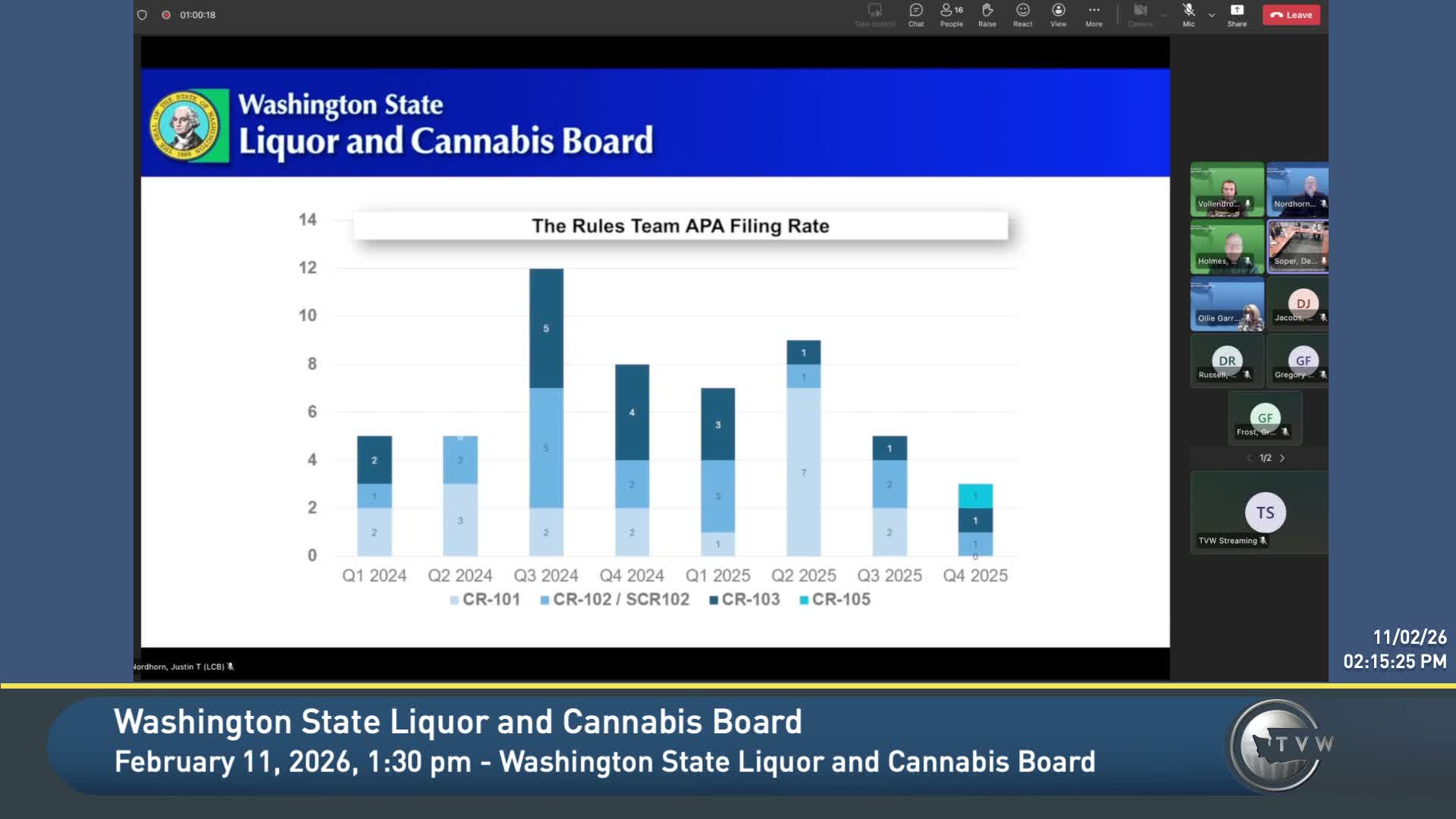
Kevin, representing the rules team, told the executive management team the unit is comparatively small yet consistently produces a high volume of filings under the Administrative Procedures Act. He said rules coordinators have at times filed as many as 12 APA proposals in a single quarter and that, given current staffing, each coordinator averages a high number of filings per year.
He described the full scope of the work: preparing CR‑102 filings, holding public hearings (minimum 20 days after CR‑102 publication), stakeholder engagement sessions, and responding to petitions (agencies must reply within 60 days). Kevin said stakeholder engagement is often the most time‑consuming element because staff must translate technical ideas into workable rule language and iterate with affected parties.
Kevin and other presenters emphasized a structural difference between alcohol and cannabis regulation: alcohol rules more often mirror statute, whereas many cannabis issues require rule development in the absence of detailed statutory direction. He described this as "statutory dissonance" that forces the agency into novel regulatory choices and raises the risk of legal challenge because rules grounded only in broad authority are more vulnerable in court.
Board members asked about the value of hiring an in‑house economist to reduce reliance on outside contracts for APA economic analyses. Kevin and Justin said an economist on staff could improve timeliness and analytical capacity for cost‑benefit and small business impact assessments, and the board discussed the tradeoffs between contracting and in‑house expertise.
No formal staffing decisions were made at this meeting; the discussion served as an informational briefing about workload and process constraints.