Get Full Government Meeting Transcripts, Videos, & Alerts Forever!
Get email alerts on the Healthcare Shutdown Hr1 topic
No spam. Unsubscribe anytime.
Washington officials, advocates say shutdown and HR 1 threaten health coverage for hundreds of thousands
Summary
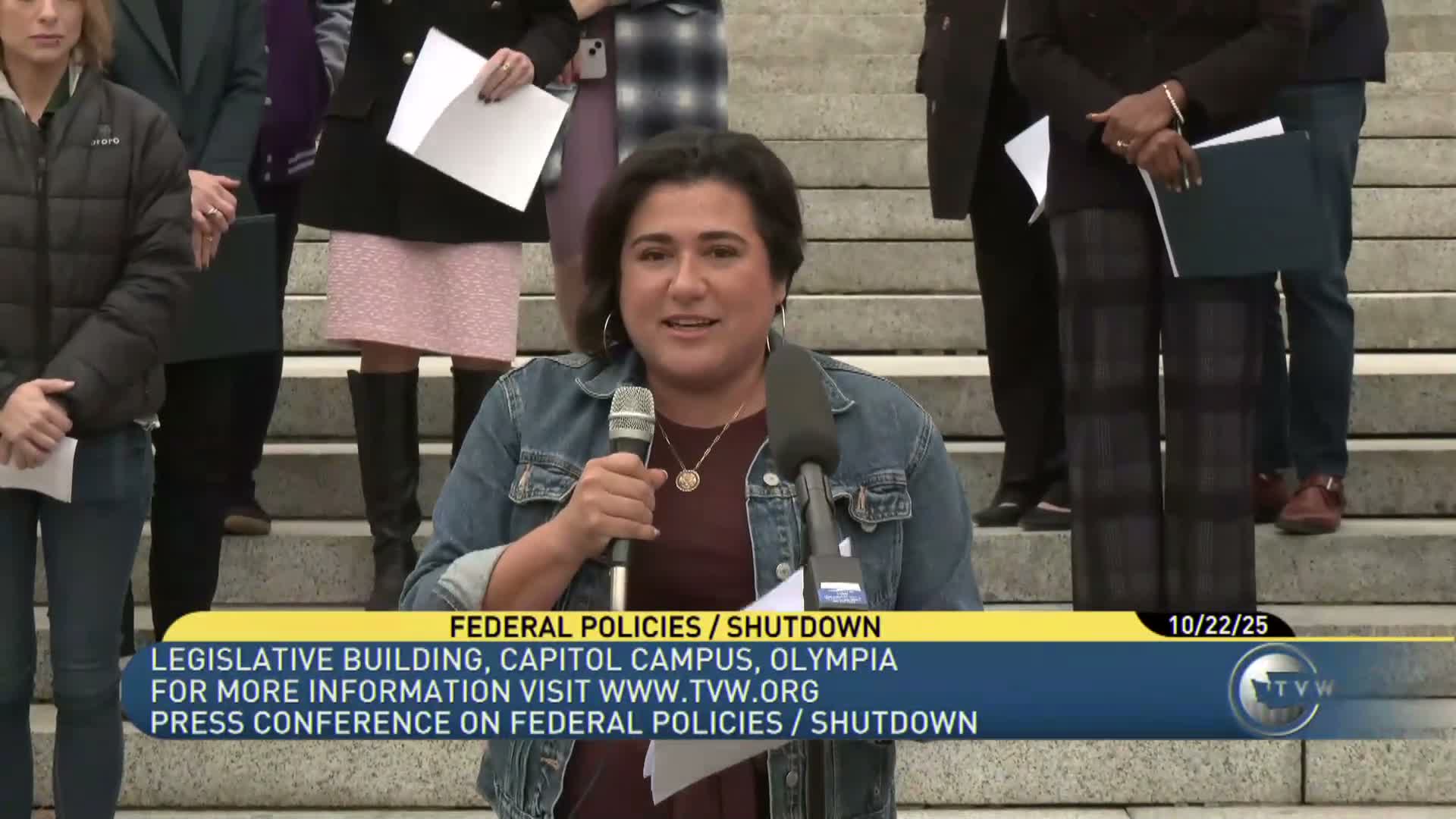
Federal and state officials, health agency staff and caregivers warned at a Washington press conference that the federal shutdown and recent House bill HR 1 would cut health and related services for large numbers of Washington residents, citing specific enrollment, funding and timing figures.
Congresswoman Emily Randall and state health officials on Monday urged Congressional leaders to return to Washington, saying a 33-day federal shutdown and provisions in HR 1 threaten health care access and other supports for Washington families.
"It's been 33 days since the... U.S. House of Representatives has been in session," Congresswoman Emily Randall said, blaming Republican leaders for refusing to negotiate to reopen the government and stressing the effects on women, parents and caregivers.
Officials and advocates said the federal changes would hit both individuals and providers. "At the Health Care Authority, we probably serve nearly 2,000,000 Washingtonians accessing health care through our insurance programs," Evan Klein, special assistant for legislative and policy affairs at the Washington State Health Care Authority, said. He told reporters the first HR 1 changes are already felt: roughly $10 million less for family planning next year, eligibility and paperwork changes that could affect about 620,000 people beginning in 2027, and a long-term reduction in federal support that could mean an estimated $1,500,000,000 less per year for hospitals once state-directed payments are capped in 2028.
State Insurance Commissioner Patty Kuder warned of immediate market effects: insurers requested a 21.2% rate increase this year and the office determined 21% was justified; up to 7 percentage points of those increases stem from the expiration of enhanced premium tax credits. Kuder said last year more than 216,000 people in Washington27s individual market received enhanced premium tax credits and that, without an extension, the exchange estimates up to 80,000 Washingtonians could drop coverage.
Advocates and affected residents described concrete consequences. "My child is not a budget cut," parent Olivia Maguire said, describing staffing reductions at the Office of Special Education Programs and the risk to Individuals with Disabilities Education Act (IDEA) enforcement and early-intervention services. Testimony also warned that Head Start, SNAP, WIC and housing assistance could be disrupted; caregiver Gloria described receiving unexpected bills for chemotherapy-related care and said about 3,000 lawfully present immigrants could lose long-term care benefits.
Britney Gregory, executive director of the Washington State Women27s Commission, said HR 1 would disproportionately harm mothers and pregnant people and projected roughly 250,000 Washingtonians could lose care under the bill; she noted that about 45% of births in the state are covered by Medicaid, a proportion that is higher in rural counties.
State Senator Jessica Bateman, a member of the health-care committee, highlighted timing pressures: open enrollment begins Nov. 1, she said, and without extended premium tax credits some people will receive rate notices this week and must decide whether to keep coverage. Bateman estimated the average increase for affected Thurston County residents could be about $1,500 per person per year.
Speakers repeatedly framed the problem as a combination of the current shutdown and policy changes in HR 1, urging Speaker Mike Johnson and other Congressional leaders to call members back to negotiate. Randall said she had a brief conversation with Representative Dan Newhouse but stressed that "without buy-in from leadership" there is no clear path to a resolution.
The event ended with a call for federal action and local organizing; speakers encouraged constituents to press Congress to extend the premium tax credits and to restore funding for health and social services. Randall and others made themselves available for questions but did not announce any formal local policy changes or votes.