Lifetime Citizen Portal Access — AI Briefings, Alerts & Unlimited Follows
Bath Village School turns town forest into year‑long science classroom
Loading...
Summary
Bath Village School and the Bath Conservation Commission described a year‑long program that brought 44 students into the Bath Town Forest for forestry, aquatic and wildlife study, using ArcGIS mapping and water testing; partners and volunteers provided equipment and training and students contributed data to the town's natural resources inventory.
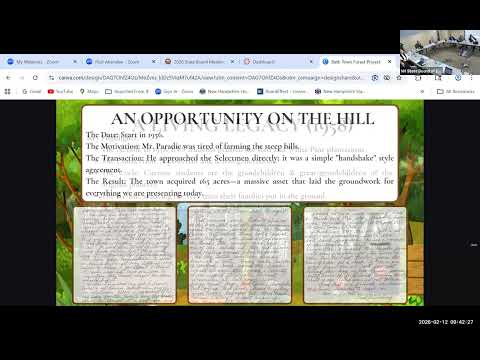
Bath Village School showcased a year‑long outdoor curriculum that uses the town's 165‑acre Bath Town Forest as an extension of the classroom, saying the program has given students hands‑on experience in forestry, aquatic systems and wildlife management.
Judy Tomosa, an aquatic educator and member of the Bath Conservation Commission, and Bruce Warren, a licensed forester, told the State Board of Education the program puts students from kindergarten through sixth grade into the forest to practice scientific skills they learn in class. "We taught them how to use math and compass," Tomosa said, and students "took what they did in the classroom and applied it out in the field." Students described activities including macroinvertebrate sampling and electrofishing demonstrations to assess brook trout habitat.
Principal Megan Jones said Bath Village School's small enrollment (44 students) made it easier to coordinate immersive fieldwork. Karen Belladoro, the fifth‑ and sixth‑grade teacher, said the project used three pillars—forestry, aquatic systems and wildlife management—and brought in professionals for real‑world mentoring. Students used ArcGIS mapping and water‑quality meters; staff said early success led to grant funding that made advanced tools a permanent part of the science classroom.
Student presenters described replacing textbook study with field investigations: "We raised trout from eggs to fingerlings in the classroom and then tested Bridal Brook to make sure it could support them," a sixth grader said. Presenters said the students' work is contributed to the town's natural‑resources inventory and that volunteers logged more than 300 hours last year; staff emphasized the project cost the school little or nothing because equipment was borrowed and purchases covered by grants.
The delegation credited local partners—the conservation commission, Fish & Game biologists, the fire department and Trail Unlimited volunteers—for training and on‑site assistance and said other towns have contacted them to replicate the program. The presentation concluded with a schoolwide expo that showcased student projects and reporting back to the community, a step officials said strengthened both learning and civic connection.
The board did not take formal action on the presentation. Students, teachers and conservation leaders left the panel with encouragement from members and an offer of further guidance on partnerships and curriculum alignment.