
House Transportation Committee finalizes letter to Appropriations, urges long-term fixes to funding shortfall
Get AI-powered insights, summaries, and transcripts
Subscribe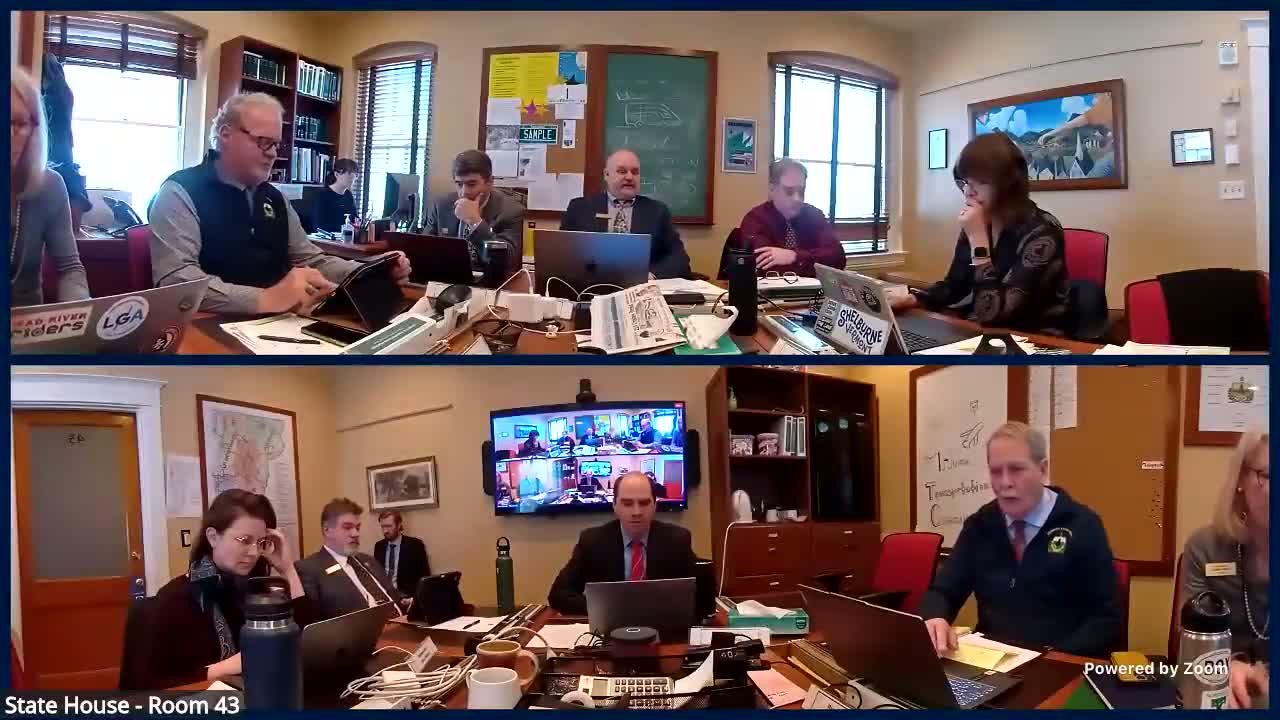
Summary
The House Transportation Committee reviewed and approved a response letter to appropriations emphasizing long-term structural funding shortfalls, the use of federal indirect costs that reduce project matches, and potential revenue options including a mileage-based user fee and reallocation of purchase-and-use tax revenues.
The House Transportation Committee on Feb. 20 finalized a response letter to the House Appropriations Committee that frames Vermont's transportation funding gap as a structural, multi-year problem and urges collaborative work on revenue options.
Speaker 1 opened the meeting by saying the committee was preparing a response letter due that day and that counsel would review final edits. "Vermont continues to experience significant transportation funding challenges," Speaker 1 said, and proposed adding the word "structural" to the draft to emphasize long-term pressure on the transportation fund.
The draft letter, as discussed, notes that the Agency of Transportation can fund only about one-third of municipal grant requests in a typical year and that the state and local maintenance backlog is expanding. Speaker 2 told the group that "The agency is unable to accept new projects until 2036," a point members said should be clearly reflected to show the pipeline constraint towns face.
Committee members described how current budget choices reduce the amount of federal money available for projects. Speakers discussed using the federal indirect cost rate to cover operating expenses this year and next, a move that Speaker 4 said requires dedicating roughly "$12,000,000 of administration" and therefore reduces funds available for project matches. Members discussed the arithmetic of matching federal grants, noting that without matching state funds federal dollars cannot be released for local projects.
The committee voiced conditional support for a governor's proposal to reallocate a portion of purchase-and-use tax revenues to transportation. "The $10,000,000 proposed will provide the state match for roughly 53,000,000 in federal funding," Speaker 2 said, while several members emphasized that the reallocation "is part of the solution" but "will likely not be enough" to resolve the overall shortfall.
The letter also signals that the committee intends to continue exploring revenue enhancements, including a mileage-based user fee, identifying additional items to subject to purchase-and-use tax, and other potential sources. Members discussed the likelihood that the gas tax and registration fees will not keep pace with vehicle trends and inflation, and that additional state revenue will be necessary to match federal grants at scale.
Committee members debated phrasing to balance urgency and realism. Some preferred milder language such as "may not be enough," while others pressed for firmer wording; the group agreed to a stronger formulation that reflects modeling and projections.
The committee did not take formal votes on policy changes during the meeting. Speaker 1 said the final letter would be transmitted after only grammatical edits, and that committee time next week is available for any proposed amendments or budget changes. "We are adjourned for today," Speaker 1 said at the close of the session.
Next steps: the committee will deliver the response letter to the Appropriations Committee as discussed and reconvene as needed to review language and proposed changes in the coming week.