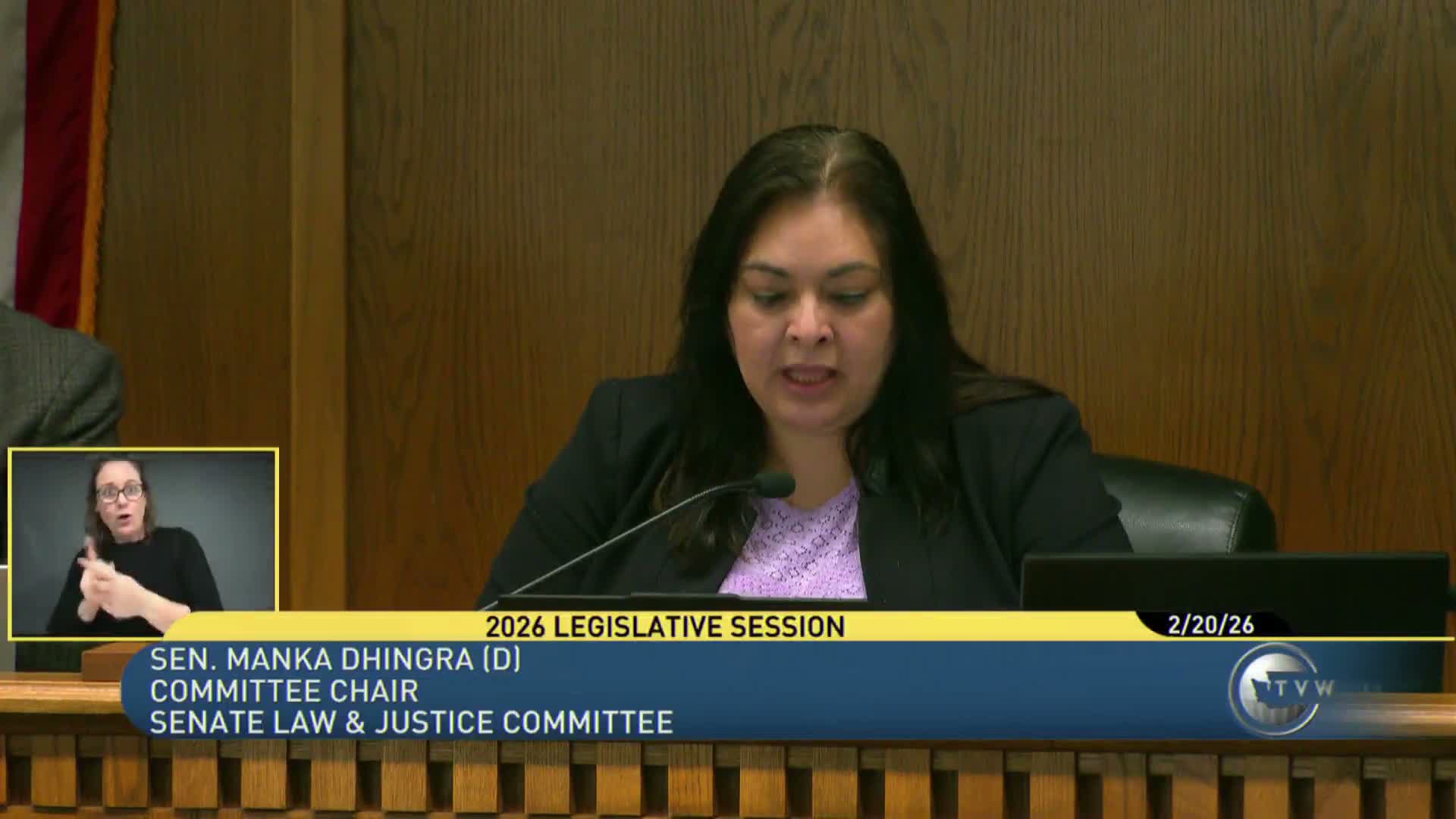
Committee hears testimony on letting officials use campaign funds for security and address-protection measures
Loading...
Summary
Second Substitute House Bill 23 33 would allow candidates and elected officials to reimburse personal security costs from campaign or surplus funds when security is proportionate to a credible threat; hearings focused on restoring earlier address-protection language, balancing public-records access, and PDC processes.
Lawmakers heard hours of testimony on safety measures for elected officials and candidates under Second Substitute House Bill 23 33.
Sponsor Representative Liz Berry described political violence as a growing threat, citing her experience with the Gabrielle Giffords shooting and telling the committee the bill "balances much needed safety measures for elected officials, which is vital for democracy." The measure would permit reimbursement from active campaign or surplus funds for "personal security measures" when those measures are reasonably proportional to a demonstrable threat and would bar payments to persons with a close relation or a personal beneficial interest.
Prosecutors, county auditors and victim-advocates urged stronger address-protection provisions that had been removed in earlier drafts. Gary Ehrnsdorff and Jennifer Ritchie recounted multiple threats and said the commercial scraping of public records makes simple redaction ineffective; Michael Mohandesen said rescraping by people-search sites creates a "never ending whack-a-mole" unless legislative fixes restore stronger address protections.
Media and publisher groups urged caution. Roland Thompson (Allied Daily Newspapers of Washington and broadcasting/publishing groups) said much address information is available commercially and warned removing that access would have operational consequences. Sean Flynn, general counsel for the Public Disclosure Commission, explained the PDC's existing modification and redaction processes for filers who demonstrate "unreasonable hardship," said the commission has issued a policy statement tracking many protections in the bill, and cautioned against codifying agency discretion in ways that could have unintended consequences.
County auditors said earlier proposed redaction provisions would have been operationally and statutorily difficult, and the Washington Association of County Auditors signed on as neutral after language was removed. Advocacy groups including Vote Mama Foundation and others urged passage to align state practice with federal guidance on campaign funds for security.
Testimony underscored competing priorities: officials' safety and family security on one hand, and transparency, public records access and press functions on the other. The committee closed the hearing with a record of dozens of witnesses; no committee vote was recorded that day.