
President announces 10% global tariff under section 122 after Supreme Court ruling, vows section 301 probes
Get AI-powered insights, summaries, and transcripts
Subscribe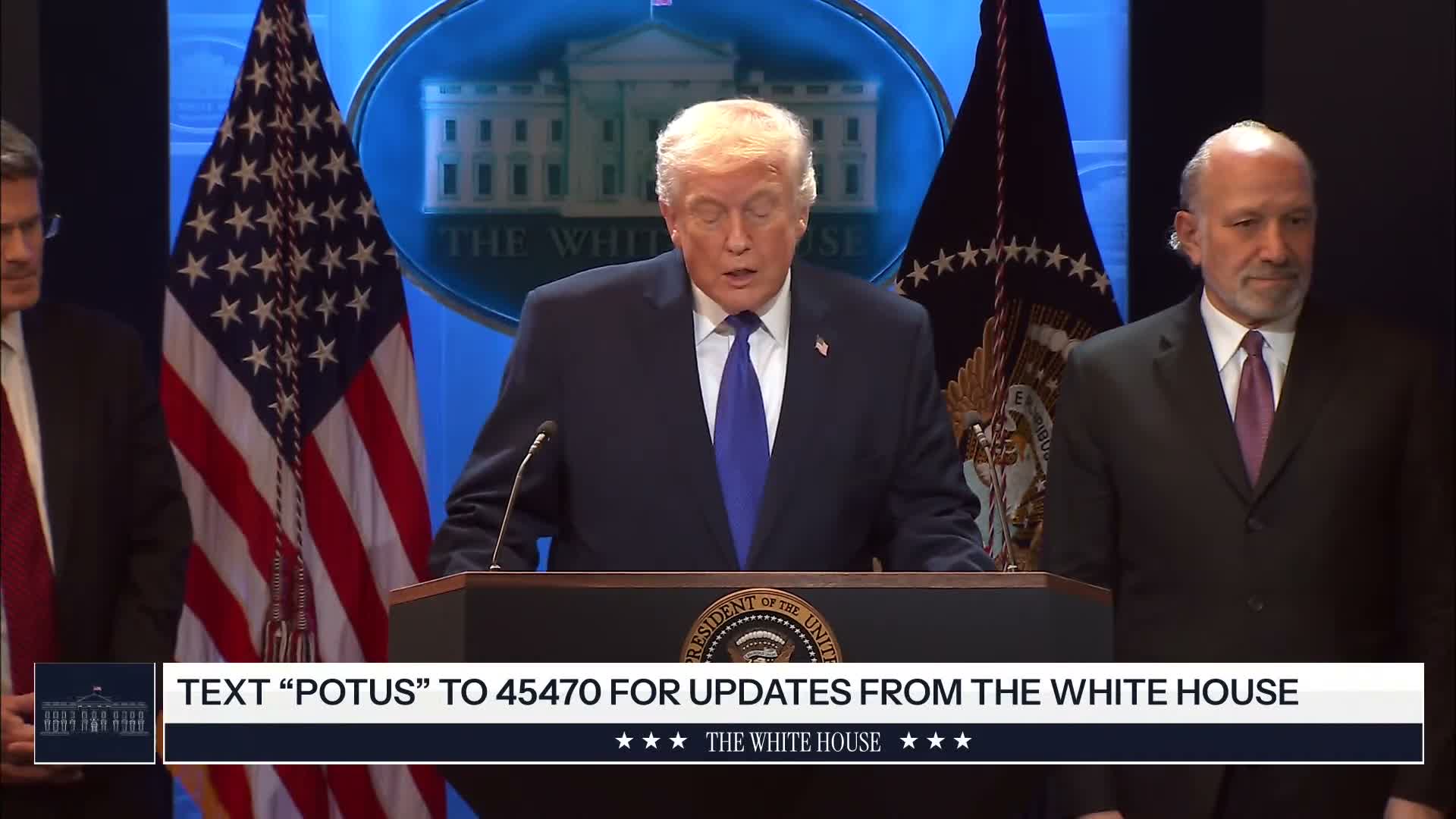
Summary
At a press briefing in Georgia, the president called the Supreme Court decision on tariffs "deeply disappointing," said he will sign an order imposing a 10% global tariff under section 122 and that the administration will open section 301 investigations; questions remain about billions in prior tariff revenue and implementation timing.
At a press briefing in Georgia, the president sharply criticized the Supreme Court ruling that limited one form of presidential tariff authority and announced immediate steps to maintain and expand U.S. trade restrictions.
The president said the ruling was "deeply disappointing" and lauded dissenting justices, then announced: "Today, I will sign an order to impose a 10% global tariff under section 122 over and above our normal tariffs already being charged," and added that his team was "initiating several section 301 and other investigations to protect our country from unfair trading practices of other countries and companies." He framed the actions as a way to preserve national-security and economic protections the administration has used previously.
Why it matters: The announcement signals the administration will pursue alternative statutory routes to impose trade penalties after the court curtailed use of a specific IEPAA tariff authority. The move could reshape U.S. trade relations and prompt litigation and diplomatic responses from trading partners.
Details and legal basis The president and an official identified in the briefing as Jamieson cited several statutes as alternate authorities, including the Trade Expansion Act of 1962 (section 232), provisions of the Trade Act of 1974 (sections referenced by the administration), and the Tariff Act of 1930. Jamieson said the administration would implement the section 122 measure and pursue section 301 investigations "in the coming days and weeks," and that the program would retain continuity.
On timing, the president told reporters he expected the new 10% provision to take effect "starting effectively... I think it's 3 days from now," and said some other investigations would be a longer, more formal process.
Unresolved revenue and refunds Reporters raised whether the government would have to refund prior tariff collections, citing an estimate that roughly $175 billion in tariff revenue could be in limbo. The president said the Supreme Court opinion "didn't even discuss that point" and predicted that the question of refunds "has to get litigated for the next 2 years," leaving the issue unresolved.
Domestic impacts cited The president repeatedly credited earlier tariffs with restoring U.S. manufacturing capacity, offering anecdotes from steel and auto plants that he said returned to multi‑shift production. He also asserted, without external citation in the briefing, that strong borders and tariff measures reduced fentanyl arriving in the U.S. by about 30%.
Questions and next steps Reporters pressed for evidence for some of the president's broader assertions, including claims of foreign influence over the Court and precise mechanics for refunds. The administration said it would sign the section 122 order and roll out section 301 actions soon but left the legal question of prior collections and possible refunds to future litigation. Jamieson said the public can expect further announcements "in the coming days and weeks." The administration also indicated some tariff revenue has been used for domestic programs, noting a recently announced $12,000,000,000 payment to farmers out of tariff funds.
The briefing ended with the president reiterating that the decision had created "certainty" and that the administration would continue to use available tools to protect American industry and national security.