Get Full Government Meeting Transcripts, Videos, & Alerts Forever!
Get email alerts on the Grants And Procurement topic
No spam. Unsubscribe anytime.
NJDEP holds information session for 2025 Water Quality Restoration grant awardees
Summary
The New Jersey Department of Environmental Protection told 2025 Water Quality Restoration grant recipients how to complete SAGE modifications, what will be required in grant agreements and financial/progress reports, and answered questions on early starts, permits and insurance.
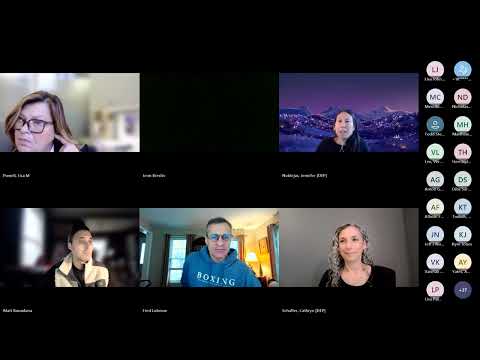
The New Jersey Department of Environmental Protection held a recorded information session for 2025 Water Quality Restoration grant awardees that reviewed next steps for awardees, explained how grant agreements will be drafted in the SAGE system, and detailed progress and financial reporting requirements.
Kathryn Schaffer, manager of the Bureau of Watershed Management in the Division of Watershed Protection and Restoration, said awards were announced Oct. 30 and that grant managers will post revision requests in SAGE. "Please note, work can only begin when the grant agreement is fully executed, and it can take 6 to 12 months for a grant to be executed," Schaffer said, adding that grantees should expect comments on timelines and budgets before agreements are drafted.
Jennifer Nuplahis, who led the grant-agreement presentation, walked attendees through the SAGE workflow: grant managers will add comments on the grantee evaluation summary page, grantees must revise the application pages (including budget details) to address those comments, and the revised application becomes the scope of work for the agreement. Nuplahis described two options before execution: an early work period, which allows work to start before the agreement is signed but carries the risk that "reimbursements will not be disbursed until after the grant is executed," and an advanced-payment option for organizations that cannot cover upfront costs.
Rosemary Brown discussed progress reporting and administrative review. Progress reports will be submitted biannually rather than quarterly; grant managers will check that reported work periods align with internal tracking spreadsheets and will return reports for modification if there are gaps or inconsistencies. Brown also said watershed-based plans should be submitted to the Department for review (approval can take as long as six months) and that each completed best management practice must include the BMP name, completion date, HUP14, category, size, any load-reduction data and supporting attachments.
Anne Elizabeth of the fiscal team outlined documentation required for financial reports: payroll or salary runs that show hours and pay, fringe-rate calculations, invoices with proofs of payment for consultants and subcontractors, receipts for supplies, and travel logs showing mileage and purpose. She noted financial reports are due twice a year (Jan–Jun reports are due Aug. 15; Jul–Dec reports are due Feb. 15) and that reimbursements are processed only after the financial report is approved. She added that food purchases and permitting fees are not reimbursable, and that grantees should list the State of New Jersey as the certificate holder on their insurance certificates.
In the Q&A, Montgomery Township asked about an early-start request for a watershed plan covering multiple municipalities; Schaffer said early start dates cannot predate the Oct. 30 award date and referred the requester to their assigned grant manager, Amelia Yates. Monmouth University asked whether DEP co-applicant status would waive certain permit fees; Schaffer said she would check with staff and advised that reductions—rather than full waivers—were more likely. Attendees also asked whether grant managers should be invited to community-engagement events; Schaffer said grant managers should be informed and can participate when appropriate.
Schaffer closed by saying grant managers will reach out with modification requests (possibly not until January because of the holidays), that the session recording and slides will be posted on the Department website, and that the Department will run a poll and consider follow-up sessions on permitting, quality-assurance plans, watershed planning, closeout and budget details.
The Department asked grantees to submit requested modifications promptly (within 30 days when possible), to supply required insurance and subcontractor documentation, and to coordinate with their assigned grant manager on early starts, permitting, and community engagement. Attendees were reminded that questions can also be submitted by email to the listed grant managers.