
LCRA launches feasibility study for potential new reservoir to boost Lower Colorado Basin supplies
Get AI-powered insights, summaries, and transcripts
Subscribe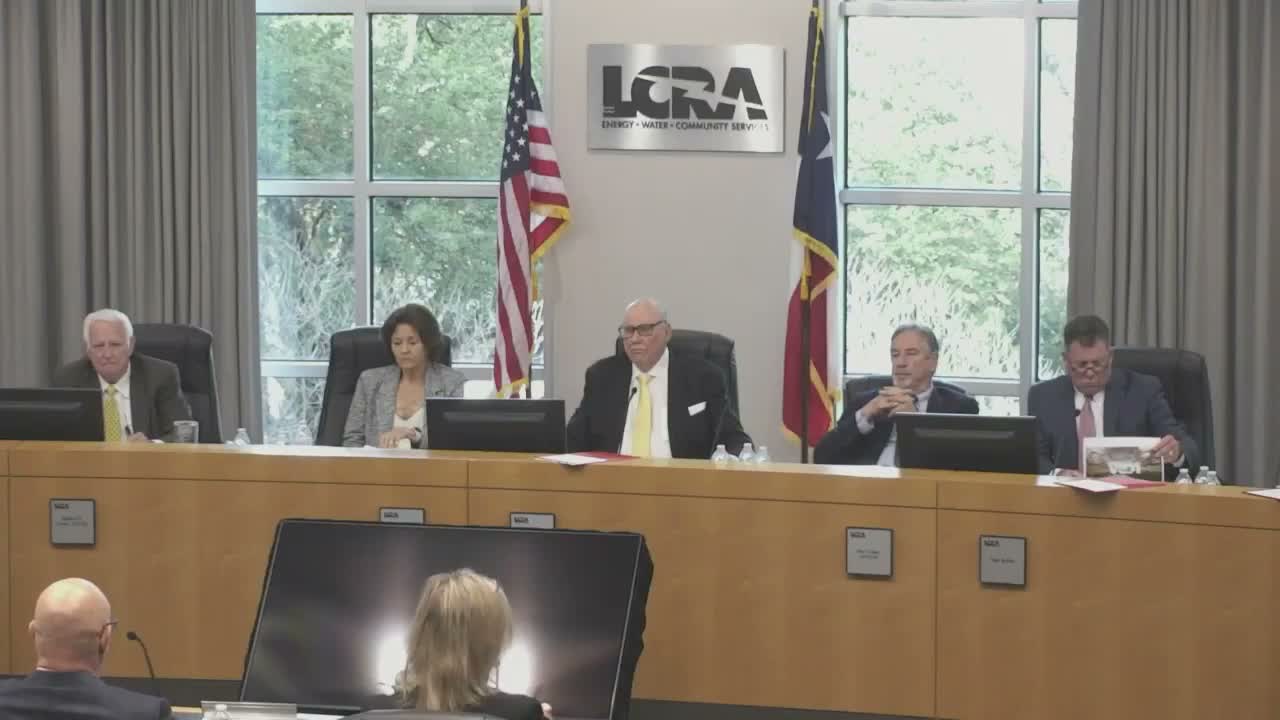
Summary
An unidentified LCRA presenter told the board the authority will study a potential off‑channel reservoir on agency land that could hold about 48,080 acre‑feet and help meet regional water needs; the agency will assess technical, environmental and funding constraints before returning with cost and schedule estimates.
Unidentified Speaker, speaking for the Lower Colorado River Authority (LCRA), announced the agency is launching a feasibility study to evaluate a potential new off‑channel reservoir on land the speaker said LCRA already owns northwest of Eagle County, Eagle Lake, and Colorado County. "I'm so excited to be able to share with you all that we're exploring building yet another reservoir to increase water supplies for our fast growing region," the presenter said.
The presenter said the site could store about 48,080 acre‑feet, which he compared to being larger than the Arbuckle Reservoir and two to three times the capacity of Lake Austin. He told the board the parcel is near an existing river intake and pump station, and that engineers will examine how the site could be used for off‑channel storage and any technical, environmental and permanent constraints.
The announcement followed LCRA bringing the Arbuckle Reservoir online last October, the presenter said, and was described as part of the authority's board‑approved water supply resource report outlining strategies to add supplies. The presenter noted a target in that report of adding "60,000 acre meter water supplies by 2040," a figure stated in the meeting transcript using the term "acre meter." The agency said it will complete due diligence, estimate costs, explore funding options, and develop a timetable before returning to the board with recommendations.
The authority did not provide a project schedule, a cost estimate, or specific funding sources during the update. The presenter cautioned that building a reservoir "takes years," underscoring that the study is an early step and not a final decision. Next steps the presenter listed were technical feasibility work, environmental review, cost estimation and funding analysis; the board will receive those findings in a future meeting.
The meeting did not include a formal vote or binding direction to proceed beyond commissioning the feasibility study.