
LCRA board authorizes three short-term note deals and up to $400 million in refunding bonds
Get AI-powered insights, summaries, and transcripts
Subscribe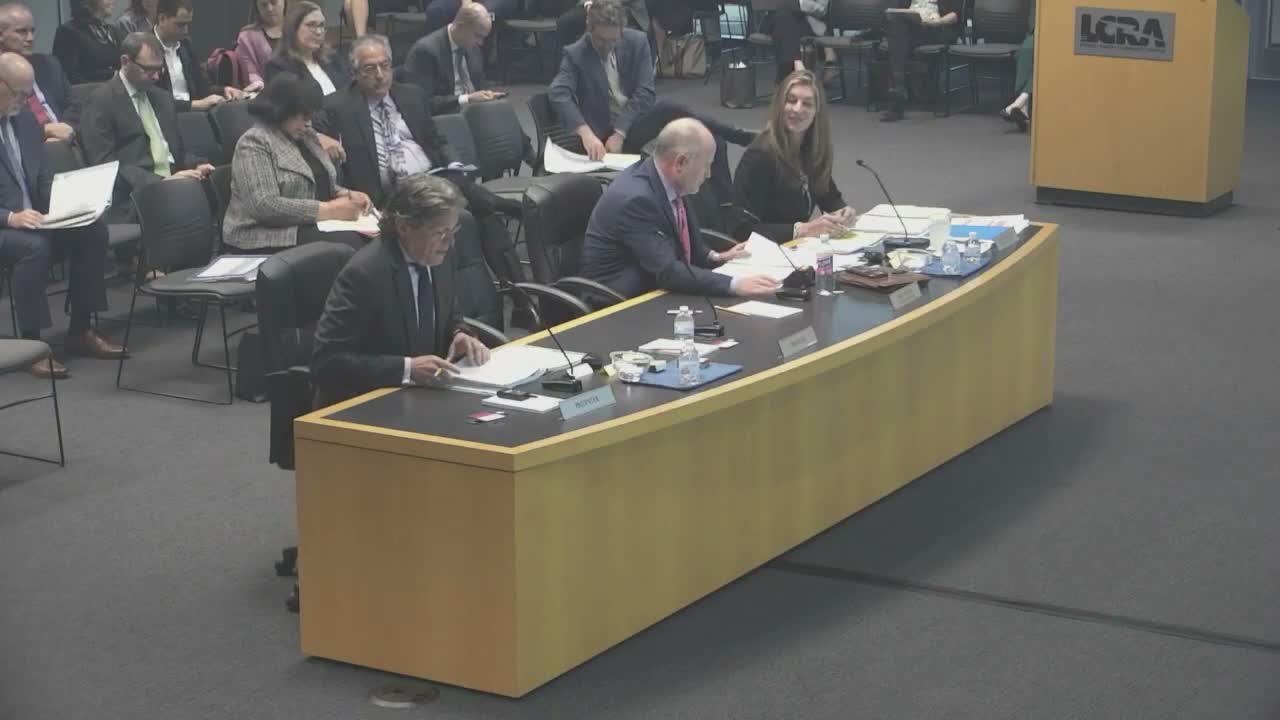
Summary
The Lower Colorado River Authority board on Feb. 18 approved three note purchase agreements (each up to $100 million) and authorized up to $400 million in refunding revenue bonds to refinance short-term debt and provide flexibility in timing of long-term bond issuance.
A majority of the Lower Colorado River Authority board on Feb. 18 authorized several short-term financing actions intended to diversify the authority’s debt program and reduce remarketing risk.
Finance staff asked the board to approve note purchase agreements that would allow LCRA to sell private taxable and tax-exempt notes directly to banks rather than rely solely on commercial paper. One item sought authorization to enter a note purchase agreement with US Bank for an amount not to exceed $100,000,000 and to extend the facility for up to three years; another requested a similar agreement with JPMorgan Chase for up to $100,000,000 and a three-year term; a third companion item related to transmission contract revenue notes likewise sought up to $100,000,000. Each item passed on voice vote.
Finance staff also requested and received board approval of a supplemental resolution to issue up to $400,000,000 in LCRA refunding revenue bonds. Staff said the bond proceeds would primarily refinance short-term debt associated with LCRA generation and telecommunications assets and could refinance some long-term obligations if economically feasible. The presenter told directors the Finance Committee discussed the transaction in January and staff expects to go to market in early May, subject to conditions.
Board members and staff framed the package as a two-step approach: use short-term debt to finance capital needs and, when market conditions permit, refinance into long-term bonds to lower overall debt service costs. The presenters said the direct-purchase structure provides flexibility around timing and reduces exposure to remarketing volatility in public commercial-paper programs.
No individual vote tallies for each director were recorded in the public discussion; the board approved each item by the routine voice-method used in the meeting. The board then moved on to other agenda items.
What’s next: staff will continue negotiating final terms with the banks and monitor market conditions before moving to long-term issuance.