Get Full Government Meeting Transcripts, Videos, & Alerts Forever!
Get email alerts on the Deaf Students topic
No spam. Unsubscribe anytime.
PGCPS adviser explains why deaf and hard-of-hearing students are classified under IDEA, not ESOL
Summary
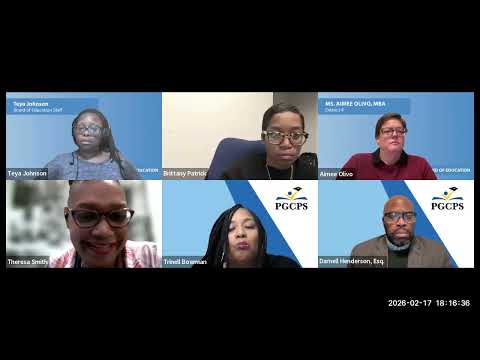
Tranel Bowman told the Disability Issues Advisory Board on Feb. 17 that deaf and hard-of-hearing students are categorized under IDEA as students with disabilities and may also be multilingual learners; their core instructional need is communication access (for example, ASL), not English language development.
At the Feb. 17 Disability Issues Advisory Board meeting, Tranel Bowman explained why deaf and hard-of-hearing students are generally classified as students with disabilities under the Individuals with Disabilities Education Act (IDEA), rather than as ESOL students.
"Being deaf or deafness or deaf and hard of hearing is a disability category under IDEA," Bowman said, and those students may also be multilingual learners if American Sign Language (ASL) is not their first language. "American Sign Language is actually a language," she said, and supports for deaf students focus on communication access rather than on English acquisition alone.
Bowman said classifying a deaf or hard-of-hearing student solely as a multilingual learner can mask language deprivation issues and recommended that teams assess whether a student meets the IDEA threshold for specialized services that ensure equitable access to language and communication.
Chair Theresa Smith said Bowman’s explanation helped clarify why deaf students do not automatically fall under ESOL and suggested further follow‑up if questions remained.