Committee endorses Senate File 52 funding package for wildlife and invasive-species projects
Loading...
Summary
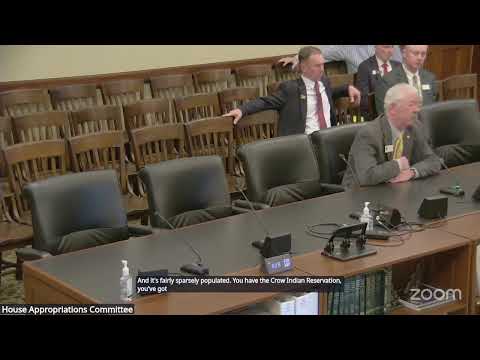
The Select Natural Resource Funding Committee voted 7–0 to advance Senate File 52, a large-project funding package presented by the Wildlife and Natural Resource Trust that includes stream restoration, cheatgrass treatments, mule-deer habitat work and a fish-screen on the South Fork canal.
The Joint Select Natural Resource Funding Committee voted to advance Senate File 52 after hearing a series of large-project presentations from the Wildlife and Natural Resource Trust.
Director Bob Budd told the committee the Trust brings projects before the legislature once cumulative funding reaches its large-project threshold. "The threshold for a large project is $400,000," Budd said, and he described a slate of multi-year efforts the Trust proposes for the coming cycle.
Among the projects Budd described was the "upper graybel" stream restoration, which he said will improve irrigation efficiency, remove perched culverts and install arches to reopen upstream passage for native fish. Budd said a senate amendment corrected the miles of stream in the bill to "40 miles" and that an additional $150 (as listed in the presentation) would complete the long-running effort.
Budd emphasized both native-species protections and recreational opportunities. "Weopen hundreds of miles of native spawning areas for Bonneville cutthroat, for Yellowstone cutthroat, all four of the cutthroat strains," he said, arguing that improving access reduces the risk of federal endangered-species listings for cutthroats.
The Trust also proposed habitat restoration in the Bags Valley Headwaters to address mule-deer declines following the heavy 2022 winter. Budd described mechanical treatments, juniper removal and aspen restoration across roughly 35,000 acres with work repeated on a two-year cadence. Representative Harrelson pressed for evidence of effectiveness; Budd replied that site visits and funded studies show improved body condition, higher twin rates and better fawn survival where treatments were completed.
Invasive-species efforts were a second major theme. Budd outlined multiple cheatgrass initiatives (including a second-iteration project and a regional "Western Wyoming Cheatgrass 2" effort spanning five counties led by Teton County) and a riparian invasive-grass project on the North Platte aimed at protecting cottonwood gallery forest and reducing fire risk to nearby homes.
Budd also proposed a fish-screen on the Cody Canal (South Fork) to reduce losses to irrigation diversions. He said more than 43,000 native fish are lost annually into that canal and described a rotating drum screen that would return fish to the main channel while allowing irrigation flow.
During public comment, Tim Beck of Lovell and chair of the Bighorn County Weed and Pest board urged stronger federal cooperation for cheatgrass control in counties with large shares of federal land. "In Bighorn County, we're talking 67% federal and state lands," Beck said, and he characterized the available private-lands funding as insufficient to address the scale of the problem. Budd replied that federal agencies commonly contribute funding through county weed-and-pest districts and that, in many places, NEPA and other processes have been completed to allow coordinated treatment.
After questions and brief committee discussion, Representative Harrelson moved to advance the bill; Representative Aleman seconded. The committee took a roll-call vote and the clerk recorded seven ayes and no no votes. The committee recorded that Representative Williams will present the bill on the floor.
The committee closed public comment and adjourned.