House passes memorial asking study on expanding health coverage for public higher-education employees
Loading...
Summary
The New Mexico House approved House Memorial 4 requesting a legislative study of options to expand health insurance to public higher-education educators and graduate student employees, after lawmakers debated eligibility, costs and whether some students already qualify for Medicaid.
The New Mexico House voted to pass House Memorial 4, which requests the Legislative Finance Committee study options to expand health insurance access to public higher-education educators and graduate student employees.
Representative (speaker 12), who explained the memorial on the floor, said nearly 3,000 graduate workers statewide earn an average of under $23,000 a year and that 51% of graduate workers are people of color, arguing many lack employer-sponsored medical, dental or vision coverage. “We have nearly 3,000 graduate workers statewide with an average pay of under $23,000 a year,” the sponsor said in explaining the need for a study.
Representative (speaker 8) questioned the memorial’s scope and language on the floor, noting that many graduate workers may already qualify for Medicaid and stressing the study should assess feasibility and potential costs rather than assume expansion. “With that kind of rate, they probably would have a hard time paying the 20%,” the questioning member said when discussing a hypothetical 80/20 state-pay split tied to state insurance.
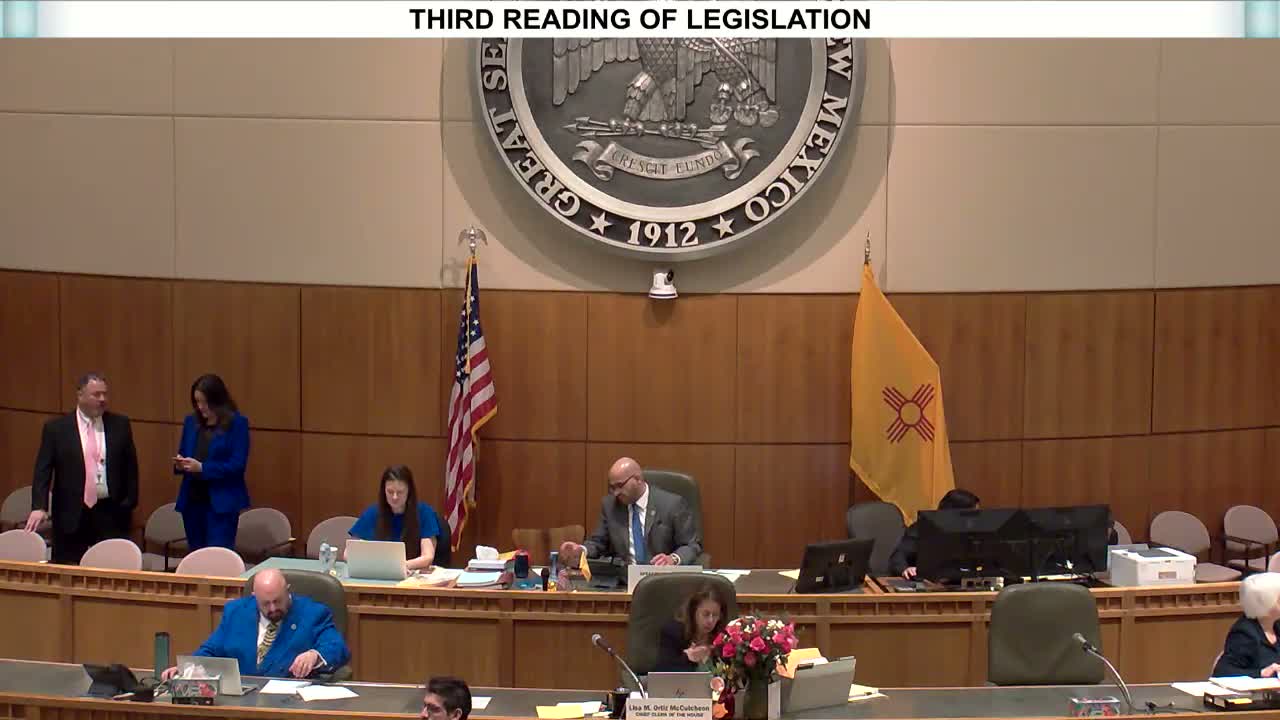
The House opened and closed the final-passage vote on the memorial; the presiding officer announced the final tally as 36 in the affirmative and 23 in the negative, and declared House Memorial 4 passed.
What the memorial requires and next steps House Memorial 4 does not create a program or change eligibility rules; it asks the Legislative Finance Committee to study options and report back. The memorial’s text, as explained on the floor, frames the effort as a study to explore ways to expand coverage and to identify costs and mechanisms if expansion is pursued. Any actual policy change or subsidy would require subsequent legislation.
Stakeholders and fiscal questions remain Lawmakers on the floor pushed the sponsor to clarify whether the study should examine existing public insurance eligibility (Medicaid/Medicare), employer-sponsored options at institutions, and the fiscal implications for state budgets. The House debate recorded on the floor did not include a conclusive answer about the study’s timeline, estimated cost, or whether it assumes state contributions beyond existing programs; those details would be resolved by the Legislative Finance Committee during the study.
The House moved on to other items after the vote; the memorial’s study recommendation now proceeds to the legislative process for follow-up by the committee named in the memorial.