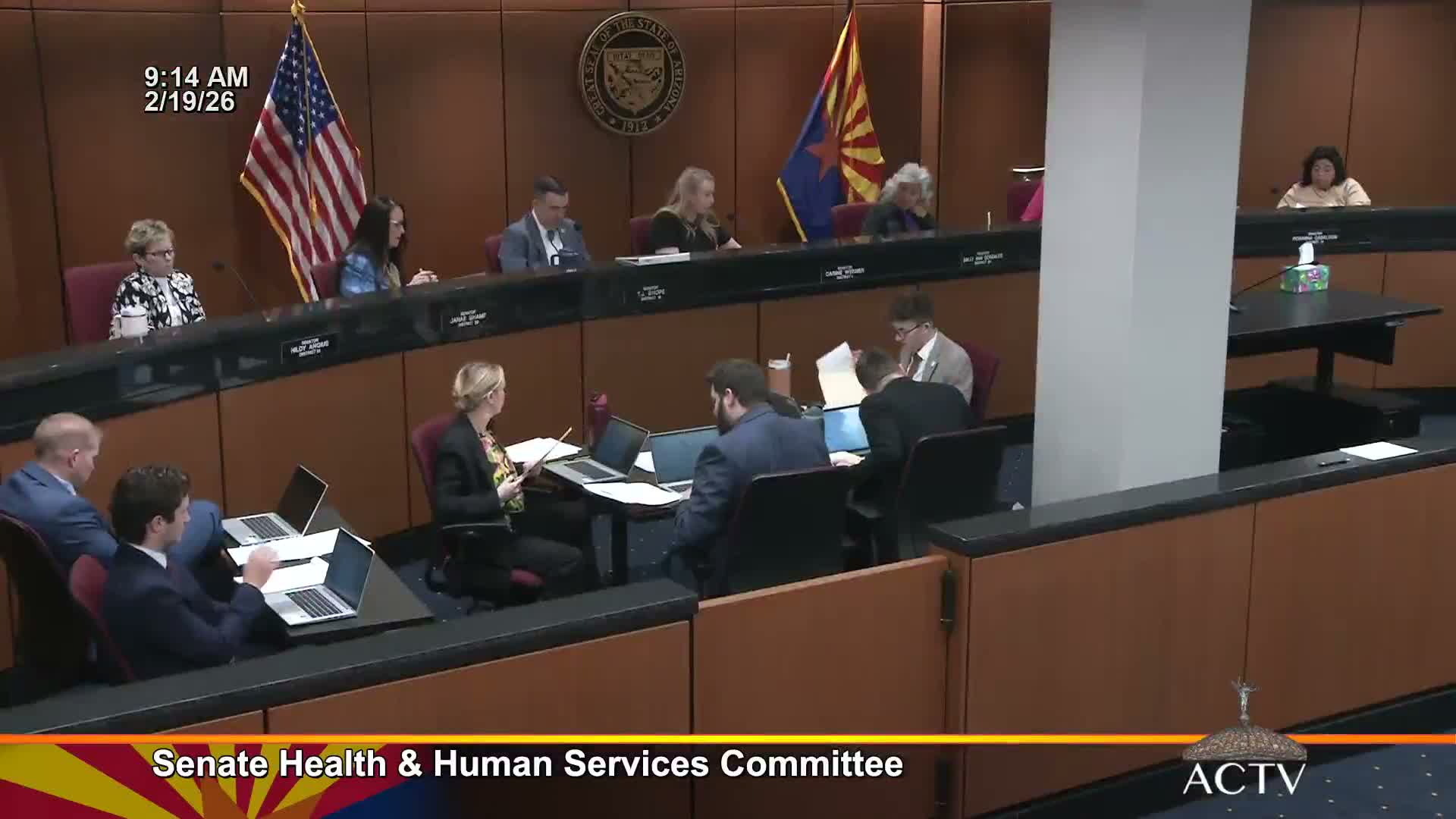
Senate panel votes to lift Maricopa County bed cap at state psychiatric hospital; legal and fiscal questions remain
Loading...
Summary
The committee approved SB 18-13 to remove the 55‑bed Maricopa County residency cap at the Arizona State Hospital, prompting debate over Arnold v. Sarn settlement implications, available dormant beds, renovation costs and the risk of renewed litigation.
On Feb. 11 the Senate Health & Human Services Committee voted to advance SB 18-13, a measure that would allow the Arizona State Hospital (ASH) to admit patients based on clinical need and remove explicit county‑of‑residence admission limits. The committee adopted amendments that removed an earlier provision requiring U.S. citizenship for ASH admission.
Sponsor Senator Gowen framed the bill as a step to open unused hospital capacity and treat seriously mentally ill people who are cycling through emergency rooms and the justice system. "There are plenty of beds up there not being utilized," the sponsor said, arguing the 55‑bed limit was an arbitrary number chosen long ago and the county population has since tripled.
Attorney Josh Mozelle, representing the Association for the Chronically Mentally Ill, reviewed the litigation history. He said a 1989 case established a duty to build a cohesive system, then settlement negotiations in 1995 produced a 55‑bed cap tied to Maricopa County. "The statute says services shall be provided to the serious and mentally ill," Mozelle said; "the legislature has the authority to make this decision," and he argued the cap could be changed without reopening the underlying ruling.
Carla (Carly) Fleeg of the Arizona Department of Health Services cautioned that removing the cap alone does not increase physical bed capacity and warned that eliminating the Maricopa cap could violate the Arnold v. Sarn exit agreement and risk renewed litigation. ADHS noted a 2023 fiscal estimate for renovating civil bed space to accommodate about 75 additional beds and cited ongoing staffing cost estimates in the tens of millions.
Stakeholders including the Arizona Attorneys for Criminal Justice said a formula or guardrails are needed to prevent runaway institutionalization; family members and advocates urged the panel to prioritize getting people into care. The committee voted to advance SB 18-13 with a do‑pass recommendation (reported 5 ayes, 2 noes); senators asked the Rules Committee and staff to analyze any legal exposure before floor action.