Committee advances bill to change development-fee rules and address ADUs amid city objections
Loading...
Summary
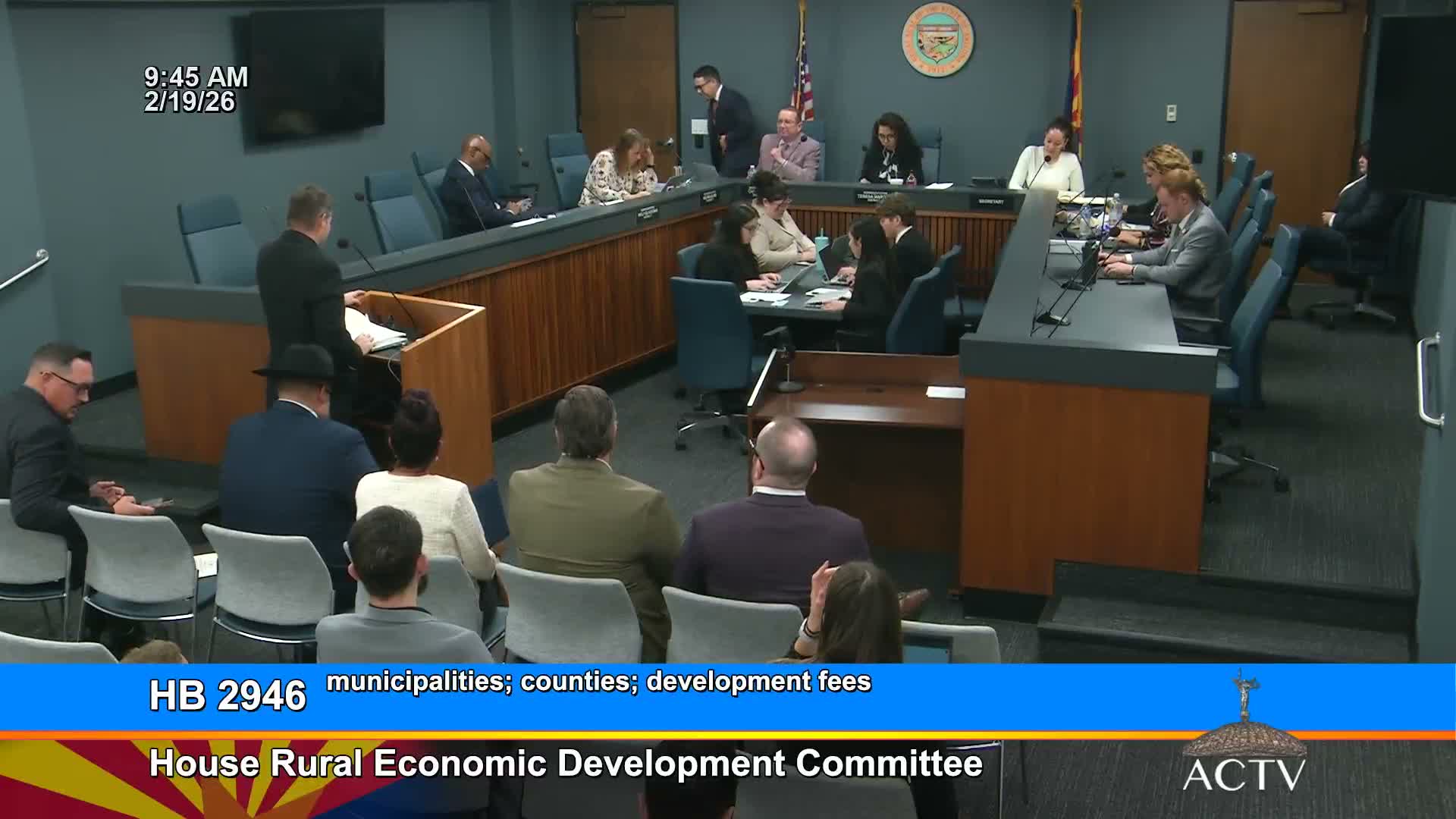
House Bill 2946, which would revise when and how municipalities collect development fees and prohibit assessing fees on accessory dwelling units (ADUs), passed the committee as amended on Feb. 29 after testimony from the sponsor and opposition from city and municipal groups who warned it would shift costs to existing taxpayers.
The House Rural Economic Development Committee advanced House Bill 2946 on Feb. 29 after hours of testimony that split industry groups and municipal officials over who should pay for infrastructure tied to new housing.
Sponsor Representative Kyle Powell said the bill aims to ease barriers to housing and give developers stability in planning. "The intent of this bill was not to create a hornet's nest," Powell said, arguing that high fees can prevent families from adding accessory dwelling units. He told the committee that current permit and impact costs for ADUs can run "approximately $10 to $15,000," which he said can discourage small-family builders.
Opponents — including the city of Maricopa, the League of Arizona Cities and Towns, and municipal attorneys — said several provisions would move costs from new development onto existing taxpayers. "This unintentionally shifts the burden from growth to existing taxpayers in a really critical way," said attorney Andrew McGuire, who represents municipalities. Katie Proctor of the city of Maricopa warned that delaying fee collection until certificate of occupancy would leave municipalities with out-of-date infrastructure plans and financing timing problems.
The League's Tom Savage summarized municipal concerns and said the League stands in respectful opposition while remaining open to working with the sponsor on ADU language.
Committee members repeatedly said they wanted more negotiation but voted to adopt an amendment in the chair's name by voice vote and then to return the bill with a due-pass recommendation. During roll call several members explained they were voting to continue the conversation and reserved the right to change their votes on the floor. The committee recorded a 4 yes, 1 no, 2 present, 0 absent result and advanced HB 2946 as amended.
The measure now moves toward floor consideration. Committee members and municipal representatives signaled they expect further negotiations to refine technical language on timing, fee dedication, and protections for local infrastructure financing.