
Arizona committee backs bill to let communities form tourism improvement areas
Get AI-powered insights, summaries, and transcripts
Sign Up Free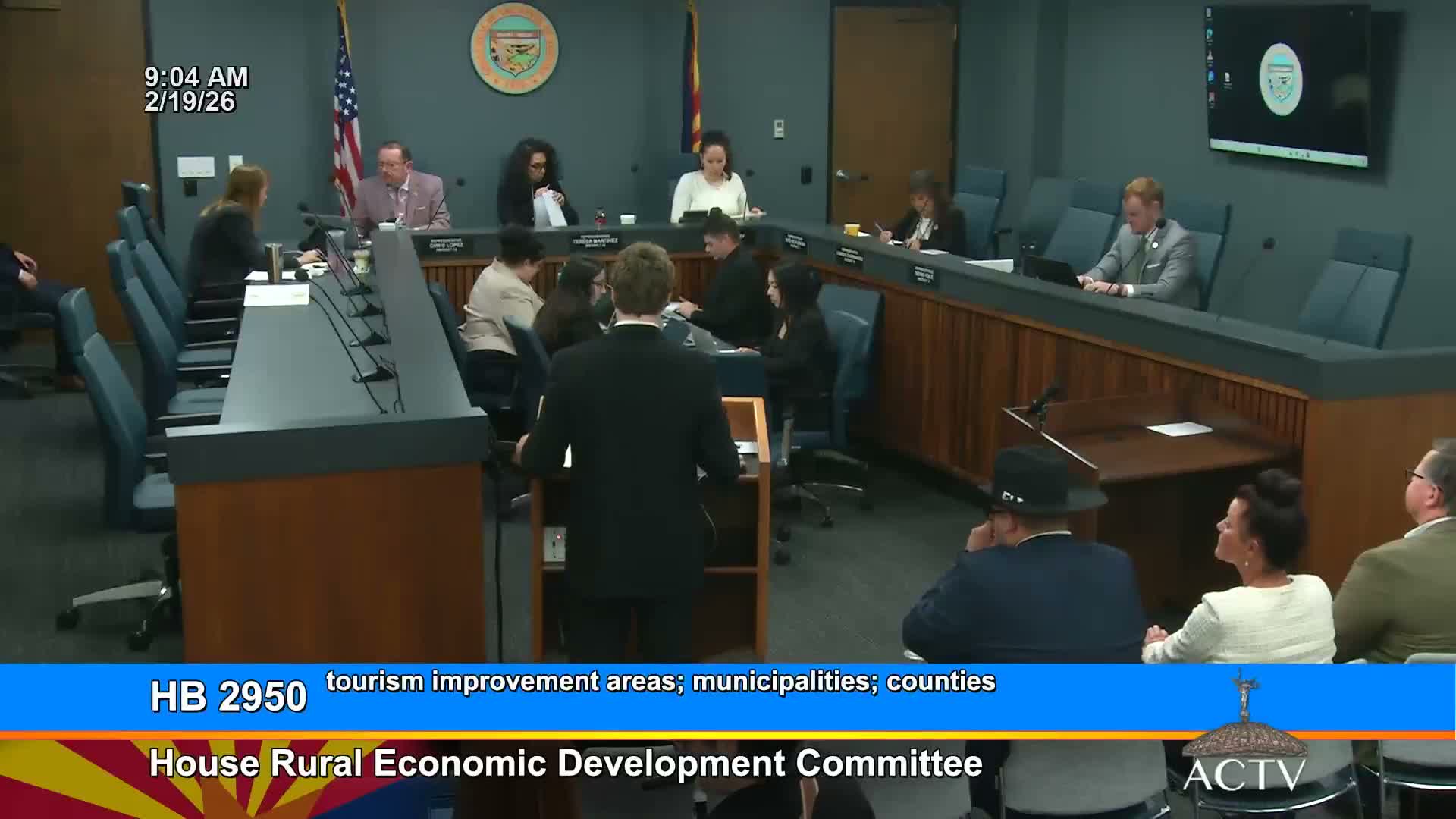
Summary
The House Rural Economic Development Committee voted Feb. 29 to recommend House Bill 2950, which would allow governing bodies to approve tourism improvement areas funded by lodging businesses for local marketing and visitor attraction; supporters said the tool helps rural economies without raising taxes.
A House committee on Feb. 29 recommended House Bill 2950, a measure that would let local governments and lodging businesses establish tourism improvement areas to pool marketing resources and promote overnight stays.
Supporters told the Rural Economic Development Committee the tool is voluntary and aimed at helping communities — especially rural counties — compete for conventions and visitors. "HB 29 50 gives communities a competitive tool with local control and accountability," said Kim Grace Sabo, president and CEO of the Arizona Lodging and Tourism Association, who testified in support. She said visitor spending last year approached $30 billion in Arizona, supporting nearly 300,000 jobs and generating more than $4 billion in tax revenue.
Marcus Carney, executive director of Visit Yuma, said the measure would help smaller communities afford branding and marketing for local events. "This type of funding then allows us to help market and bring more people so that then, ultimately, we can give more scholarships," Carney said, describing festivals and air shows that drive travel to his district.
A representative of Visit Phoenix described tourism improvement districts as an established tool used in many states and said Arizona risks falling behind without similar options for local destination marketing.
Committee members discussed how events and attractions across rural Arizona could benefit. After discussion the vice chair moved HB 2950 be returned with a "due pass" recommendation. The committee recorded a 7–0 vote and sent the bill forward to the next legislative stage.
The committee endorsement does not finalize policy; HB 2950 must still clear additional floor action and any subsequent committee or caucus steps before becoming law.