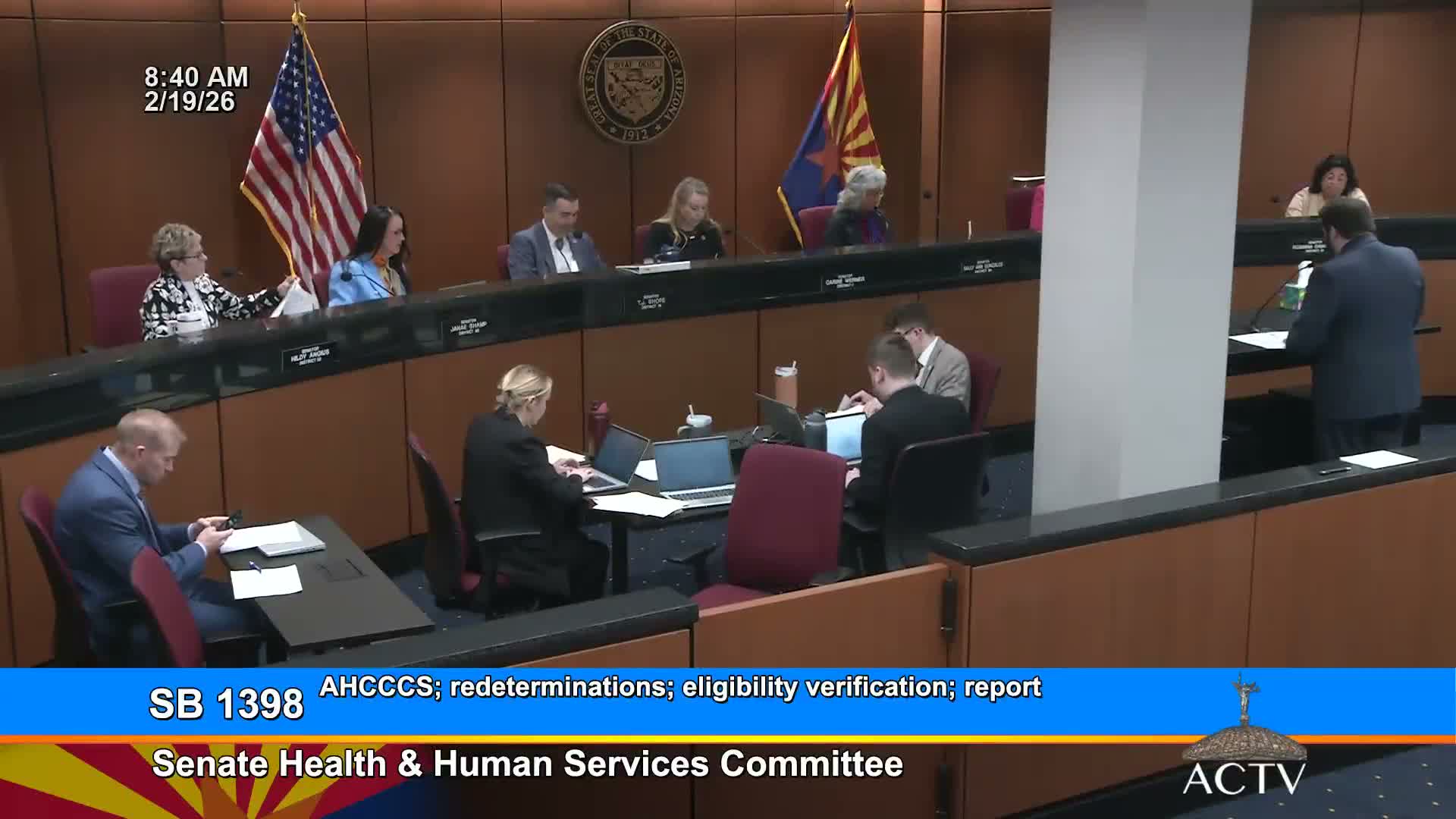
Senate committee advances bill for six‑month Medicaid eligibility checks; stakeholders warn of churn and costs
Loading...
Summary
A Senate committee gave a do‑pass recommendation to SB 13-98, which would require AHCCCS to redetermine eligibility for members aged 21+ every six months beginning Jan. 1, 2027. Agency and patient advocates warned of system costs, administrative burden and coverage churn affecting hundreds of thousands.
A Senate Health & Human Services Committee advanced legislation on Feb. 11 that would require Arizona Health Care Cost Containment System (AHCCCS) to redetermine eligibility for members aged 21 and older at least every six months starting Jan. 1, 2027.
Sponsor testimony described SB 13-98 as a reporting and eligibility-timing measure. Damien Carpenter of Access said the bill matches the timing in federal HR1 but does not include HR1's exemptions for groups such as Native Americans, pregnant and postpartum people, parents of dependent children, older adults or people with disabilities. "This new requirement will start in January, and it's estimated it will impact 380,000 members," Carpenter said, adding that the change will carry system, notice and staffing costs and that the bill contains no appropriation to pay for that work.
Elizabeth Lee, a board‑certified nurse and patient advocate, urged the committee to consider the patient impact of more-frequent redeterminations. "Mandatory frequent redeterminations... burden actual patients," she said, describing interrupted care and administrative trauma for people with chronic conditions and medically fragile children.
Lawmakers debated the bill's scope and the absence of a funding mechanism. A two‑page technical amendment was offered and adopted. The committee voted to give SB 13-98 a do‑pass recommendation (committee tally reported by the clerk: 4 ayes, 3 noes).
The bill's next procedural step is the Senate floor and subsequent committee referrals required for enactment. The committee record shows ongoing concerns about implementation costs and whether federal exemptions should be mirrored in state law.