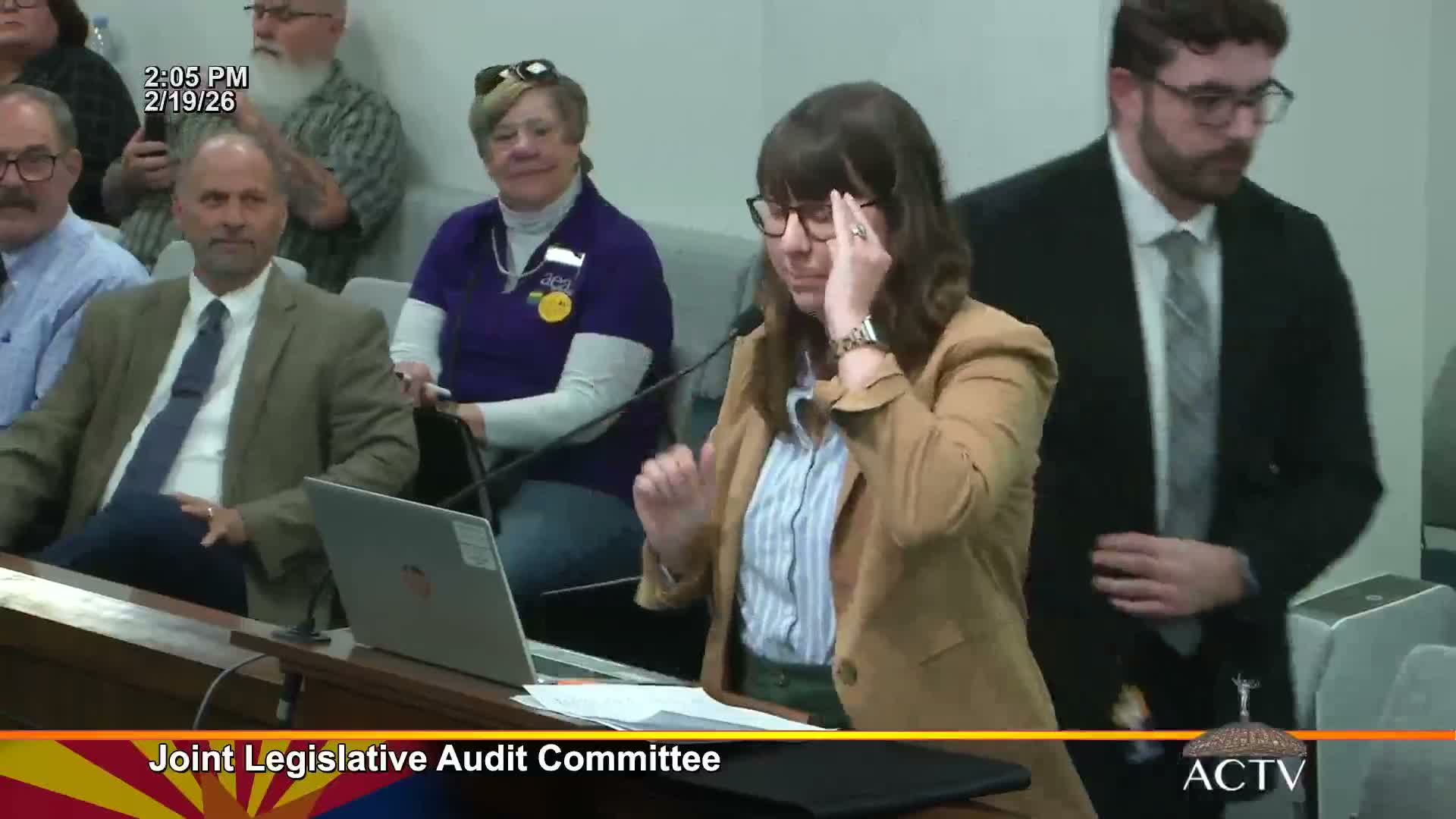
Auditor General: nine Arizona school districts now in highest financial‑risk category; districts outline cuts, action plans
Loading...
Summary
The Auditor General reported in January 2026 that the number of highest‑risk school districts in Arizona rose from two to nine. District leaders — from Tucson Unified to several small rural districts and receiverships — described cost reductions, hiring freezes, school closures and one‑time sales to stabilize finances.
The Joint Legislative Audit Committee heard on the Auditor General's January 2026 school district financial‑risk analysis that more Arizona districts are now classified at the highest risk of operating within available cash resources.
"The highest risk districts increased from 2 to 9 and districts approaching the highest risk category increased from 7 to 9," Megan Heager, director of the Auditor General's accountability services division, told the committee. She said the office scores districts on 10 financial risk measures and assigns more points to measures that pose greater financial threat.
Heager highlighted common drivers behind elevated risk: sharp single‑year declines in budget‑limit reserves for some districts, declining student counts that reduce per‑pupil revenues, redirection of capital monies to operations and pressures from rising salaries, benefits and utility costs.
Districts described varied mitigation strategies. Tucson Unified School District finance leaders said they had corrected prior misallocations between capital and operating funds, redirected $10 million of capital monies to operations in fiscal year 2026 (about 45% of its capital monies for that year), and are pursuing a package of cuts and efficiencies including a hiring freeze and department reductions. Ricardo Hernandez, Tucson Unified chief financial officer, said the district has implemented 0‑based budgeting for desegregation funds, energy‑efficiency projects producing rebates, and proposed reductions that together aim to shrink operating costs on a multi‑year timetable. "We recognize that we have to permanently reduce operating expenses by 2030 of $27,000,000," Hernandez said.
Smaller and rural districts emphasized different tools. Sierra Vista Unified Superintendent Terry Romo described immediate actions after taking office — closing one elementary school, freezing nonessential spending, aligning staffing to enrollment, renegotiating contracts, redirecting district additional assistance to operations and pursuing property sales to generate one‑time capital.
Receiver Tim McGrath described progress at districts in receivership (including Isaac and Antelope): a mix of staffing reductions, program eliminations, contracting out services, a $25 million leaseback to provide short‑term cash and a plan to repay that obligation over time. McGrath said the receiver had reduced deficits with aggressive corrective actions and expected continued improvement in the coming fiscal year.
A markedly different strategy came from very small districts such as Santa Cruz Elementary, where Superintendent Kathy Romero said the district deliberately reduced average daily membership below 125 to qualify for a statutory small‑schools adjustment that yields recurring additional funding — roughly $250,000 annually for the district — and offset much of a local enrollment loss. Romero said the district also increased its local tax rate to stabilize recurring revenues.
Heager said the Auditor General's office contacts highest‑risk districts periodically during the year, reviews district action plans, and presents results publicly; the office also posts district pages showing the underlying data and action‑plan materials. Committee members asked district leaders about academic and safety strategies tied to enrollment, the sustainability of one‑time fixes and the importance of linking fiscal mitigation to student outcomes.
What happens next: the Auditor General will continue outreach with the nine highest‑risk districts, present findings to district governing boards in public meetings and reassess mitigation actions in future updates to the web‑based risk dashboard.