Get Full Government Meeting Transcripts, Videos, & Alerts Forever!
Get email alerts on the Public Health Pfas Birth Outcomes topic
No spam. Unsubscribe anytime.
Researchers tell New Hampshire commission that PFAS‑contaminated wells are linked to higher infant mortality and low birth weight
Summary
A University of Arizona team told the New Hampshire commission their linked‑data analysis finds mothers served by drinking‑water wells downgradient of PFAS sites face substantially higher risks of infant mortality and low birthweight; presenters described sensitivity checks and urged further research and data sharing.
A team presenting to the New Hampshire Legislative Study Commission on Feb. 13 said their analysis shows large relative increases in adverse birth outcomes among mothers served by public wells that are hydrologically downgradient of PFAS‑contaminated sites.
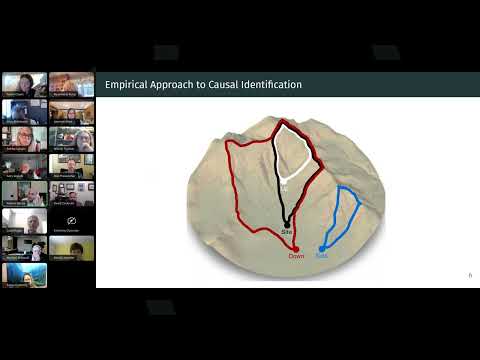
"PFAS‑contaminated drinking water harms infants," Robert, a lead author on the paper, told commissioners, summing up the study’s title and central finding. Using New Hampshire birth records (2010–2019) linked to Department of Environmental Services well locations and PFAS testing, the team compared births served by downgradient wells to those served by wells that are hydrologically ‘upgraded’ (control wells whose catchments do not include contaminated sites). The presenters said the comparison helps address common confounders in prior work.
In baseline specifications the presenters reported that a mother served by a downgradient well had an approximately 191 percent higher measured chance of infant mortality and materially higher rates of low‑birth‑weight and preterm births. When the team modeled a continuous dose–response using predicted PFAS levels at wells, they reported that a 100 parts‑per‑trillion increase in median local PFOA/PFOS predicted levels corresponded to roughly a 25 percent increase in infant mortality, a 6 percent increase in preterm births and an 8 percent increase in low‑birth‑weight births. Presenters said effects on extremely preterm and extremely low‑birth‑weight categories were larger in relative terms.
The presenters described multiple robustness checks: excluding births within 1 kilometer of sites to reduce hydrological ambiguity, dropping post‑2015 births to check behavior changes after public awareness increased, relaxing control definitions, and implementing site fixed‑effects (comparing upgradient and downgradient mothers for the same contaminated site). "We still find quite strong and significant effects," the lead presenter said, and the team emphasized they had responded to extensive peer review in an appendix they will circulate to the commission.
Commissioners pressed on data limitations. Commissioner Rosemarie asked whether serum measurements or household surveys (bottled‑water or point‑of‑entry filter use) were used; presenters said they did not have maternal serum data or survey data and that their identification relies on mothers being unaware of their exposure so that avoidance behavior would not bias the comparison. Presenters acknowledged that if downgradient mothers increased bottled‑water or filter use after 2016, the estimates would likely be conservative.
The team also described a national back‑of‑the‑envelope extrapolation: applying the New Hampshire dose–response function and predicted exposures across 11 states with PFAS testing produced estimates of additional adverse reproductive outcomes and annual societal costs in the billions of dollars, though presenters cautioned those national figures are rough given uneven testing.
The presenters provided copies of the paper, a nearly 100‑page peer‑review appendix and a slide deck on request; commissioners asked that DES and staff links to underlying groundwater monitoring reports and test data be included in meeting notes so the commission and local officials can review the underlying evidence.
The presenters said the study should be treated as one contribution to the literature and encouraged further work by epidemiologists, laboratory scientists and public‑health agencies. The commission thanked the team and agreed to circulate the materials and revisit the topic at a later meeting if needed.