Get Full Government Meeting Transcripts, Videos, & Alerts Forever!
Get email alerts on the Climate Policy topic
No spam. Unsubscribe anytime.
Governor frames ballot wins as a mandate for climate action and clean-energy jobs
Summary
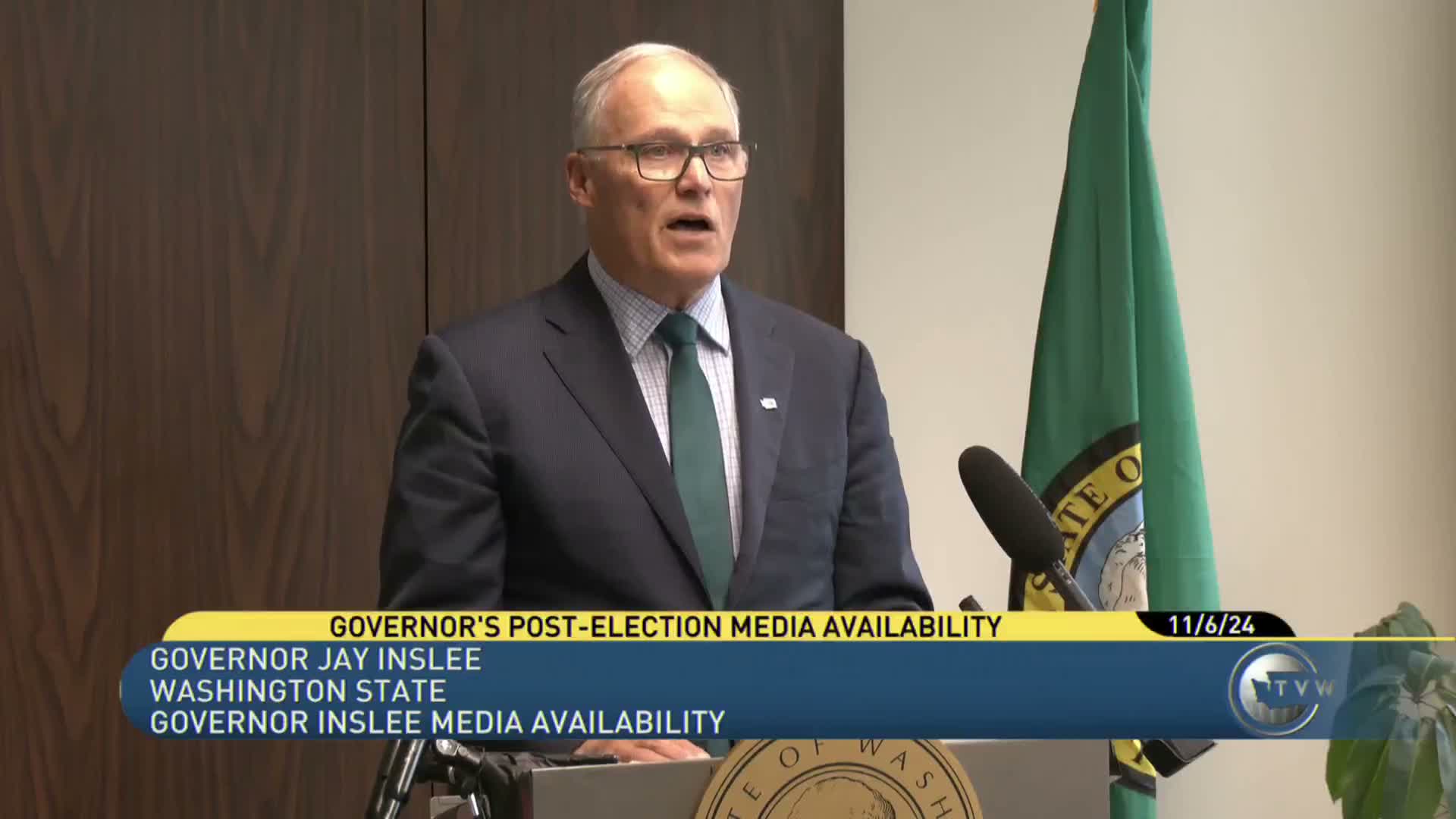
The governor said Washington's election results—including approval of the Climate Commitment Act—represent a strong mandate for state-led climate policy and clean-energy job growth, arguing the program reduces pollution and returns revenue to residents.
The governor told reporters that Washington's election results delivered a clear signal about the state's priorities and that the margin of victory for climate-related measures gives the state momentum to press national climate action. "This is a tidal wave of votes against these initiatives," the governor said, arguing the outcome shows "it is a winning message to stand against climate change."
The governor defended the Climate Commitment Act (the state's cap-and-invest program) as both an environmental and economic policy. He described the law as "fundamentally... about reducing pollution" and said it places binding limits on emissions that contribute to respiratory illnesses. He also emphasized the program's financial design: "All the money that is generated by the polluters... comes back to Washingtonians," which the governor said funds utility credits, transit and other benefits.
Asked how the cap-and-invest idea began, the governor said he co-authored a 2007 book on the topic, helped lead a House effort in 2010 and introduced the concept in his first year in office. He acknowledged political pushback, including attacks framed around a "pennies per gallon" line, but called those criticisms "malarkey" and pointed to local examples—homeowners with solar panels, households with heat pumps and companies in Moses Lake—where he said the policy has helped reduce household costs and created jobs.
The governor framed Washington's result as a model for other states, noting the state's role in the US Climate Alliance of 24 states and asserting that the alliance represents about 60% of the U.S. economy. He repeatedly emphasized that, even if federal leaders deny climate science, the state has constitutional and judicial authority to pursue its policies.
No formal action or vote was taken during the briefing. The governor said the election's outcome will strengthen efforts to expand clean-energy industries and to continue enforcing the state's pollution limits.