Get Full Government Meeting Transcripts, Videos, & Alerts Forever!
Get email alerts on the State Budget topic
No spam. Unsubscribe anytime.
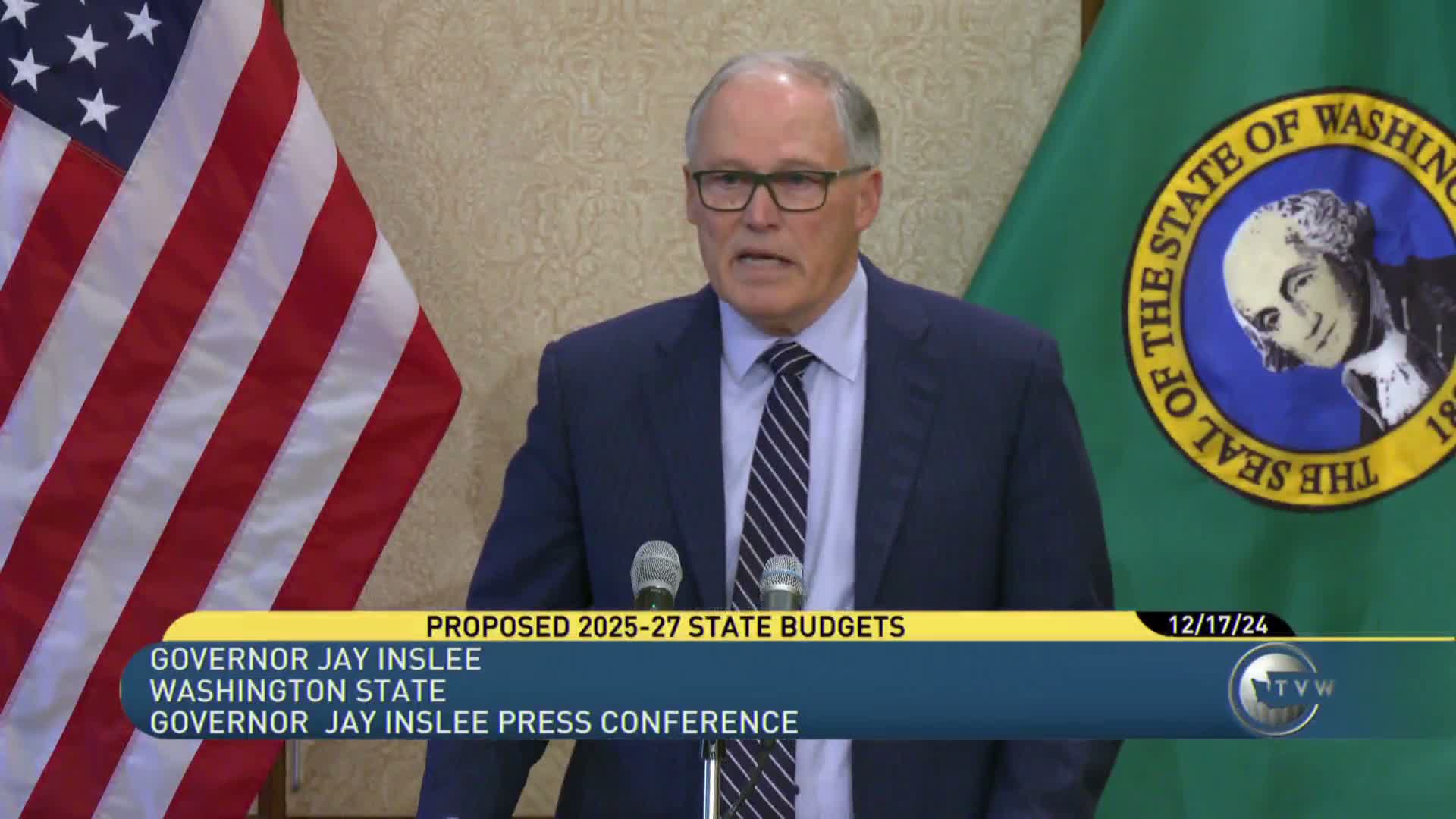
Governor Proposes Balanced Budget with 1% Wealth Tax on Fortunes Above $100 Million
Summary
The governor proposed a balanced state budget that pairs about $2 billion in reductions with new revenue proposals, including a 1% wealth tax on assets above $100 million projected by the governor to raise roughly $10.3 billion over four years; the plan also includes B&O adjustments, program closures and pauses.
The governor presented a proposed balanced budget and a package of revenue changes Monday that would combine roughly $2 billion in reductions or delays with new taxes aimed at wealthy residents and certain businesses.
"We are proposing a balanced budget," the governor said, framing the proposal as a starting point for legislative discussion and emphasizing an intent to protect services for working families while asking wealthier residents to contribute more.
The centerpiece is a proposed 1% wealth tax on net assets exceeding $100,000,000. According to the governor, that levy would generate about $10,300,000,000 over four years and would affect "just over 3,000" Washington residents. The governor described the tax as "modest," saying it would apply only to amounts above the $100 million threshold and would be less volatile than the capital gains tax because it taxes long-term holdings rather than sales.
The governor said the state's Department of Revenue evaluated the concept and "believe[s] it is . . . an effective proposal that can actually raise dollars in real terms that is somewhat predictable," language he used to explain revenue stability assumptions.
Alongside the wealth tax, the proposal includes changes to the Business & Occupation (B&O) tax for certain business categories and a temporary surcharge on larger service industries for two years to smooth timing differences in revenue. The governor estimated the B&O changes would raise about $2.6 (figure described in the briefing; transcript did not specify units), and described the changes as targeted to avoid hitting the majority of small businesses.
On the spending side, the governor outlined about $2 billion in reductions or delays over four years. Items he named included a freeze on nonessential hiring, pausing childcare-eligibility expansion, delaying bonuses tied to national board certification for educators, and proposed closures: the Mission Creek Center, three Department of Corrections reentry centers and two RHCs. He also proposed merging two pension systems (the transcript did not specify their official names) and using a one-time $1,000,000,000 transfer to the general fund while saying one pension system would retain a surplus to protect beneficiaries.
The governor repeatedly framed the package as an attempt to avoid rolling back progress in public safety, education and behavioral health even as the state confronts stark inequality: "We have produced thousands of millionaires and billionaires" while "thousands" remain unhoused or food insecure, he said.
Reporters pressed the governor on likely impacts. One asked whether the B&O change could harm low‑margin retailers such as grocery stores; the governor acknowledged small profit margins but said the increase would be modest for most businesses and compared the change to larger hypothetical federal tariff effects. Another reporter asked why the budget did not include more funding to help cities hire additional police officers given staffing shortages; the governor said he supports hiring more officers but that the legislature in prior sessions did not adopt broader local‑hiring funding; his proposal does fund two additional classes of state troopers.
On homelessness, the governor credited earlier investments tied to the Encampment Right of Way efforts with reducing several large encampments along major corridors and said roughly "70%" of people previously in encampments remain in shelter, calling the initiatives "quite successful." He said continued progress is constrained by what the state can afford under the proposed budget.
The governor acknowledged the political and practical risks of the tax proposals but defended them as necessary to maintain services: "We're not going backwards," he said. He described the plan as a starting point for the Legislature and said he expects robust debate.
The governor closed by thanking attendees and noting the proposal would now enter legislative review; he did not identify any formal votes or final decisions during the briefing.
Next steps: the governor submitted the proposal and invited legislative deliberation; revenue and expenditure projections cited in the briefing are the governor's figures or, where noted, based on the state's Department of Revenue assessment.