Get Full Government Meeting Transcripts, Videos, & Alerts Forever!
Get email alerts on the Procedure Rulemaking topic
No spam. Unsubscribe anytime.
Board declines advisory opinion on adjudicated facts, debates electronic service rulemaking
Summary
The Executive Ethics Board declined to issue an advisory opinion on a matter already adjudicated, citing precedent and the advisory function's forward-looking role; it also began discussion of rulemaking to permit electronic service but asked staff to research appeal/court interactions and USPS changes before proceeding.
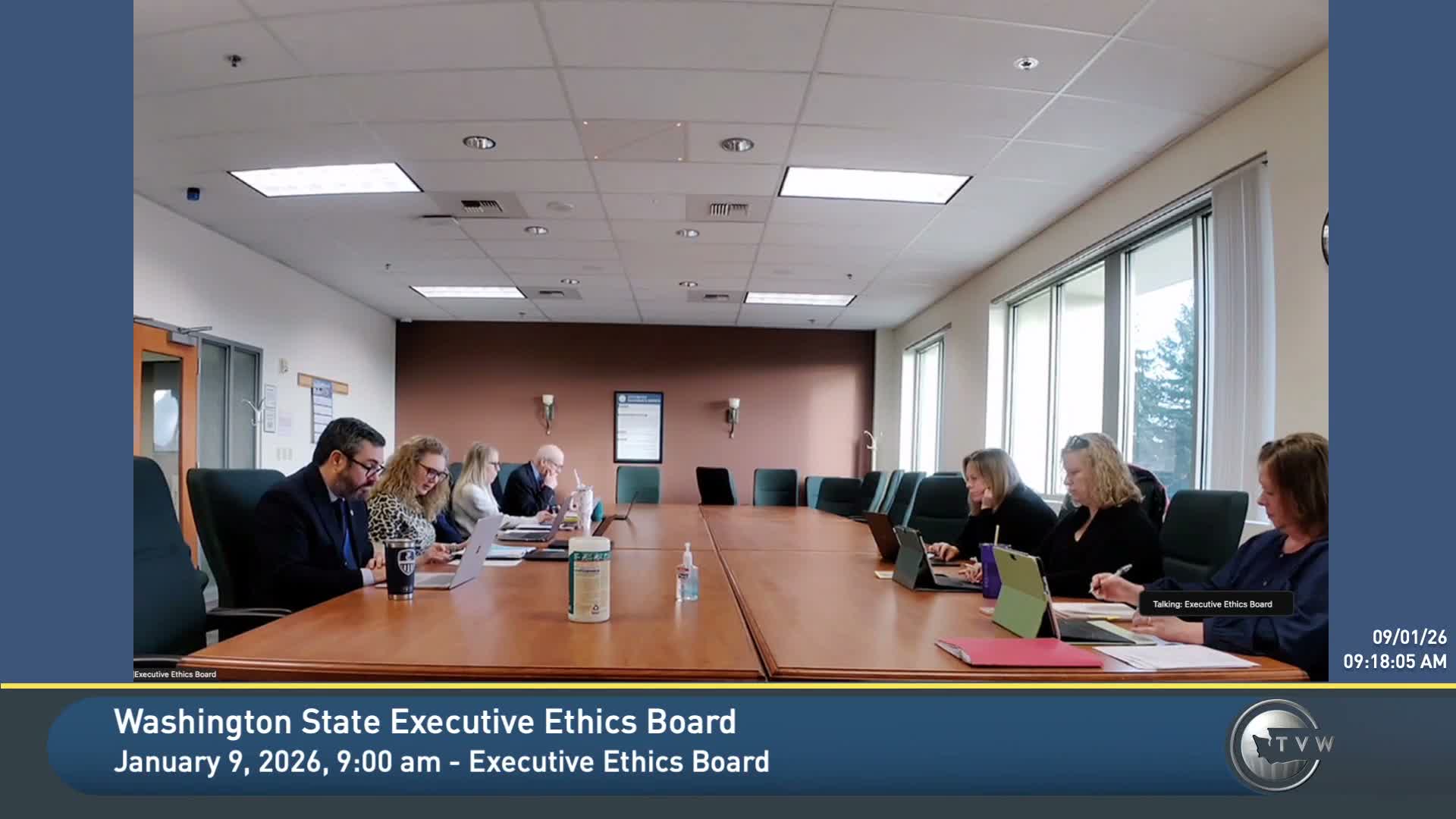
The Executive Ethics Board voted on Jan. 9 to decline a request that would have produced an advisory opinion based on facts previously adjudicated. Board members and staff said advisory opinions are intended primarily to offer forward-looking guidance to state employees and agencies, not to act as an appeals mechanism or to publish opinions anchored to closed enforcement findings.
Kate Reynolds, board staff, summarized the historical use of advisory opinions and noted that "generally ... 97% of the requests come from state employees or agencies" seeking prospective guidance. Several board members said publishing an opinion tied to adjudicated facts could set a new precedent and blur the line between enforcement and advisory functions.
A motion to decline issuance of the advisory opinion was made and seconded; the motion carried by voice vote with one recorded abstention/recusal noted in the transcript.
Separately, staff introduced a proposed rule change to add a definition for "service" in the board’s procedural rules to allow electronic service (including email) for certain steps of agency procedure. Members raised concerns about whether electronic service would satisfy appellate or court filing requirements, about proof of delivery when an email bounces, and about recent U.S. Postal Service changes to postmarking that affect mail-based proof of service. Staff said the board’s office typically seeks an electronic-service agreement with respondents and will research the appeals/court-service implications and USPS procedural changes and return with recommended language in March.
The board also began a five-year review of its advisory opinions, starting with guidance on gifts, and agreed to approve the reviews except for two opinions that staff will redraft to reflect statutory monetary-threshold changes.
The board closed for an hour-long closed session for quasi-judicial deliberations and then reconvened to record votes on stipulations and orders.