Get Full Government Meeting Transcripts, Videos, & Alerts Forever!
Get email alerts on the Fluoride topic
No spam. Unsubscribe anytime.
Board declines multiple petitions seeking new fluoridation rules, cites limited statutory authority
Summary
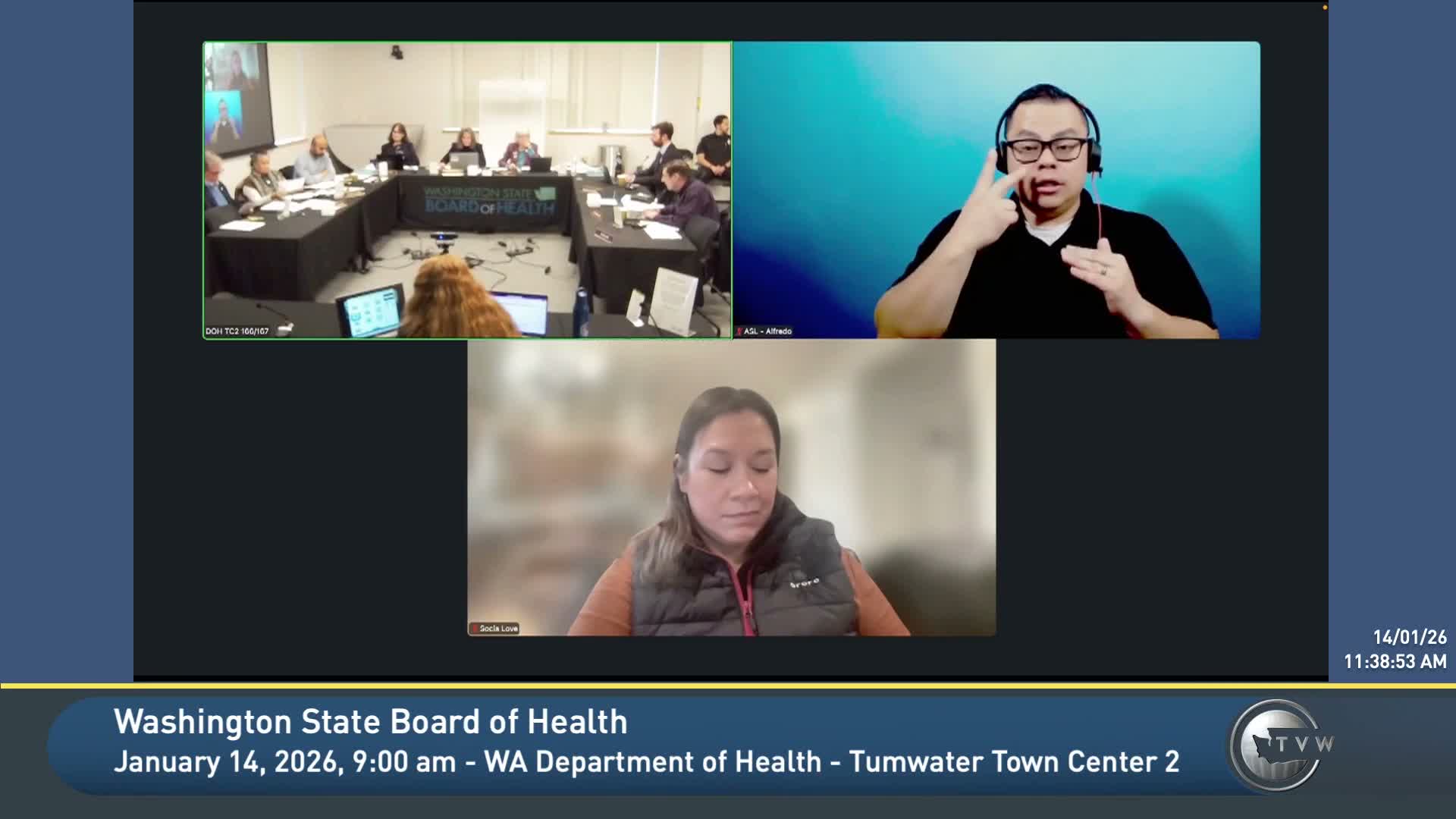
After a lengthy public comment period and staff briefings, the Washington State Board of Health declined a series of petitions that sought new rules on fluoridation safety, manufacturer requirements and board decision‑making processes, saying several requests fell outside the board’s authority to regulate group A public water systems.
The Washington State Board of Health on Jan. 13 declined multiple petitions from Bill Osmundson and Washington Action for Safe Water that sought changes to rules governing fluoridation and how the state characterizes its safety.
Staff advised the board the petitions varied — some asked the board to require manufacturers to produce FDA approval, liability insurance and batch assays for fluoridation chemicals; others sought new evidentiary standards and broad procedural requirements for the board’s own decision making. Shay Bauman, a board policy adviser, recommended denial for several petitions because they asked the state board to regulate entities and matters beyond its statutory authority under RCW 43.20.050, which covers rules for group A public water systems.
During deliberations board members repeatedly cited the board’s limited rulemaking scope. Several members noted that water‑quality protections for aquatic life (for example, salmon) are implemented under the federal Clean Water Act and state Ecology rules, not group A public water system rules. Others said the petitions read more like legislative proposals about board operations than petitions to amend group A water system rules.
The board passed motions to decline the petitions and directed staff to notify petitioners. Chair Patty Hayes reminded the public that community fluoridation decisions remain local in Washington and that the board’s group‑A water rules are distinct from broader public health statements and from local authorities.
What happens next: Petitioners were notified of the denials; staff recommended that the board consider clarifying its petition policy to reduce future filings that request rule language outside the board’s authority.
Sources: Public comment and Shay Bauman briefing at the Jan. 13, 2026 board meeting.