Get Full Government Meeting Transcripts, Videos, & Alerts Forever!
Get email alerts on the Child Welfare Safety topic
No spam. Unsubscribe anytime.
DCYF oversight board presses agency on follow-up when families decline services
Summary
At a Jan. oversight meeting, DCYF officials described safety plans, 'safe child consults' and Attorney General review before filing for dependency; board members and public commenters pushed for clearer timelines, regional data, and changes to legal thresholds after recent child fatalities.
The DCYF Oversight Board spent the first part of its 2026 meeting pressing Department of Children, Youth, and Families officials for detail on how the agency follows up when early-warning indicators are identified but caregivers decline services.
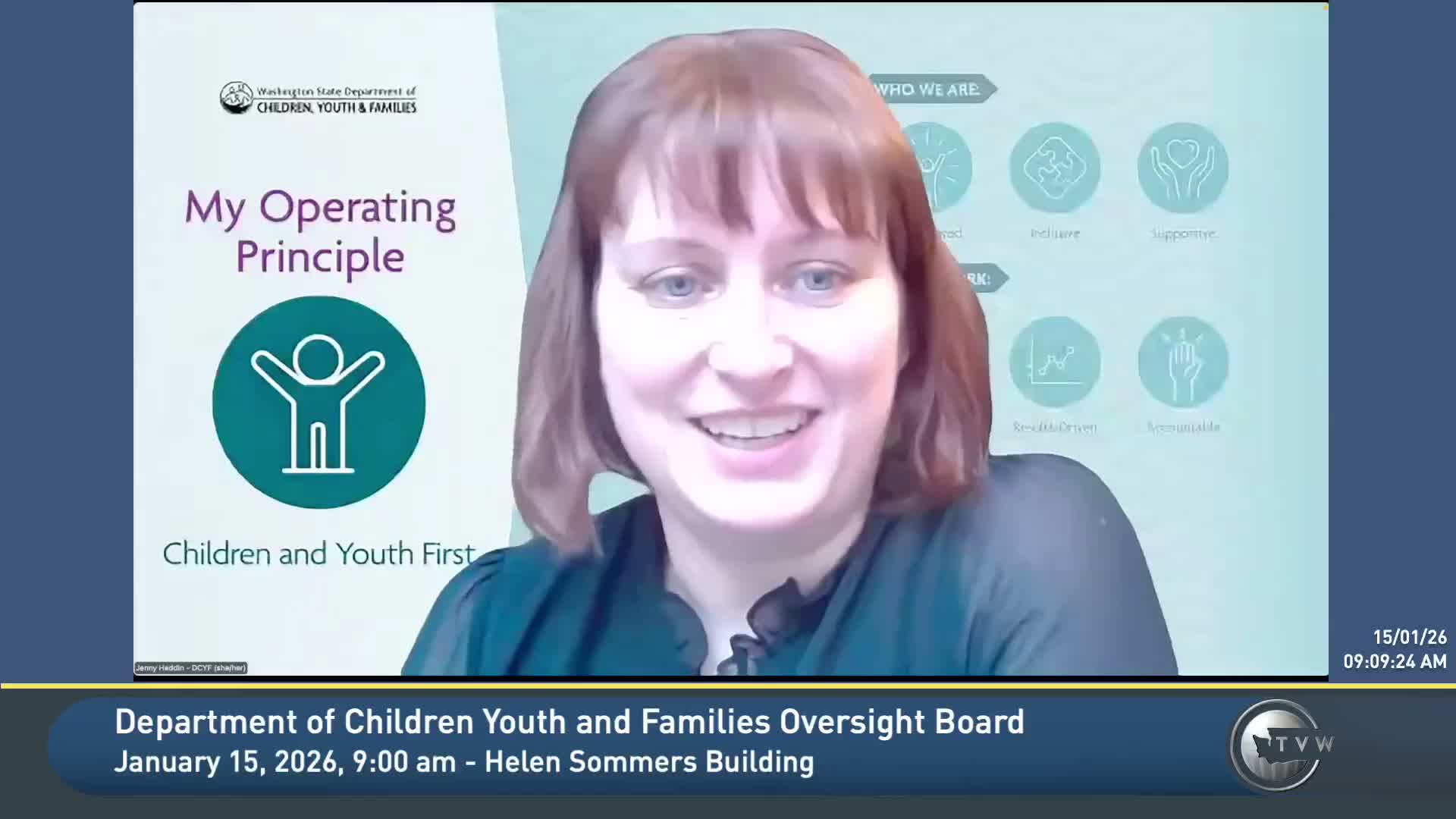
Jenny Hedden, DCYF’s chief programming officer, told the board the department’s first step when it finds safety threats is to work with families on a safety plan and to offer services such as family‑preservation supports. "When we're out with a family, and assessing them for safety, we ... try to work with the family to develop a safety plan," Hedden said. If a safety plan cannot be adhered to and safety threats persist, staff may pursue a filing of dependency and removal, she said, after a "safe child consult" with supervisors and review with the Attorney General’s office.
Board members pressed Hedden for specifics about the point at which voluntary family‑service cases escalate. Judge Sharonda Amamillo asked how long family voluntary services cases remain open after the department begins monthly health‑and‑safety visits and whether there is a standard timeline before DCYF moves toward court when families do not engage. Hedden said case length varies, that the department will "staff a case" when threats rise, and that judicial discretion ultimately determines whether legal sufficiency for removal exists.
Members repeatedly raised the problem of "chronicity" — families with repeated referrals that nonetheless fall short of the statutory standard for removal. Hedden said DCYF’s safety assessments account for prior history but acknowledged the conflict between using history to inform safety planning and the legal standard applied in court. "History cannot really come into play. It is about immediate threat to the child," Hedden said, summarizing the agency’s view of the legal sufficiency standard.
Frontline staff and public commenters urged the board to consider resource gaps that leave voluntary approaches under‑resourced, especially in rural and tribal areas. Board members asked DCYF for more data: time‑series charts of critical incidents and fatalities over multiple years, regional breakdowns, and a mapping of decision points showing when and how cases escalate from voluntary services to safety consults or court filings.
Public commenters described recent tragedies and urged legislative change. A written account read at the meeting tied the death of a child, Soojin Han, to repeated system contact and asked the legislature to review House Bill 12‑27 and related policy decisions.
The board requested follow‑up materials from DCYF, including policy clarifications on monitoring families who disengage from services, a timeline/algorithm of decision points, and regional data on trends. Hedden said the department already breaks some data down regionally and makes quarterly figures public; she also committed to returning with more detailed metrics and to coordinating on additional briefings.
The board’s next steps include asking DCYF to provide the requested trend and process data and arranging a deeper dive at a future meeting.