Get Full Government Meeting Transcripts, Videos, & Alerts Forever!
Get email alerts on the Telematics topic
No spam. Unsubscribe anytime.
Washington traffic officials roll out Street Vision telematics and present evaluation showing speed reductions tied to officer presence
Summary
A state evaluation found that targeted officer presence correlated with meaningful drops in aggregate driving speeds; the Traffic Safety Commission announced grants and 60 Cambridge Mobile Telematics Street Vision licenses for law enforcement, plus a procurement for statewide analytical services.
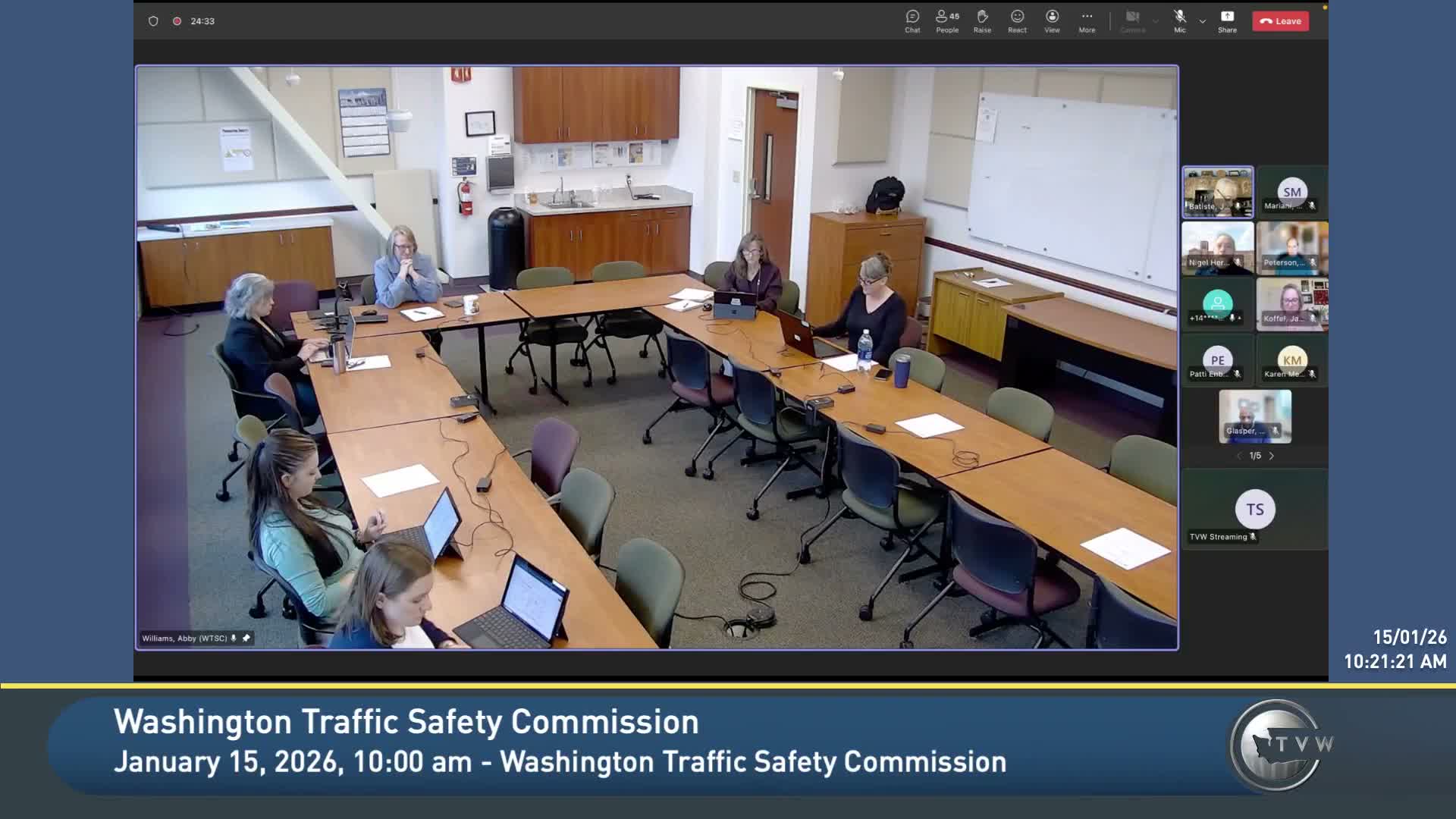
The Washington Traffic Safety Commission on Jan. 2026 heard a detailed presentation on telematics data and the Street Vision program, including an evaluation showing measurable reductions in speeding where enforcement was concentrated.
The study, performed by Michelin Mobility Intelligence for the commission, examined summer enforcement emphasis periods in four patrol districts and found ‘‘for every 1 hour increase in officer presence per mile of corridor, average driver speeds on that corridor decreased by 5.6 miles per hour,’’ the presenter reported. The evaluation used hierarchical modeling to quantify the effect before, during and after enforcement emphases.
Why it matters: Commissioners said the finding gives them a quantifiable measure for planning enforcement. Director-level participants noted that the data allow law enforcement to see whether saturation patrols produce sustained behavior change and help them target scarce resources to high-risk corridors.
Program details: The commission said it secured a third telematics grant from the Governors Highway Safety Association and supplemental funding from General Motors to deploy Cambridge Mobile Telematics’ Street Vision platform to law enforcement. The state purchased up to 100 concurrent licenses and, combining grants and state funds, is issuing free licenses to up to 60 agencies; as of the meeting 57 licenses had been filled and three remained.
Privacy and limits: Presenters emphasized the data are anonymized at both person and trip levels and do not include demographic information; Street Vision yields aggregate behavioral measures (for example, ‘‘excessive speeding’’ defined in the platform as 10+ mph over the posted limit sustained for five seconds). They cautioned rural and very low-traffic areas (for example, island ferry ports) require larger time windows to produce meaningful measures.
Local example: Spokane Police Department used Street Vision for a weekend emphasis and reported 206 contacts, 128 infractions and 16 criminal citations; evaluative snapshots showed reductions in the share of vehicles flagged for excessive speeding and small changes in 80th-percentile speeds over the evaluation window.
Next steps: The commission is moving a statewide master contract focused on telematics analytical services through procurement with DES and expects an RFP in spring 2026. The work package includes training, onboarding and a community of practice to support local agencies’ use of the tool.
"It truly is more effective to target the most high risk known areas," the presenter said, urging jurisdictions to pair Street Vision with local enforcement planning and, where appropriate, engineering changes.
The commission and law enforcement partners said they will continue onboarding agencies and monitoring outcomes; training and an interim wait list were planned once remaining licenses are allocated.