Get Full Government Meeting Transcripts, Videos, & Alerts Forever!
Get email alerts on the Failure To Register topic
No spam. Unsubscribe anytime.
Sensing Guideline Commission backs changes to failure-to-register statute
Summary
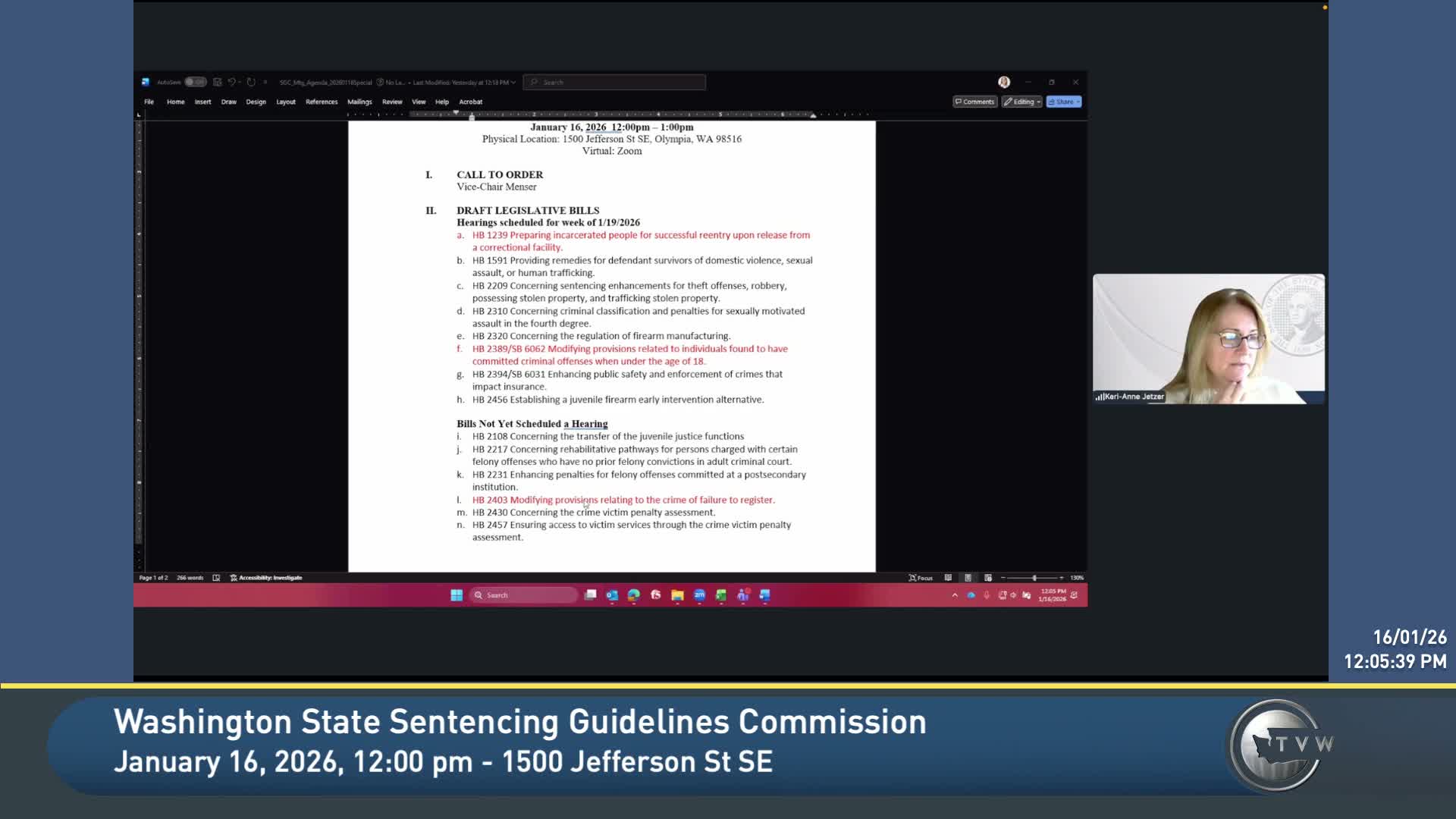
The Sensing Guideline Commission voted to support bill 2403, which reduces criminal classifications for failure-to-register offenses, prescribes one- and two-year community supervision terms, and directs DOC reentry-planning and model-policy review by the Offender Policy Board.
The Sensing Guideline Commission voted to support bill 2403 during its Jan. 16 special meeting, endorsing changes that remove prior "seriousness level 2" classifications for many second or subsequent failure-to-register offenses and create uniform community-supervision terms.
Carrie Ann, who opened discussion on the bill, summarized its main changes: second or subsequent failure-to-register convictions would be reclassified, and courts would impose one year of community supervision for first offenses and two years for subsequent offenses when incarceration is not imposed. The bill also directs the Department of Corrections to consider existing resources when preparing reentry plans and asks the Offender Policy Board to review model registration policies.
Whitney Hunt, identified in the meeting as the coordinator for the Offender Policy Board, told commissioners the bill reflects years of work and negotiations with prosecutors and defense attorneys. "In essence, this is 4 years worth of work that's being put into this bill," Hunt said, and confirmed she and a colleague planned to sign in and testify in favor at next week's hearing.
Kate Benward moved that the SGC take a pro position on 2403; Judge Swan seconded. The chair called the vote and announced the motion carried.
Why it matters: supporters told the commission the changes align with prior unanimous recommendations from the Offender Policy Board and aim to reduce punitive classifications while maintaining structured supervision; critics at prior reviews had viewed some registration failures as administrative rather than criminal. The SGC noted prior committee deferrals to the Offender Policy Board and accepted testimony and corrections provided during the meeting.
Next steps: the bill will proceed to committee hearings; representatives of the Offender Policy Board plan to testify in support.