Get Full Government Meeting Transcripts, Videos, & Alerts Forever!
Get email alerts on the Columbia Basin Initiatives topic
No spam. Unsubscribe anytime.
States, tribes and stakeholders outline basin restoration plans and flag litigation, funding needs
Summary
PAG members heard updates on the Columbia Basin Collaborative and the Columbia Basin Restoration Initiative: both seek consensus actions for salmon and steelhead recovery, infrastructure and hatchery needs, and funding requests to Congress; presenters also flagged a likely mid‑February district court ruling affecting Columbia‑Snake system operations.
Michael Garrity (Washington Department of Fish & Wildlife) and Phil (Yakima Nation representative) briefed PAG members on two basin‑scale initiatives aimed at salmon and steelhead recovery and system accountability.
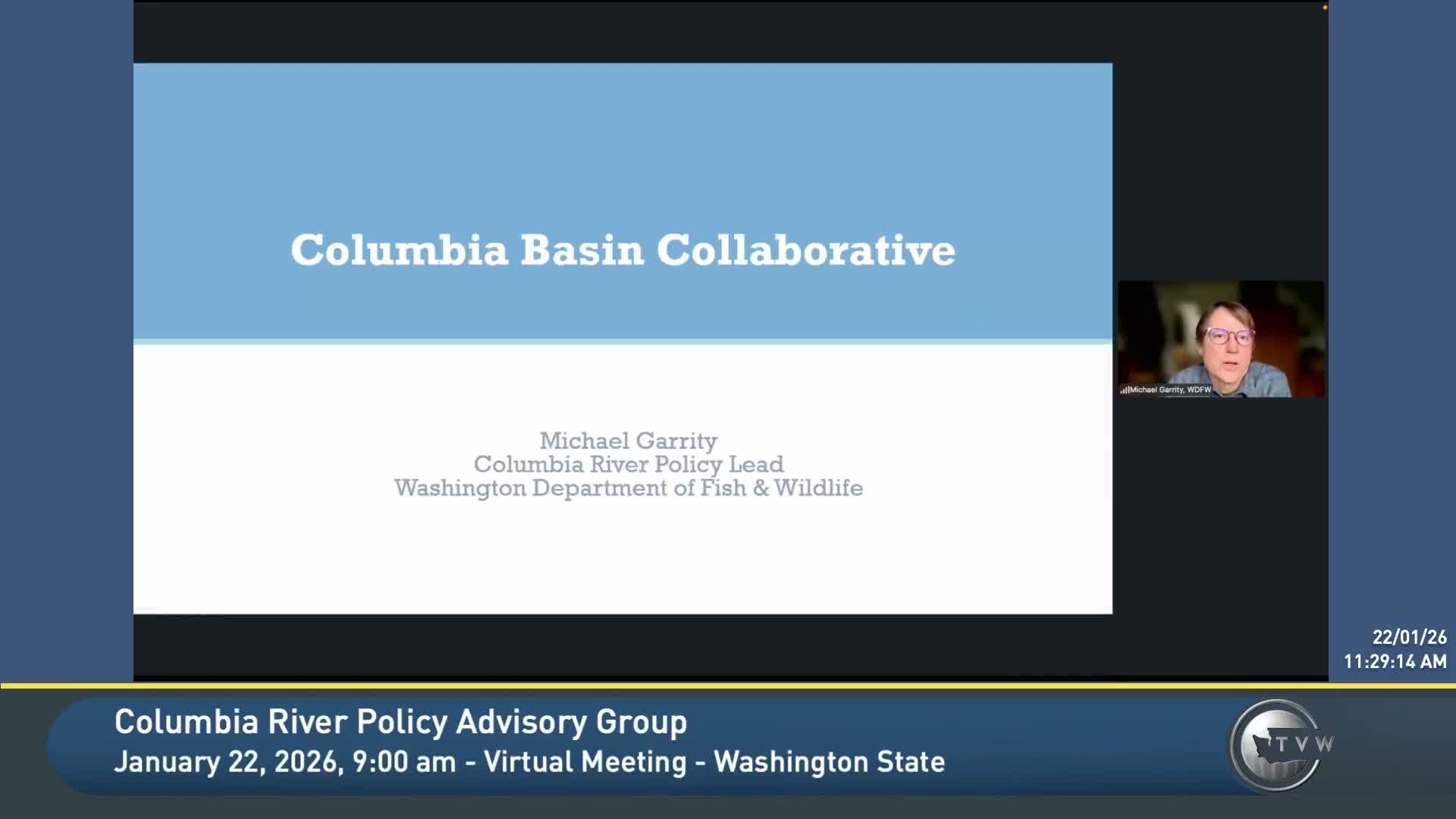
Garrity described the Columbia Basin Collaborative (CBC) as a multi‑stakeholder, consensus‑oriented forum charged with translating the Columbia Basin Partnership Task Force’s abundance goals into implementation recommendations and congressional appropriations requests. He said the CBC will prioritize areas where consensus is achievable (for example, hatchery maintenance, predator management, certain habitat actions and operations/maintenance backlogs) and will deliver recommended funding priorities to federal decision‑makers.
Phil and other tribal co‑managers outlined the Columbia Basin Restoration Initiative (CBRI), which developed through mediated conversations between two states and four Lower Columbia treaty tribes under the prior federal administration. Phil said the CBRI focuses on rapid, comprehensive measures to restore fish abundance while emphasizing tribal treaty and trust responsibilities, tribal co‑management authority, and community resiliency. He listed priorities including full funding for fisheries infrastructure and hatchery modernization, investments that increase flexibility for future system changes, and measures to address heat‑related mortality in the Lower Snake River.
The discussion included the ongoing federal litigation and mediation history: Daryl Olsen (Columbia Snake River Irrigators) had earlier told the group a U.S. district judge’s preliminary injunctive decision is expected in mid‑February and could cause immediate operational changes (spill, pool elevations, flow augmentation) with broad regional effects on irrigation and power costs.
Members and presenters stressed the need for cross‑agency coordination and “no regrets” investments to preserve options for future system changes. Several members asked about representation on the CBC (local governments and certain agricultural organizations); Garrity acknowledged gaps and said the CBC steering group can consider adjusting membership.
Why this matters: the initiatives address long‑running conflicts among federal agencies, tribes, states, irrigators and conservation groups. Funding allocations and federal policy decisions informed by CBC/CBRI work could shape operations, habitat investments and recovery trajectories for Columbia Basin salmonids.
Next steps: CBC reconvened after a pause and will meet in Portland (open observation) next week; the CBRI sponsors are continuing engagement with federal decision‑makers and stakeholders while seeking funding and implementation pathways.