Get Full Government Meeting Transcripts, Videos, & Alerts Forever!
Get email alerts on the Workforce Pell topic
No spam. Unsubscribe anytime.
Washington panel lays groundwork for implementing 'workforce Pell' while warning of limited time, staff and funding
Summary
State education and workforce officials told the Washington Workforce Board the new federal "workforce Pell" program (H.R. 1) gives states flexibility but presents tight timelines, staffing shortages and financial risks for colleges; officials urged a phased approach and close coordination with the governor's office and the Department of Education.
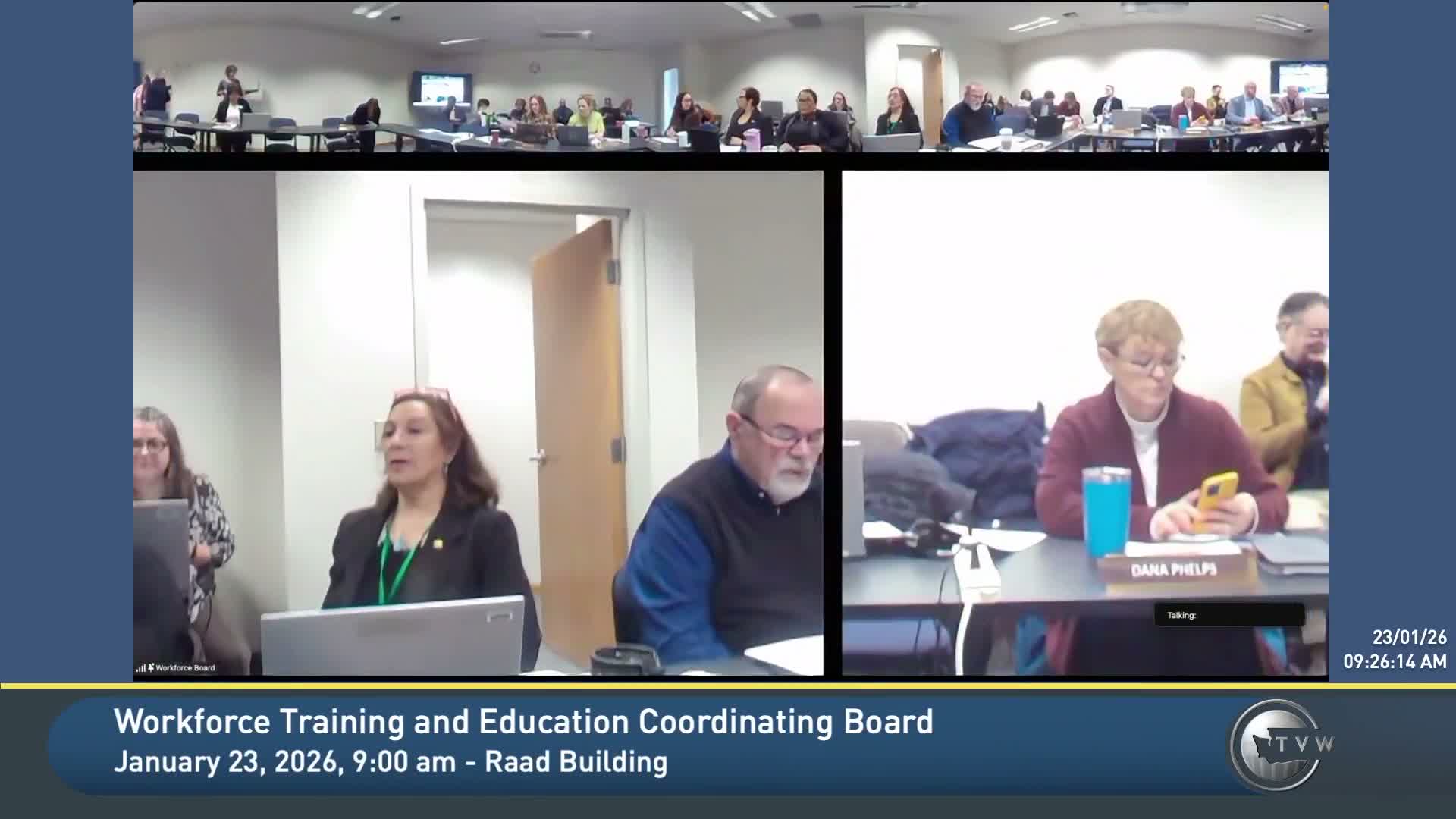
State education and workforce officials told the Washington Workforce Board that implementing the federal "workforce Pell" program will require careful coordination, a phased rollout and substantial technical work by colleges and state agencies.
Maddie, the board staff member serving as interim lead, said the governor will convene a steering committee that includes the board, Employment Security Department, the State Board for Community and Technical Colleges and other partners to provide recommendations to the governor about program criteria. Officials said final federal rules from negotiated rulemaking remain the key unknown but that Washington should be ready to act if the Department of Education moves quickly.
Marie Burwin, director of board services at the State Board for Community and Technical Colleges, outlined early eligibility and program rules she said are shaping state planning. The workforce Pell must be offered through Title IV‑eligible institutions; programs must generally have been offered for at least a year, run between about 150 and 599 clock hours (roughly 7.5–29.5 credits), and be at least eight weeks but under 15 weeks in length. She said registered apprenticeships are eligible, noting federal clarifications that clock hours need not be strictly consecutive for short apprenticeship credentials.
Shannon Venezia, director of student financial assistance, warned of practical hurdles for institutions. Each program will require individual approval by the Department of Education and institutions must document 70% program completion and 70% job placement within 180 days to meet federal benchmarks. Venezia said the Department of Education is rebuilding staff to review applications and that states should plan for a slow, resource‑intensive rollout. She also highlighted that workforce Pell is not a separate pot of money but part of federal Pell funds and that awards will be prorated by credits or clock hours.
Officials proposed a tiered approach: certify a small number of clearly eligible programs this first year and expand later. Jane and other board members pressed for safeguards to limit liability for colleges that disburse funds before federal approvals. Panelists said the governor’s office will coordinate outreach to business and labor stakeholders and the National Governors Association is assisting states with shared learning.
Next steps: staff will continue coordinating with the governor's office and partner agencies, finalize a written memo on process for the board, and convene public and technical stakeholders for feedback. The board did not adopt final policy at the meeting; members said they expect to return with more detailed recommendations as federal rules and state technical guidance emerge.