CalPERS reports $600 billion in assets, 83.7% funded; shifts to a total-portfolio investment approach
Loading...
Summary
Brad Pacheco read remarks for Miss Frost reporting CalPERS held over $600 billion in assets with an 83.7% funded status, highlighted investment gains (including strong private equity performance), and outlined steps to curb rising health premiums through risk-based contracts.
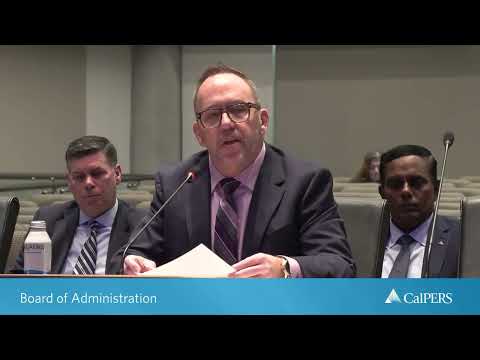
At a meeting of the California Public Employees Retirement System board, Brad Pacheco, reading comments on behalf of Miss Frost, said the system held more than $600 billion in assets and had a funded status of 83.7% as of Dec. 25. “As of December 25, we had over $600,000,000,000 in assets and our funded status was 83.7%,” he said.
Pacheco framed the numbers as the result of a decade of policy changes and data-driven decisions, including adjustments to the discount rate, actuarial assumptions, amortization policy and portfolio allocations. He recalled that when he arrived in 2016 CalPERS was about 65% funded and faced a risk of dropping below 50% in a severe downturn; the board’s subsequent reforms aimed to strengthen long-term sustainability.
The update also highlighted investment strategy changes. Pacheco said CalPERS will move to a total-portfolio approach, a coordinated investment strategy that treats the portfolio holistically rather than by siloed asset teams. He credited the investment team under Stephen Gilmore for the shift and said the system aims to produce better results “for the portfolio as a whole.” Pacheco also reported that CalPERS private equity outperformed the private-equity returns of 74 large pension funds tracked by Pensions & Investments last year.
Healthcare costs, he said, are the most common member concern. Pacheco reported an overall health premium increase of 8% this year, with HMOs up about 6%—an improvement from the double-digit increases of the previous two years. To curb costs and improve outcomes, CalPERS has negotiated contracts that place money at risk for plans that fail to meet targets on measures such as diabetes control, hypertension, colorectal cancer screening, maternity care and childhood immunizations.
Pacheco said the system’s health team, led by Don Moulds, will undertake a regional competition study to examine affordability drivers. He also noted that CalPERS customer-service teams met with almost 98,000 members last year and recorded a 95% satisfaction rating.
Pacheco closed by thanking board members and stakeholders and marking Miss Frost’s 10th anniversary with the organization. The presiding Unidentified Speaker also congratulated Miss Frost.