Committee recesses fast-tracked homestead cap increase after hours of questioning on who benefits and outreach
Loading...
Summary
Committee members pressed the administration on a proposal to raise Baltimore's homestead tax credit cap from 4% to 6%—Finance said the change would be paired with a residential rate cut, producing a net $3.8M cost to the city but average homeowner savings; members asked for address-level impact data, hold-harmless fixes for ~400 taxpayers and clearer outreach plans. The hearing was recessed for further work.
The Budget & Appropriations Committee on Feb. 23 recessed consideration of bill 26-0151, the administration's proposal to raise the local homestead tax credit cap from 4% to 6% and to pair that change with a targeted residential rate reduction.
Desiree Leckey of the Law Department certified the bill for form and legal sufficiency. Bob Sanemi, deputy finance director, laid out the administration's three-part tax relief strategy and the rationale for the proposed change. Sanemi said the cap increase would align Baltimore more closely with other Maryland jurisdictions and that if paired with a 5-cent reduction in the effective residential rate (from $2.04 to $1.99) the net fiscal impact in fiscal 2027 would be about a $3.8 million reduction in city revenue. Sanemi summed the tradeoff bluntly on the record: "This is a net cost to the City." He said the administration's modeling shows roughly 64,000 of the city's 75,000 residential homeowners would see savings under the combined package, with an average fiscal-27 savings of about $58 per homeowner; 10,807 households would see no impact and 437 taxpayers would pay more under the immediate model.
Council members pressed senior staff on several fronts. Councilman Schleifer and others asked for address-level projections across multiple future years to assess how long-term, legacy homeowners could be affected by compounding assessment growth. Sanemi said the administration had modeled current assessments and identified an unexpected group of about 400 taxpayers who would pay more because of a quirk in how the targeted homeowners tax credit was calculated on improvement value rather than total assessment; he said a technical, separate bill to correct that situation and hold those taxpayers harmless is being drafted and would cost about $9,000 to implement. "We were surprised that some folks popped out," Sanemi said; the administration characterized the correction as a simple technical fix.
Several council members criticized the bill's fast timeline and asked whether the other pieces of the administration's package'outreach, state-level eligibility expansions and payment-plan proposals'were guaranteed if the committee advanced the cap change. Sanemi and administration representatives said the city-controlled items (rate reduction and outreach work) would proceed with passage, but state changes (for example, expanding eligibility for a separate state homeowners tax credit) could not be guaranteed. Alice Kennedy, housing commissioner, described existing DHCD outreach efforts and said the department does not yet have additional staff dedicated specifically to this immediate legislative timeline.
Members also asked about equity of benefit. Sanemi's benchmarking showed the homestead cap benefit historically skews toward higher-value neighborhoods because higher assessed values produce larger dollar benefits; the administration's stated policy rationale for the combined package is that a modest increase in the homestead cap, paired with a residential rate reduction and expanded outreach, would yield net, broadly-distributed homeowner relief while keeping the city competitive regionally.
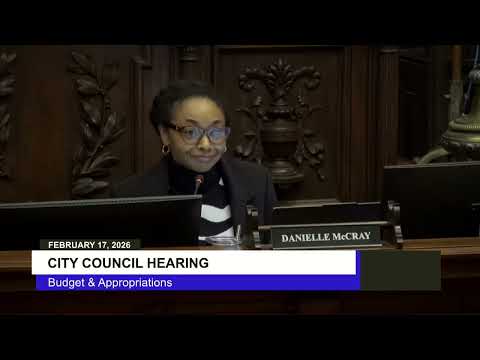
Chair Danielle McCray recessed the hearing to allow agencies and the administration to provide additional data and technical fixes; no committee vote was taken. The administration committed to follow up with address-level and modeling data requested by members and to return the hold-harmless technical legislation for the small group that would otherwise pay more.