Get Full Government Meeting Transcripts, Videos, & Alerts Forever!
Get email alerts on the Budget topic
No spam. Unsubscribe anytime.
Goochland superintendent outlines needs-driven FY26 budget, warns of nearly $2 million shortfall
Summary
Superintendent Dr. Armstrong presented a needs-based FY26 budget with targeted class-size limits, proposed two elementary teachers, and flagged health-insurance and collective-bargaining cost pressures that leave the division a shade under $2 million short of balanced funding without a confirmed local transfer.
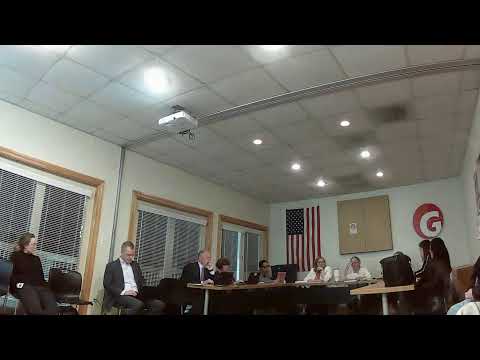
Goochland County Public Schools Superintendent Dr. Armstrong told the school board during a budget workshop that staff will present a legally required balanced FY26 budget next week but that the division currently faces a shortfall of “a shade less than $2,000,000” if a local transfer does not materialize.
Dr. Armstrong framed the work as needs-based and said staff would both present a balanced budget and highlight the additional items they would pursue if new funds arrive. “We will present a balanced budget, balanced either to a local transfer number if we get it between now and then or balanced to a flat funding amount,” he said, adding that any extra funds would be used to address prioritized needs.
The presentation included a detailed enrollment model for the division’s three elementary schools (listed in materials as Bird, GES/Goodrich Elementary School and Randolph) and a set of class-size targets: 15–19 students in kindergarten–first grade, 16–20 in grades two–three, and 17–21 in grades four–five. Using those projections, staff recommended adding two elementary teachers — an additional second-grade position at Randolph and an additional kindergarten section at Goodrich — to keep classes within the division’s target ranges.
Dr. Armstrong also described a list of other staffing priorities meant to support strategic goals, including improved special-education support, a full-time encore (specials) teacher at each elementary, and expansion of nurse-aide roles. He provided an estimate that the additional staffing needs would total nearly $850,000 in the request before the board.
Benefits and insurance were a second major cost pressure discussed at length. Staff said a benefits consultant’s recent analysis, coupled with a state decision to stop covering certain weight-loss drugs, narrowed the likely premium increase to around 10 percent, with a final figure expected in mid-February. “Our consultant feels pretty confident that we should land around this 10%,” Stephanie Weiss summarized during the presentation.
Board members raised questions about extracurricular stipends and Career and Technical Education (CTE) staffing. Staff confirmed increased stipends to formalize long-volunteer roles in robotics and athletics and clarified that two new CTE positions under consideration would be full-time (11-month contracts were noted for those positions).
Dr. Armstrong also noted capital and facilities requests that have been moved into the operating budget in recent years, including LED flasher upgrades, bus replacements, sidewalk repairs and parking-lot maintenance. Staff estimated roughly $300,000 for a set of maintenance and capital items that, combined with other changes, would represent about $302,000 in additional operating capital this year compared with the prior plan.
The superintendent raised a broader fiscal risk: potential costs tied to collective bargaining. He told the board that counsel (Sands Anderson) estimated a 3-year collective-bargaining package for teachers could amount to between $2.5 million and $4 million over three years for teacher compensation alone; a board member’s illustrative math applying a 20 percent figure to the division’s stated salary-and-benefits base of about $28 million yielded a high-end illustrative exposure of roughly $5.6 million annually — presented as a worst-case estimate rather than a forecast.
Dr. Armstrong closed by reiterating the timeline for the budget process: the division will present a balanced budget at next week’s regular business meeting, hold a public hearing on Feb. 17, seek board approval Feb. 24, and present to the board of supervisors on March 3. If reductions become necessary, he said his priorities would be to preserve employee raises as much as possible and to share the cost of a premium increase rather than eliminate raises.
Votes at a glance
- Motion to adopt meeting agenda: moved by Angela Allen, seconded by Michelle Maxwell — approved by voice vote (ayes). - Motion to approve revised school board calendar (shifted Feb. 16 and Mar. 20 from PD/student holiday to instructional days): moved by Miss Robinson, seconded by Miss Forsy — approved by voice vote (ayes). - Motion to enter closed session (personnel and legal briefing under Virginia code): moved/seconded and approved by voice vote (ayes).
What happens next
Staff committed to present a balanced budget next week with the numerical details the supervisors requested, to show dollar amounts for items moved to the “tier 3” list, and to return with a final insurance-premium number in mid-February. The board moved into closed session after the workshop and will certify the closed session as required by state law.