
Pflugerville finance committee orients new members, outlines budget calendar and review role
Get AI-powered insights, summaries, and transcripts
Sign Up Free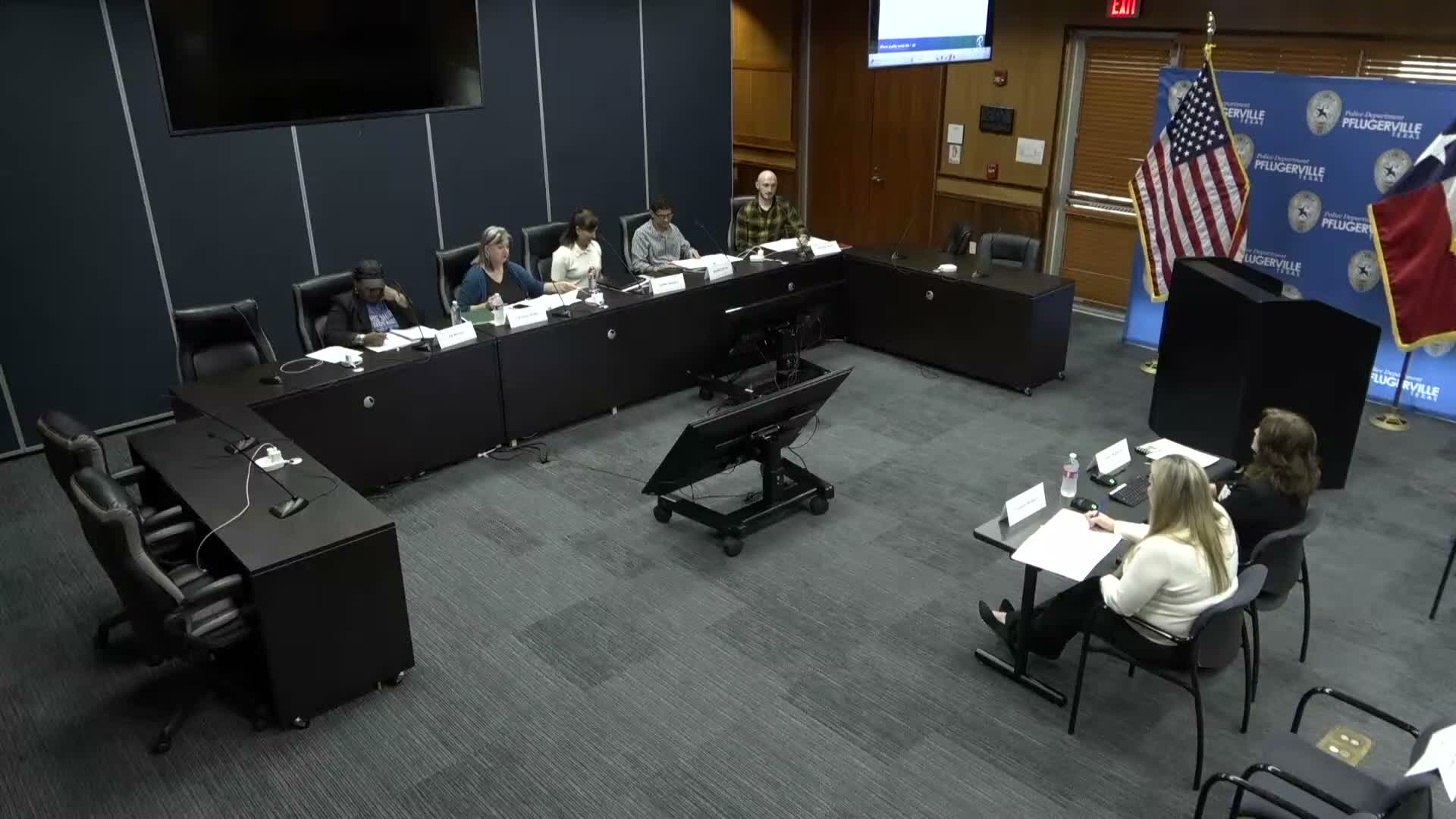
Summary
At its orientation meeting, the Pflugerville Finance & Budget Committee reviewed its charge to vet the city budget, the budget calendar and resources, and communication rules under the Texas Open Meetings Act; staff warned of a roughly $1 million loss from personal property tax exemptions and detailed deadlines ahead of the proposed budget on July 31.
The Pflugerville Finance & Budget Committee met for an organizational session that outlined the committee’s advisory role, reviewed the budget calendar and materials, and set expectations for how members should communicate between meetings.
Tracy Waldron, the city’s finance director, told members the committee’s primary responsibility is to review the proposed budget and make written recommendations to the City Council. “The biggest function of this board is to [review] the budget and recommendation,” Waldron said while describing resources on the city’s finance web page and the city charter sections that guide the annual budget process.
Waldron walked members through the budget calendar and key deadlines. She said the proposed budget will be produced on July 30 and delivered July 31; the FAB committee is scheduled to meet on Aug. 19 to form its formal recommendations, and the council must adopt a budget by Sept. 30. “The council must adopt the budget by ordinance… and it has to be adopted by September 30,” Waldron said.
On revenue projections, Waldron described recent volatility: sales tax growth has flattened, and development-fee collections fell from about $4 million in 2023 to roughly half that amount in 2025. She added a legislative change affecting personal property exemptions will reduce revenues. “We are actually looking at about 1,000,000 dollars in property tax exemptions that we’re gonna lose,” Waldron said, and she told the committee preliminary numbers from the appraisal district would arrive in April.
The committee discussed how staff prepares the budget: departments begin with a base budget that strips out one-time capital and staff uses ClearGov software to integrate personnel, capital projects and the CIP into the budget book. Waldron said the city’s general fund has a 25% policy for fund balance and that staff typically aim a bit higher to support bond ratings.
Members asked how the committee’s recommendations are transmitted to council and what they can do between meetings. Waldron said recommendations should be prepared in writing and included in the FAB meeting summary that goes to council. She cautioned that members must follow the Texas Open Meetings Act and advised them to route questions through the staff liaison so staff can consolidate public responses. “You just have to follow the open meetings act rules,” Waldron said.
Committee members introduced themselves and identified topics they plan to follow, including sales tax forecasting, the CIP and the new recreation center. Staff flagged upcoming fee reviews (recreation fees and water and wastewater rates) that will be presented in June and July after vetting by other advisory boards, and staff said fee ordinances typically require two readings.
Two routine motions concluded the meeting: the committee approved the minutes from the previous meeting (motion by Christine Bailey; second by Jonathan; voice vote) and later voted to adjourn (motion by Christine Bailey; second by Ronald Cintron; voice vote). The FAB committee’s next substantive meeting will focus on revenue items in April, with additional workshops scheduled in June and July ahead of the proposed budget delivery in late July.
For follow-up, staff said they will provide preliminary appraisal-district estimates in April and that members should review the posted budget materials and recorded workshops to prepare for the summer workshops and the August recommendation meeting.