
Committee advances bill to bar certain employers from requiring genetic‑based vaccines
Get AI-powered insights, summaries, and transcripts
Subscribe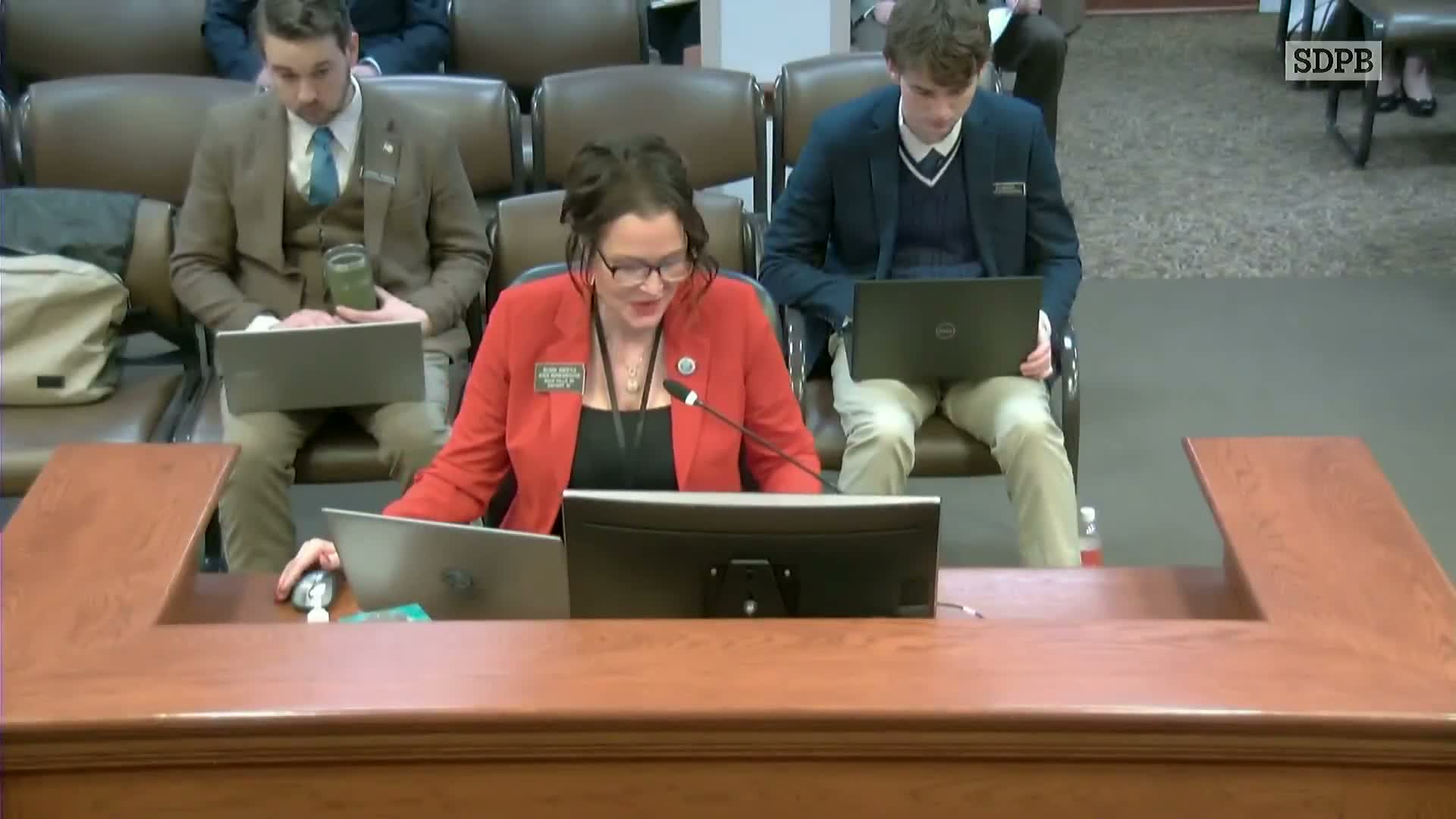
Summary
The House Health and Human Services Committee voted to send House Bill 11‑63 — which would prohibit many entities from requiring genetic‑based vaccines while enumerating specific carve‑outs — to the floor with a due‑pass recommendation after lengthy proponent and opponent testimony from health systems, businesses and advocates.
Pierre — The House Health & Human Services Committee voted 8‑5 to send House Bill 11‑63, a measure that would broadly bar certain persons from requiring genetic‑based vaccines, to the House floor with a due‑pass recommendation.
Representative Andara (District 10), the bill’s sponsor, said the measure carefully lists exclusions — including the South Dakota National Guard, existing childhood vaccination schedules, hospital personnel, the Board of Regents and community support providers — and is intended to protect individual choice. “I am not here as an anti‑vaxxer or a vaxxer. I am here to share facts, and I am here to ensure South Dakota does its part to protect the rights of our citizens to choose what they put in their bodies,” the sponsor said.
Proponents cited scientific dissenters and anecdotal accounts of adverse events and court awards in other states. John Cooney (Sioux Falls) and others recounted personal stories and named outside researchers who question the safety and efficacy of mRNA or so‑called genetic vaccines.
Opponents included a broad array of health systems (Avera, Sanford, Monument Health), the South Dakota Chamber and hospital associations, which argued the bill would jeopardize patient safety, interfere with employment decisions, and create conflicts with CDC/CMS guidance and accreditation standards. Avera’s Kim Alsom Reiser and other health officials asked whether carve‑outs adequately protect long‑term care, cancer centers and community pharmacies.
Committee questions focused on carve‑outs, effects on students and clinical placements, legal interactions with federal requirements and how immunocompromised patients would be protected. Opponents warned the bill’s carve‑outs were too narrow for real‑world clinical settings.
After debate, the committee adopted a do‑pass recommendation. The bill now moves to the House floor for further consideration. The record includes extensive proponent and opponent testimony and multiple online comments.