Get Full Government Meeting Transcripts, Videos, & Alerts Forever!
Get email alerts on the Juvenile Sentencing Option B topic
No spam. Unsubscribe anytime.
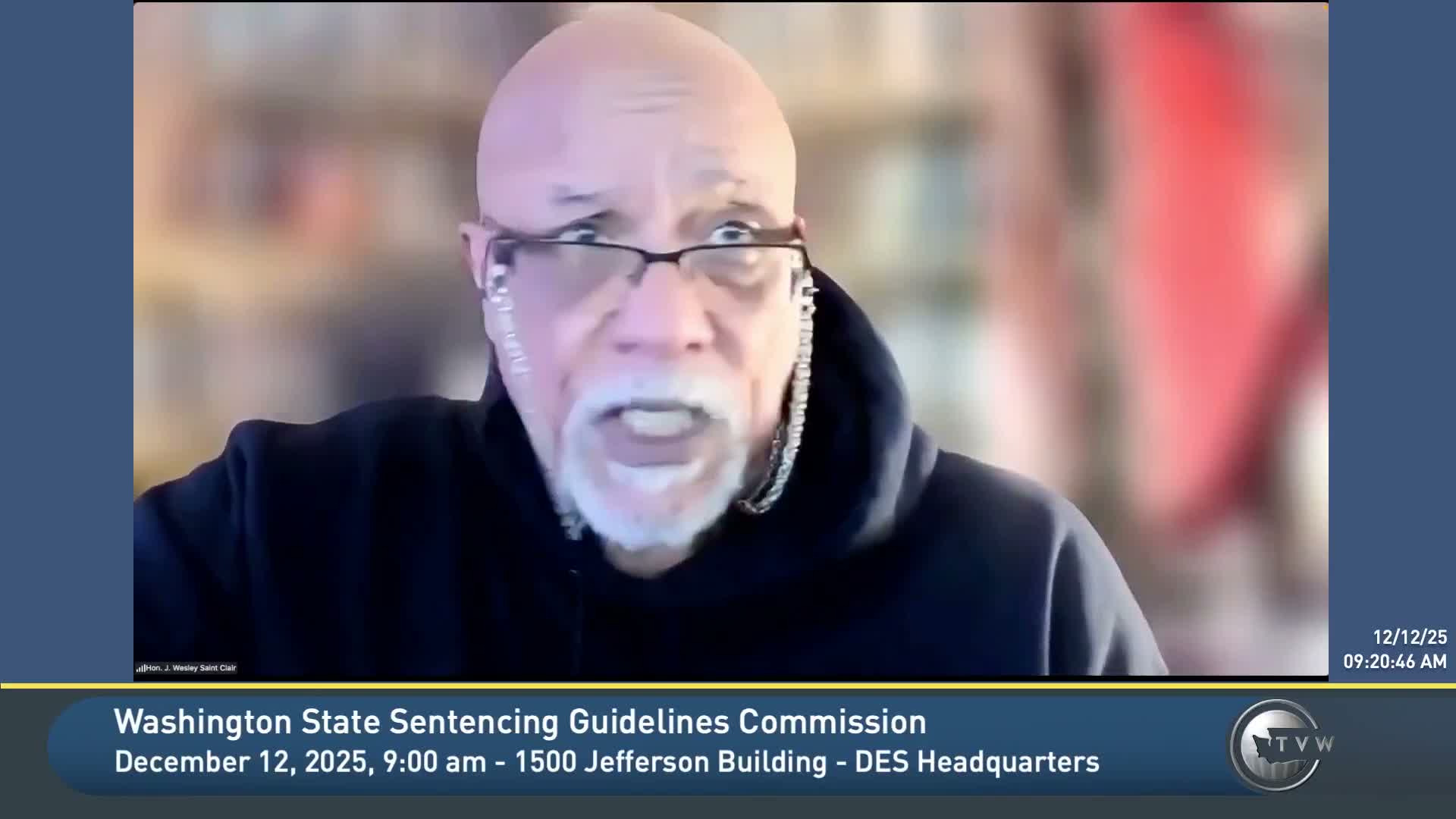
Sentencing Guidelines Commission debates widening 'Option B' for juveniles, tables action for later
Summary
The Sentencing Guidelines Commission reviewed juvenile committee recommendations to loosen limits on the 'Option B' suspended-disposition alternative, including allowing multiple Option B dispositions and expanding eligibility for some firearm and assault offenses. Members raised concerns about facility capacity, public safety, and statutory ambiguity and agreed to pause final votes.
The Sentencing Guidelines Commission met Dec. 12, 2025, to consider juvenile committee recommendations that would broaden when judges may impose an "Option B" suspended-disposition sentencing alternative for juveniles. The commission heard data from a subcommittee analysis covering fiscal years 2005–2024 and debated changes ranging from permitting multiple Option B dispositions to clarifying statutory language that currently creates uneven application across counties.
Lauren (juvenile committee presenter) summarized the data used in the analysis and the committee's proposals. She said the full dataset initially identified 756 cases comprising 955 offenses with Option B dispositions; after applying exclusion rules the analytic sample included 559 cases and 630 offenses. The presentation said Robbery 2 and Assault 2 were the offenses most frequently receiving Option B in the period studied, and that by fiscal year 2024 Option B accounted for roughly 3% of all juvenile dispositions statewide. Lauren cautioned that outcome studies comparing Option B youth with other probation populations do not exist, so the committee cannot yet conclude how Option B affects recidivism or long-term outcomes.
The juvenile committee advanced several recommendations. Recommendation 1 would permit multiple Option B dispositions (removing or loosening a statutory cap adopted in 2018) and restore judicial discretion to impose a subsequent Option B in appropriate cases. Supporters, including Ramona Brandes, said the change recognizes developmental change and differences in local services; Brandes noted historical multiple-Option-B use was rare before the 2018 cap. Opponents, including representatives speaking for prosecuting attorneys (WAPA), warned that many counties lack community services essential for Option B to succeed and urged legislative caution.
Recommendation 2 would not alter eligibility criteria but would add a statutory or guidance framework identifying factors judges should consider when deciding on a second or subsequent Option B. The proposed factors include offense severity and role, harm to victims, prior criminal history and success of earlier rehabilitative attempts, availability and appropriateness of programming (e.g., functional family therapy, MST, IACT), developmental maturity and stability of living situations, and whether time elapsed or other changes reduce reoffending risk.
Recommendation 3 would make unlawful possession of a firearm (described in discussion as UPF under RCW 13.41.093 and related statutes on juvenile firearm adjudications) option-eligible in some circumstances. Presenters noted statutory complexity: unlawful possession is generally a juvenile category C offense and only becomes JR-eligible with multiple prior adjudications; theft of a firearm and possession of a stolen firearm are already classified at higher juvenile categories (category B) and are presently eligible. Prosecutors and some members urged caution, noting that possession cases are often charged alongside theft or stolen-firearm counts, which already prevents Option B use, and that evidence on firearm-focused programming and outcomes is limited.
Recommendation 4 sought to make Assault 2 eligible for Option B for youth 14 and older and to make Robbery 1 eligible regardless of age. Supporters framed this as a way to reduce racial disproportionality in juvenile detention. Opponents, including Representative Davis and several county prosecutors present, cautioned that Assault 2 includes heterogeneous conduct (from minor physical contact to strangulation) and that plea practices can obscure the underlying conduct, so expanding eligibility without prongspecific limits could risk public-safety harms.
The committee also flagged an internal statutory inconsistency: one provision within the Option B statute refers to "class" (adult felony class language) rather than the juvenile "category" scheme used elsewhere, producing conflicting interpretations across jurisdictions. The juvenile committee recommended the legislature clarify whether the statute should reference "category" (juvenile disposition categories) consistently.
After robust debate — including concerns about overcrowding and treatment availability at the Green Hill youth facility and requests for more data and legal review — several members said they were not prepared to vote on the recommendations at this meeting. The chair and multiple members asked colleagues to review the meeting recording and materials, refine language and proposed guardrails, and bring suggested edits to the commission ahead of the legislative session. No final policy changes were approved at the Dec. 12 meeting.
Commission business included a procedural vote to approve prior minutes (the chair announced the motion carried with abstentions recorded); the chair also announced they had tendered their resignation to the governor and that Commissioner Minster would serve as interim chair until a gubernatorial appointment.
Next steps: the juvenile subcommittee and staff will circulate draft language and additional analyses, and the Sentencing Guidelines Commission will revisit the proposals at future meetings during the legislative session.