Get Full Government Meeting Transcripts, Videos, & Alerts Forever!
Get email alerts on the Paul Wright Pardon topic
No spam. Unsubscribe anytime.
Clemency board recommends denial of Paul Wright’s pardon after victim’s testimony
Summary
The Washington Clemency and Pardons Board voted 4-0 on Dec. 12, 2025, to recommend the governor deny Paul Wright’s petition for a pardon, citing victim testimony and the board’s finding that extraordinary circumstances were not shown.
The Washington Clemency and Pardons Board voted unanimously on Dec. 12, 2025, to recommend that Gov. Jay Inslee deny an unconditional pardon for Paul Wright, who was convicted of felony murder in 1987.
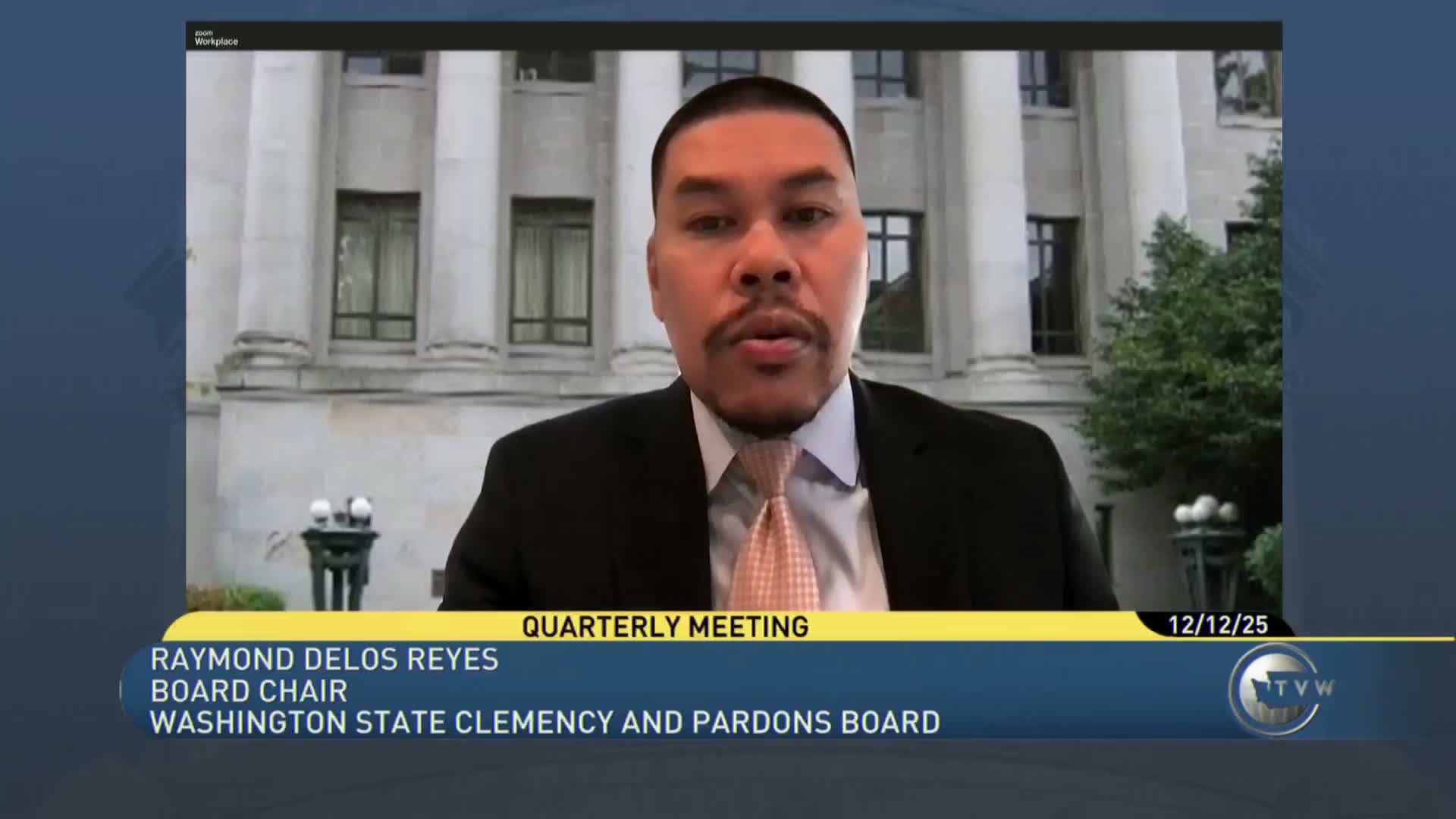
Chair Raymond Delas Reyes said the panel had heard Raleigh’s testimony and read the submitted materials but ‘‘I do not find extraordinary circumstances here that I would recommend a pardon on your behalf,’’ signaling the board’s view that the petition did not meet the standard for clemency. The recommendation is advisory; the governor retains final authority.
Wright, represented by attorney Joseph E. Bringman, told the board he sought ‘‘an unconditional pardon for my 1987 conviction for felony murder’’ to remove legal disabilities that prevent him from serving as his mother’s guardian and from traveling for international advocacy. Bringman argued Wright has ‘‘been fully rehabilitated’’ and cited supportive letters and precedents of pardons and commutations for people convicted of murder.
King County deputy prosecuting attorney Christina Miyamasu told the board her office’s position was not that a murder conviction automatically bars clemency but that the prosecutor’s review emphasized the lasting impact on the victim’s family and the specific barriers the petitioner faces. She asked the board to hear from the victim to understand that impact directly.
Bailey Cade, who identified herself as Curtis Smith’s partner and the mother of his child, disputed Wright’s repeated public descriptions of Smith as a ‘‘drug dealer’’ and described decades of trauma, including a traumatic brain injury and ongoing PTSD. ‘‘Curtis was not a drug dealer,’’ she said, and testified she had not received what she considered a true apology or full accountability from Wright. Her testimony drew repeated acknowledgments from board members about the power of victim impact when weighing clemency petitions.
Board members praised Wright’s post-release advocacy but said that the statutory and discretionary standard for a pardon requires a showing of extraordinary circumstances and that victim impact and the record did not support a favorable recommendation in this case. After deliberation, Chair Delas Reyes moved to recommend denial; the motion was seconded and passed 4-0.
Because the board’s recommendation is advisory, the governor may accept or reject it. The board closed the Wright hearing and recessed before continuing with other matters.