Get Full Government Meeting Transcripts, Videos, & Alerts Forever!
Get email alerts on the Commutation Combslast topic
No spam. Unsubscribe anytime.
Clemency board denies Travis Combslast’s petition after victim statements; vote 2–1
Summary
After extensive testimony from the petitioner, supporters and the Gagnon family, the Clemency and Pardons Board voted 2–1 on Dec. 12, 2025, to deny the commutation petition of Travis Combslast, citing the seriousness of the 1996 murder and persistent victim-family trauma.
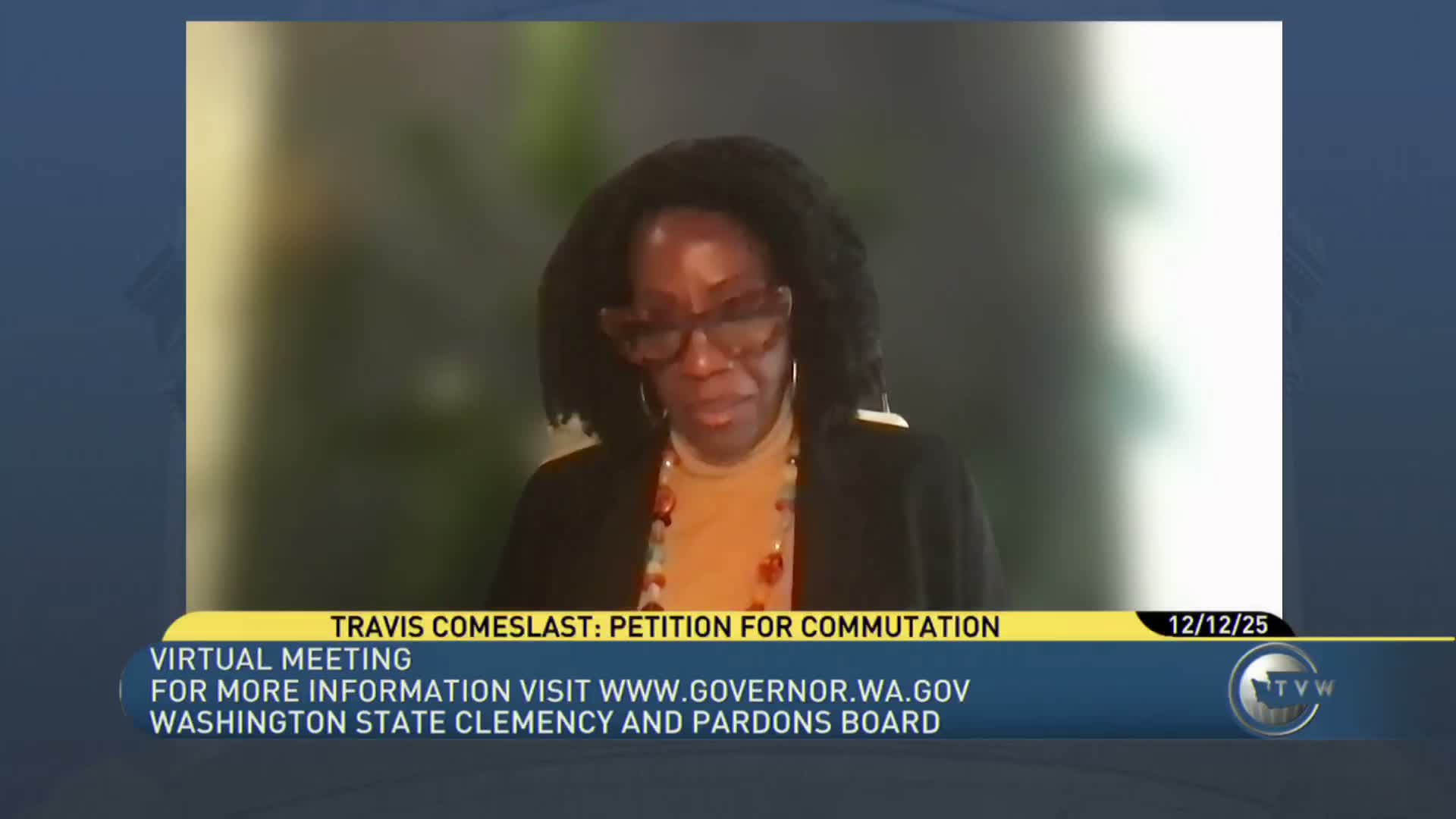
The Washington State Clemency and Pardons Board on Dec. 12, 2025, denied the commutation petition of Travis Combslast by a 2–1 vote after hearing testimony from the petitioner, support witnesses and multiple members of the victim’s family.
Counsel for Combslast described his decades of programming, leadership in prison cultural and rehabilitation efforts, recent speaking engagements and advocated that changes in sentencing law and Combslast’s age and record of institutional work warranted commutation. Combslast told the board he is ‘‘truly remorseful’’ and described decades of community work and plans for trauma‑informed and reentry education.
Spokane County prosecutor Preston McCollum urged the board to reject the petition, emphasizing the gravity of the 1996 first‑degree murder, the firearm aggravator, the judge’s high‑end sentence and the continued trauma to the victim family. McCollum said the sentence remains proportionate and stressed victims’ interest in finality.
Members of the Gagnon family spoke in opposition: Barbara Gagnon recounted the killing in her home and said the petition again retraumatizes the family; Symetria Gagnon described lifelong loss and asked the board to deny clemency; family friend Whitney Kelly urged the board to maintain the sentence and said parole would send the wrong message to youth.
During deliberation, Board Member Aline Flower said she was impressed by Combslast’s remorse and prison leadership and described law changes that affect sentencing calculations, but Chair Rhonda Salvesen and Board Member Kazi Joshua emphasized the victims’ pain and concerns about community safety and finality. Chair Salvesen moved to deny the petition; Joshua seconded and the motion passed 2–1. The board noted Vice Chair Baldwin, who was absent, will review the hearing and provide a vote later for the governor’s record.
The board’s recommendation to deny will be transmitted to the governor; the governor retains final authority.