Get Full Government Meeting Transcripts, Videos, & Alerts Forever!
Get email alerts on the Return To Work topic
No spam. Unsubscribe anytime.
Department expands return-to-work tools: ERTW, WorkSource partnerships and skill-enhancement training
Summary
LNI described a continuum of return-to-work services—early employer-facing consultation, WorkSource vocational counselors, private vocational referrals and a new skill enhancement benefit (2024 law) to support foundational training and credentials apart from formal retraining caps. Staff reported early positive outcomes and plans to use occupation-coded wage data for outcome tracking in 2026.
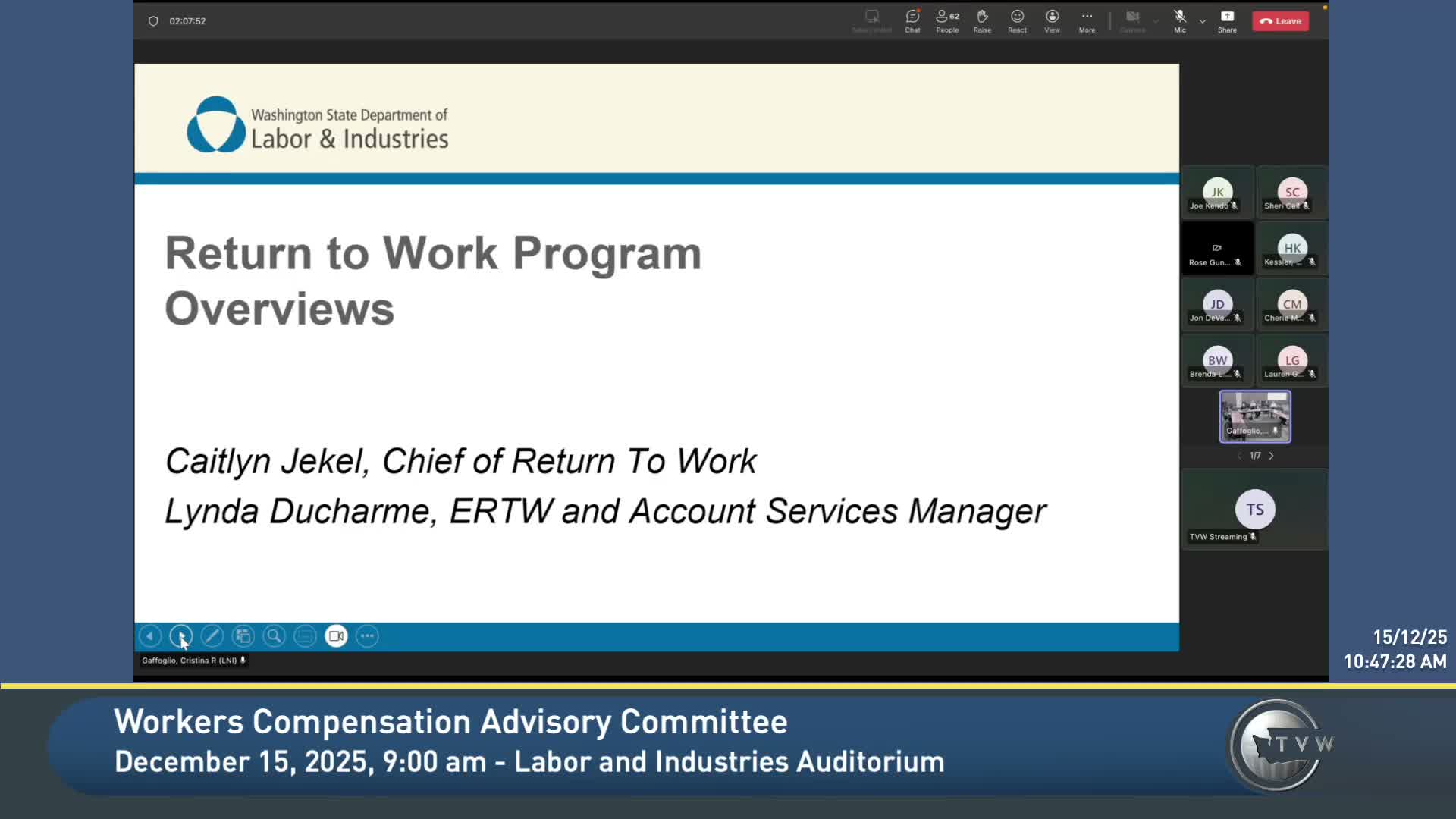
Caitlin Jekyll and Linda Ducharme presented the department's return-to-work continuum and programs intended to keep workers attached to employment. They described three complementary elements: early return-to-work (ERTW) employer consultation (job banks, light-duty planning), WorkSource co-located vocational counselors (12 sites statewide, ~1,200 workers assisted in last 12 months), and private-sector vocational rehabilitation referrals (about 7,500 referrals last year for claims showing risk of long-term disability).
They highlighted a 2024 law that authorized skill enhancement training: a voluntary program, statutorily funded with its own annual dollar cap separate from formal retraining, allowing workers to pursue foundational skills (English language, adult basic education) or credentialing (HAZMAT, forklift, phlebotomy) earlier in vocational recovery. Caitlin said early data show workers using the benefit for short-term credentials and that the department will use improved occupation-coded wage reporting (expected operational in early 2026) to track long-term occupational outcomes after training.
Why it matters: staff said earlier, flexible interventions help keep workers motivated and improve the likelihood of sustained employment; the programs also help employers retain skilled workers. The department asked the committee for continued stakeholder engagement on program rollout and data-sharing improvements.