Get Full Government Meeting Transcripts, Videos, & Alerts Forever!
Get email alerts on the Financial Overview topic
No spam. Unsubscribe anytime.
LNI reports net loss for quarter; contingency reserve rises on investment gains
Summary
Kim Hurley reported a net loss of $196 million for the quarter (July–Sept 2025), insurance operations loss of $480 million, premiums earned ~$612 million and benefits incurred ~$991 million; investment gains increased the contingency reserve to about $4.989 billion (26% of liabilities).
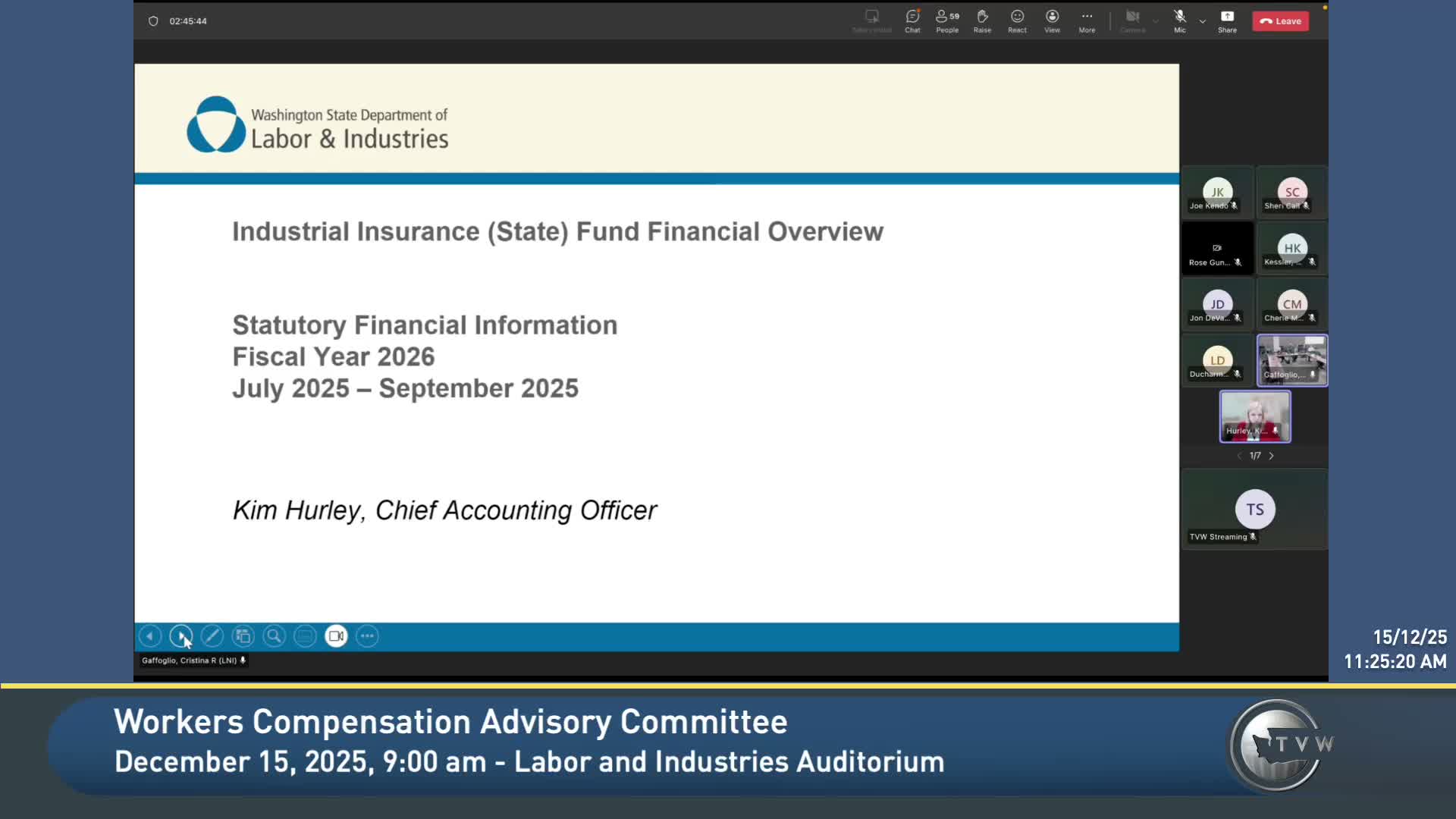
Kim Hurley presented the industrial insurance state fund financial overview for the quarter ending Sept. 30, 2025. She said insurance operations produced a $480 million loss: premiums earned were approximately $612 million and benefits incurred were about $991 million. Offsetting investment results produced $184 million in investment income, which partially offset the operating loss and left a net loss for the quarter of $196 million.
Hurley explained the combined contingency reserve rose by $63 million to about $4.989 billion (about 26% of liabilities) due in part to unrealized investment gains. She described constituent components: the accident account showed unfavorable development concentrated in time-loss and total permanent disability, and the medical-aid account held a strong contingency ratio (~75% of liabilities). Key performance ratios showed a combined ratio of roughly 178.3% and an operating ratio of about 147.6% for the quarter.
Committee members asked what is included in "other revenues and expenses"; Kim replied it includes fines and penalties, interest on past-due accounts, self-insurance reimbursements and non-insurance programs such as DOSH safety and health activities. She also described statutory reporting adjustments that remove certain illiquid assets from contingency-reserve calculations.
Why it matters: the figures affect conversations about fund solvency, legislative proposals that touch fund operations and potential budget priorities (for example, funding claims units and system modernization). The department said it will continue monitoring trends and brief the committee after the governor's budget decision.