Get Full Government Meeting Transcripts, Videos, & Alerts Forever!
Get email alerts on the Legislation topic
No spam. Unsubscribe anytime.
Board backs legislative outreach for nursing‑education fixes and college‑grant expansion
Summary
Board members gave general support to two draft bills: one seeking to streamline nursing‑program approval by relying on national accreditation (with an 80% NCLEX pass‑rate safeguard), and another to extend the Washington College Grant to some short‑term workforce certificates pending rulemaking; members raised implementation and fiscal questions.
At its Dec. 15 meeting the State Board for Community and Technical Colleges reviewed two draft legislative proposals and authorized staff to continue stakeholder outreach and rulemaking work.
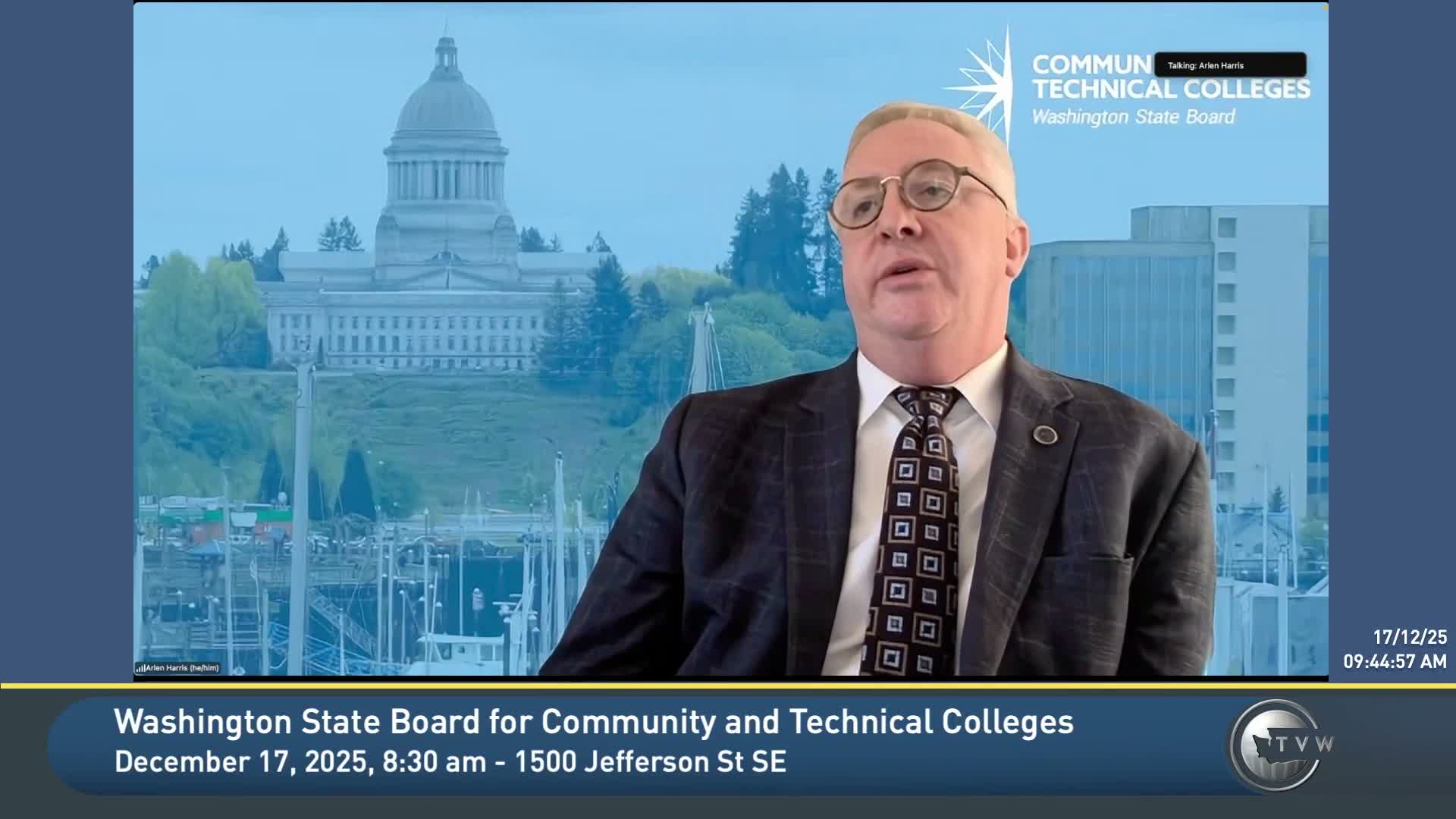
Arlen Harris presented a draft nursing‑education bill that would rely on national nursing accreditation documentation for state program approval and reduce certain educator credential requirements (for example, removing a PhD requirement for simulation directors), while allowing the Washington Board of Nursing to intervene if an institution’s NCLEX pass rate falls below 80%. Harris described an example in which a program took eight years to gain approval and said the proposal aims to create more efficient pathways into nursing programs. “We’re looking for efficiencies in that process,” he said.
Board members acknowledged the bill’s possible controversy and the need to continue conversations with the Board of Nursing, labor groups and employer partners. Joyce, representing presidents, said the draft has broad support among colleges frustrated by approval timelines.
The second draft would extend the Washington College Grant to eligible post‑secondary non‑degree and short‑term credential programs (potentially including programs shorter than the workforce Pell threshold). The proposal would require the state board to define eligible programs through rulemaking and, at staff request, include consultation with the Student Achievement Council.
Members asked practical questions about fiscal exposure if eligibility expands faster than the Washington Education Investment Account can fund grants, and how the state would prioritize aid if demand exceeds supply. Staff explained the College Grant functions as an entitlement during the active year and that legislators and OFM typically manage fiscal exposure through eligibility tweaks and future biennial funding adjustments.
The board signaled general support to continue advocacy and stakeholder engagement; both bills received no formal board vote but staff were directed to continue refinement and outreach.