Get Full Government Meeting Transcripts, Videos, & Alerts Forever!
Get email alerts on the Tuition topic
No spam. Unsubscribe anytime.
State board sets 2026–27 tuition ceilings: operating fee +3.3%, building fee +2.3%
Summary
The State Board for Community and Technical Colleges adopted statutory maximums for 2026–27 tuition components — a 3.3% cap on the resident operating fee, 2.3% on the building fee and a 3.2% cap on services and activities — and discussed sensitivity to enrollment impacts and international‑student treatment.
The State Board for Community and Technical Colleges on Dec. 15 approved maximum 2026–27 tuition increases set under state law, adopting an operating‑fee cap of 3.3%, a building‑fee adjustment of 2.3% and a services‑and‑activities cap of 3.2%.
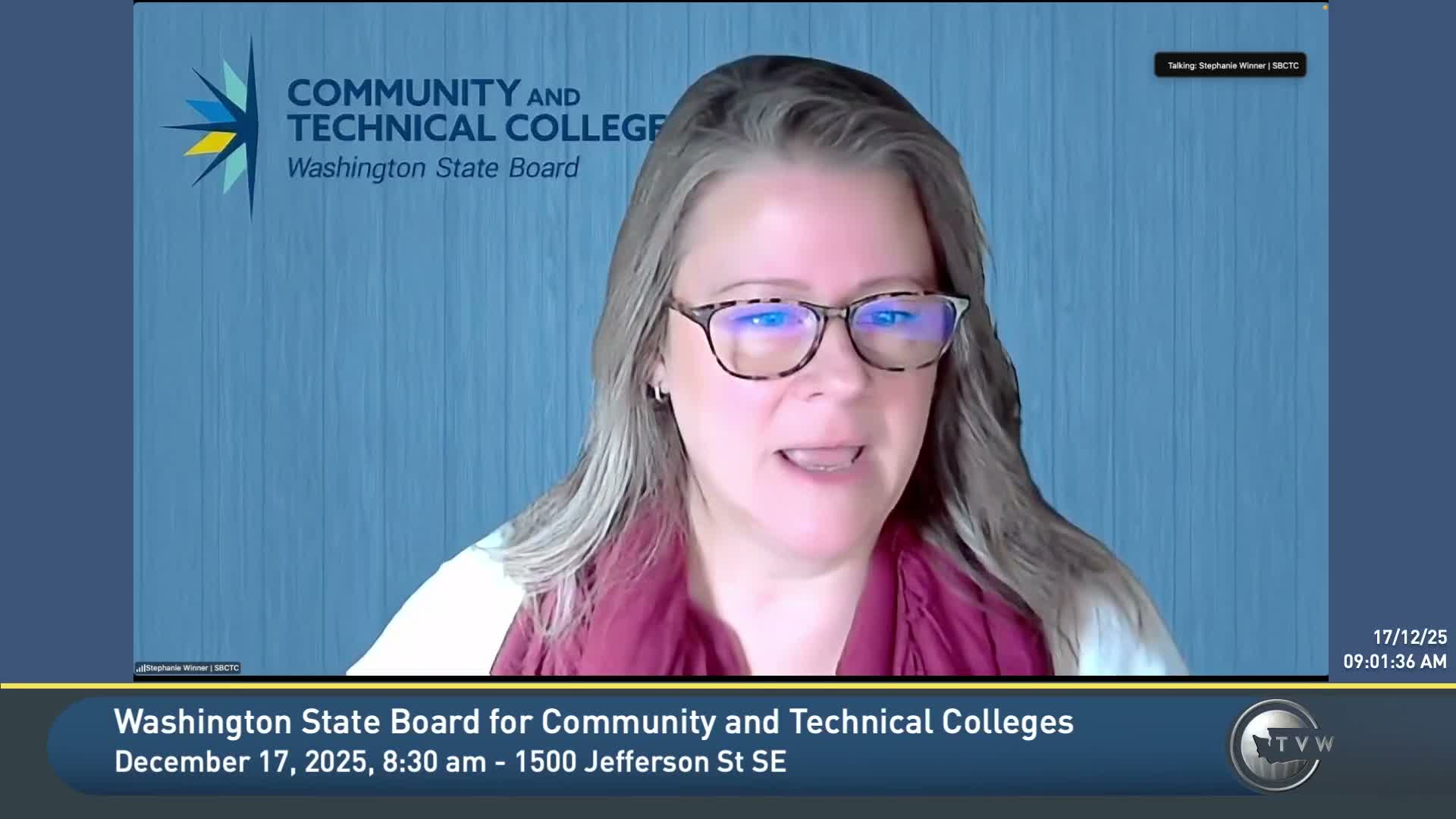
Stephanie Wenner, the board’s operating budget director, told members that RCW 28B.15.067 authorizes the board to set resident and nonresident tuition components and explained the formulas regulators use: the operating fee increase is limited by a 14‑year rolling average of Seattle median hourly wages and OFM calculated a 3.3% ceiling for this year; the building fee is tied to cumulative Seattle CPI and was set at 2.3% for 2026–27.
Wenner said colleges cannot exceed the operating‑fee or building‑fee amounts set by the board, while local boards retain limited authority over student services and activities fees but may not exceed the system cap. “All rates that are included in Tab 3 Attachment A of your board packet reflect those limits,” she said.
Board members asked whether international students remain in the nonresident category under the new allocation model and whether colleges can opt out of the maximum increases. Wenner replied that colleges may set lower S&A fees but may not exceed the board‑set operating‑fee or formula‑set building‑fee limits. Board member Choi added that the operating‑fee authority resides with the state board by statute.
Members also pressed for data on how tuition increases affect enrollment. Wenner said she did not have a sensitivity analysis available and that financial‑aid options — including Washington College Grant and federal aid — typically mitigate immediate impacts. Board members noted that, historically, tuition increases in this range have not produced large enrollment shifts but asked staff to seek clearer evidence.
The board moved to adopt the tuition resolution; the motion passed by voice vote.
The board packet lists the specific rates and the statutory citations that govern fee setting. Colleges will apply the approved maximums as they set local tuition and fee schedules for the coming academic year.