Get Full Government Meeting Transcripts, Videos, & Alerts Forever!
Get email alerts on the Divestment And Responsible Investment topic
No spam. Unsubscribe anytime.
Dozens of commenters urge Washington State Investment Board to divest from firms tied to alleged abuses and fossil fuels
Summary
Dozens of speakers at the board’s Dec. 18 meeting urged divestment from companies they said enable human‑rights abuses in Gaza and pose climate risks to pension returns, while the board reiterated its fiduciary focus and practice of active ownership.
Dozens of public commenters at the Washington State Investment Board meeting on Dec. 18 pressed the board to divest from companies they said are complicit in human‑rights abuses and to adopt clearer processes for assessing harmful corporate impacts.
"We are here asking the SIB to adopt a clear process to assess harmful corporate impacts, engage with companies where change is possible, and exclude companies when engagement fails," said Leila Saliba, a PERS2 participant with Washington for Peace and Justice. Several speakers named companies including Palantir, Caterpillar, Lockheed Martin and Elbit Systems as examples they said warrant divestment.
Ben of Jewish Voice for Peace told the board that while proxy voting is valuable, "some companies are not responsive to this sort of pressure. In some cases, divestment is the best approach," and cited the board’s previously stated steps for an "orderly divestment strategy" after Russia’s 2022 invasion as precedent for action.
Other speakers linked climate risks to pension security. "The tragic occasion [recent historic flooding] is a visceral reminder that our infrastructure was built for a climate norm that we are currently exiting," Andrew Echols of 350 Washington said, urging action to align investments with decarbonization and to reduce exposure to fossil‑fuel risk.
Several commenters framed the demands as legal and moral imperatives. Susan Griggs referenced an International Court of Justice finding described in public testimony as "plausible genocide" and urged the board to consider "legal, moral, and financial risks." A student from the University of Washington said he would reconsider future public‑sector employment if his pension remained invested in firms he described as complicit in atrocities.
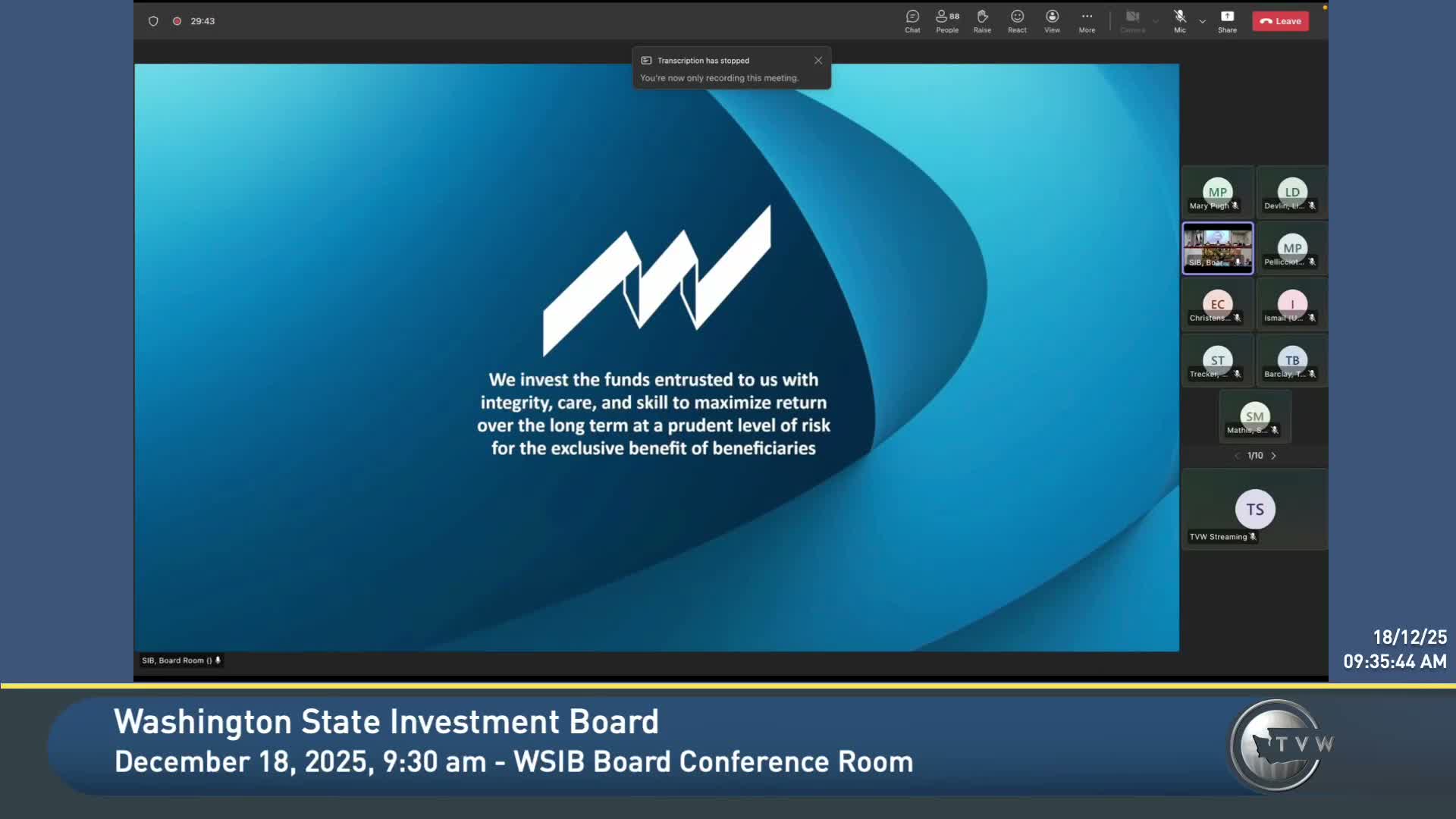
In reply, the chair thanked speakers for their comments and reiterated the board’s fiduciary responsibilities. "As you know, we're investing the funds that are entrusted to us for the exclusive benefit of our plan beneficiaries," the chair said. "Our board takes our fiduciary responsibilities very seriously. We're firm believers in active ownership, and we're universal owners." The chair also said staff and the board will review how public testimony is handled because of the substantially increased number of commenters.
What happens next: public commenters asked for policy changes, legislative action on the board’s mandate, or an internal review of engagement/divestment thresholds. The board did not take a formal vote on divestment at the Dec. 18 meeting; speakers’ requests were recorded in public comment and staff said the testimony has been distributed to board members and will be reviewed.