Get Full Government Meeting Transcripts, Videos, & Alerts Forever!
Get email alerts on the Enforcement And Education topic
No spam. Unsubscribe anytime.
LCB enforcement and education chief reports improved complaint resolution, hires and targeted operations
Summary
Division leadership reported improved complaint prioritization and education integration, a reduction in vacancies with 27 hires in the past 10 months, and targeted warrant and unlicensed-establishment enforcement; staffing shortfalls (about 30–40 vacancies) were cited as a recent constraint.
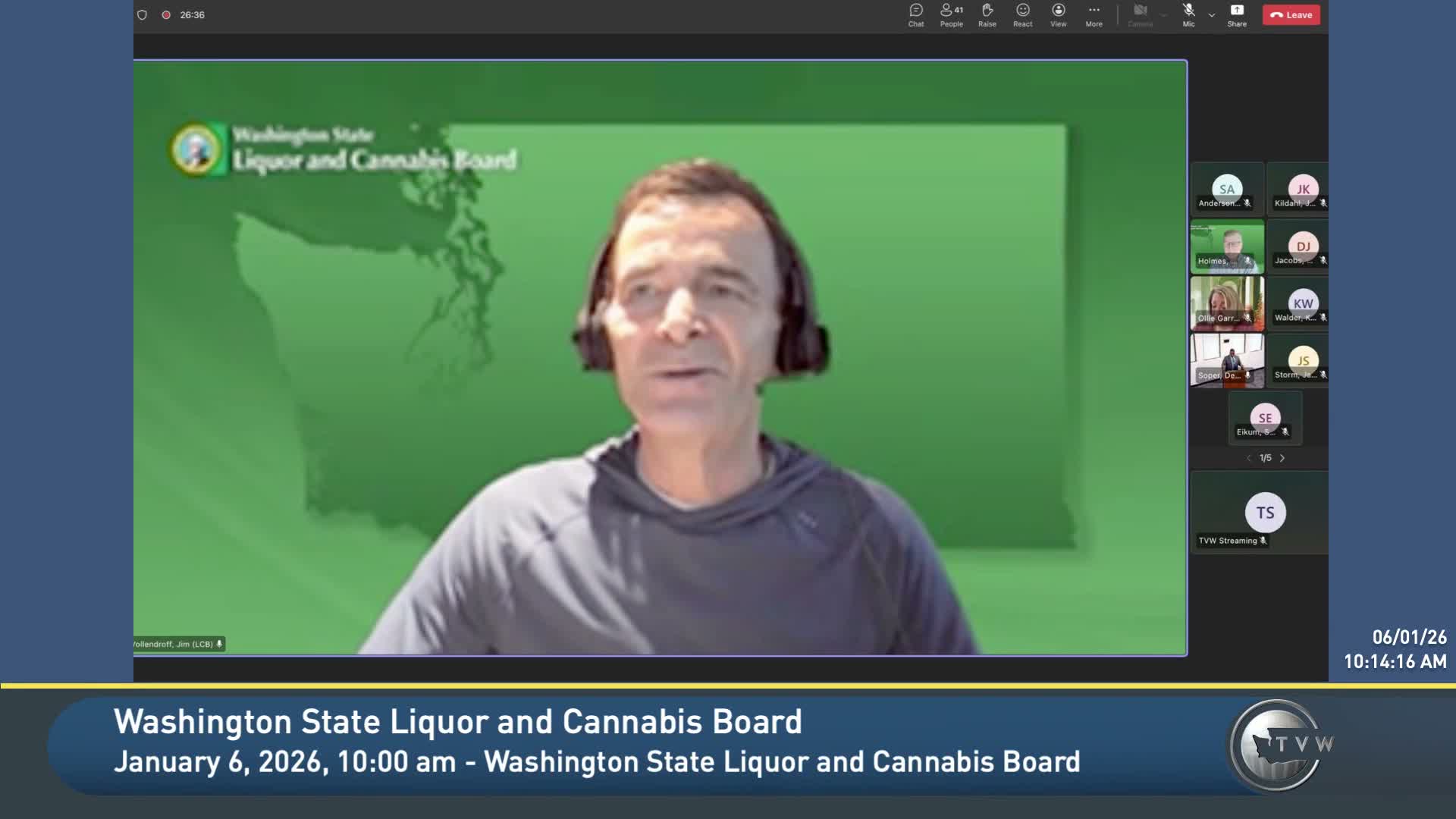
Larry, the division leader for enforcement and education, briefed the board Jan. 2 on outcomes from 2025 and priorities for 2026.
He described a funnel-and-pyramid approach to compliance: broad education and compliance checks for most licensees, targeted assistance for those needing help, and enforcement actions for repeat or uncooperative violators. Larry said the division improved intake and complaint-resolution prioritization, which stabilized substantiation rates despite high complaint volume.
"When you're short 30 to 40 personnel in a division of a 190 to 200 people, it does have an impact on how quickly we can provide service," Larry said, explaining delays can reduce the ability to substantiate complaints for some industries. He said tobacco and vapor substantiation rates are higher because those industries are smaller and easier to reach.
Larry said the agency integrated compliance consultants across all four industries, hired four additional compliance consultants, created a statewide liquor retail team and altered counting rules for education contacts to exclude very short interactions. He noted hires have reduced vacancies: "there have been 27 staff commissioned and non commissioned hired" in the last 10 months and three commissioned conditional offers are outstanding.
On enforcement operations, Larry said the division conducted about six warrants or warrant assists in the past seven months to support partner agencies and to address unlicensed establishments, and stressed work on repeat violators and better tracking of reportable outcomes.
Board members asked about substantiation differences and anonymous or competitor complaints; Larry described existing vetting processes and coordination with captains and compliance teams.
No formal actions were taken; the report is informational and the board encouraged staff to continue proposing policy changes that could assist enforcement work.