Get Full Government Meeting Transcripts, Videos, & Alerts Forever!
Get email alerts on the CR 103 Adoptions topic
No spam. Unsubscribe anytime.
LCB adopts CR-103 filings to align rules with 2025 laws and to implement expanded alcohol service areas
Summary
At its Jan. 7 meeting the board approved CR-103 filings to adopt final rules implementing the 2025 legislative package (aligning numerous rules and repealing a pandemic provision) and to implement second substitute House Bill 1515 on expanded alcohol service areas; motions were moved and seconded and the board approved both filings.
The Washington State Liquor and Cannabis Board on Jan. 7 approved two CR-103 filings to adopt final rule language: one to align LCB rules with the 2025 legislative implementation package and one to implement second substitute House Bill 1515 (expanded alcohol service areas).
Kevin Walder, policy and rules manager, told the board he was requesting approval to file a CR-103 with the Code Reviser to adopt final rules necessary to implement House Bills 1636 and 1698 and second substitute Senate Bill 5786. Walder said the package corrects typographical errors, repeals a temporary COVID‑19 delivery provision that statutes have since repealed, and amends 50 existing rules (repealing one). He said the expedited rulemaking CR-105 was filed Nov. 5 and, because staff received no public comments, the board could adopt and file the CR-103 on Jan. 20 for immediate effect thereafter.
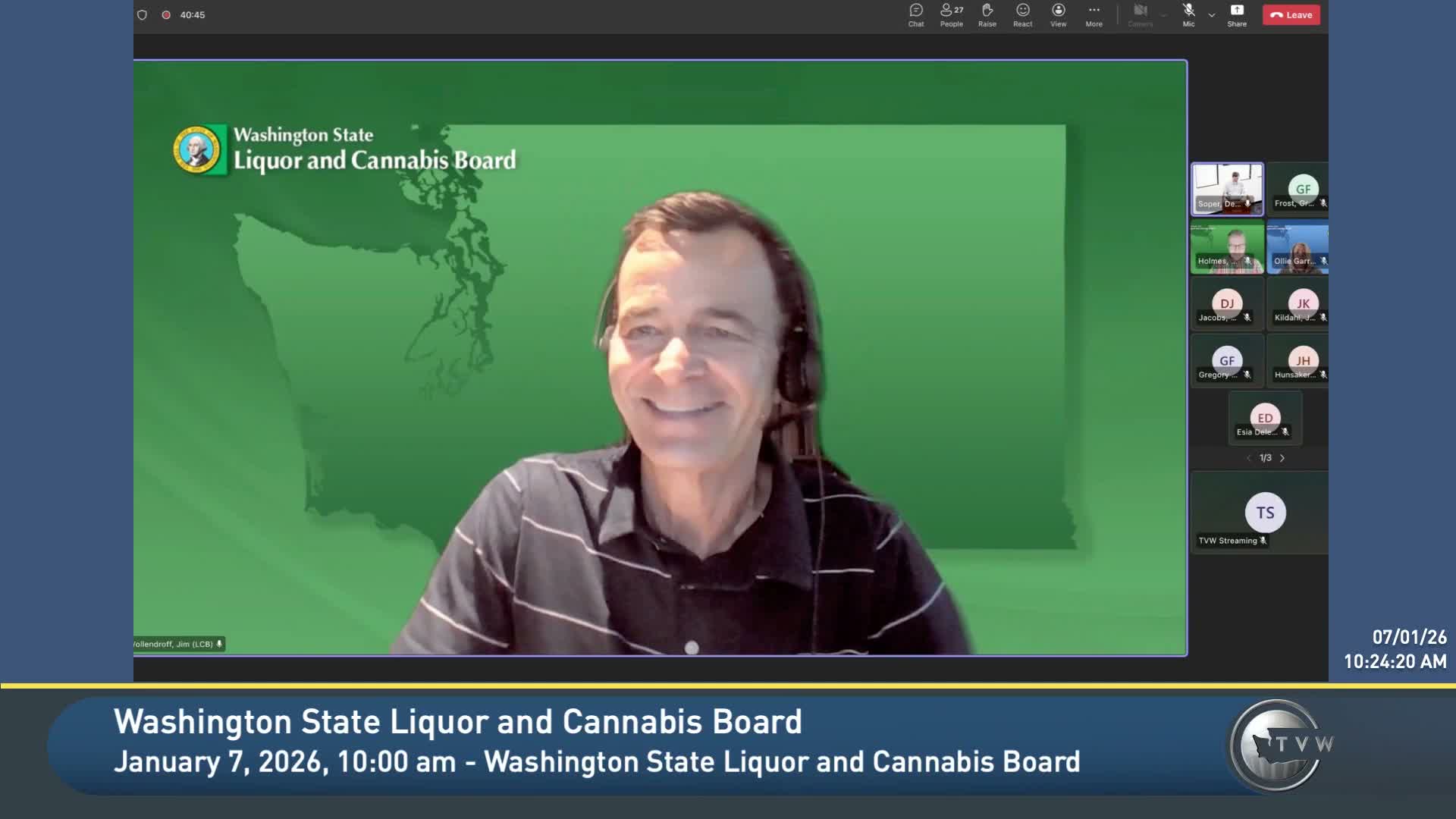
A motion to adopt the CR-103 for the 2025 legislative implementation package was made by the board member identified in the record as Pete and seconded by the member identified as Ali; Chair Volendroff stated concurrence and the board approved the filing.
On a separate item, Daniel Jacobs, policy and rules coordinator, requested approval of a CR-103 to implement second substitute House Bill 1515, which creates new authorizations that permit local governments to allow patrons to carry alcoholic beverages from licensed establishments into designated public areas. Jacobs said the final rules would amend seven existing rules and create six new rules and, if approved, would be filed immediately and take effect Feb. 7.
Jacobs described stakeholder engagement for HB 1515: the CR-101 and CR-102 phases, one formal written comment from the Seattle Department of Transportation, and recommendations from the Washington Association for Substance Misuse and Violence Prevention, which provided the only testimony at the Dec. 11 public hearing. That stakeholder group asked, among other things, that the rules not allow a waiver to a 42‑inch barrier height requirement and recommended requiring non‑alcohol service areas, staff‑resource accounting and uniform tracking of drinks served. Jacobs said the final rule language does not offer a waiver of the 42‑inch height requirement, defers to local barrier requirements where they exist, and that requiring non‑alcohol service areas would exceed the Board’s rulemaking authority.
Jacobs also said the rule package clarified the definition of a "multi‑day event" for civic center authorization to a maximum of 14 consecutive days. After Jacobs’ presentation, a motion to adopt the CR-103 for HB 1515 was made and seconded; Chair Volendroff concurred and the board approved the filing for immediate submission and subsequent effect on the schedule described by staff.
The meeting record does not show a recorded roll‑call vote with individual yes/no tallies for either CR-103 adoption; the minutes show that motions were moved, seconded and that the chair concurred, at which point the board approved both items.
Next steps for the adopted filings include formal submission to the Office of the Code Reviser and the effective dates and filing dates described by staff at the meeting.