Get Full Government Meeting Transcripts, Videos, & Alerts Forever!
Get email alerts on the Licenses Roundup topic
No spam. Unsubscribe anytime.
Milwaukee licenses committee approves many renewals, holds several contested items
Summary
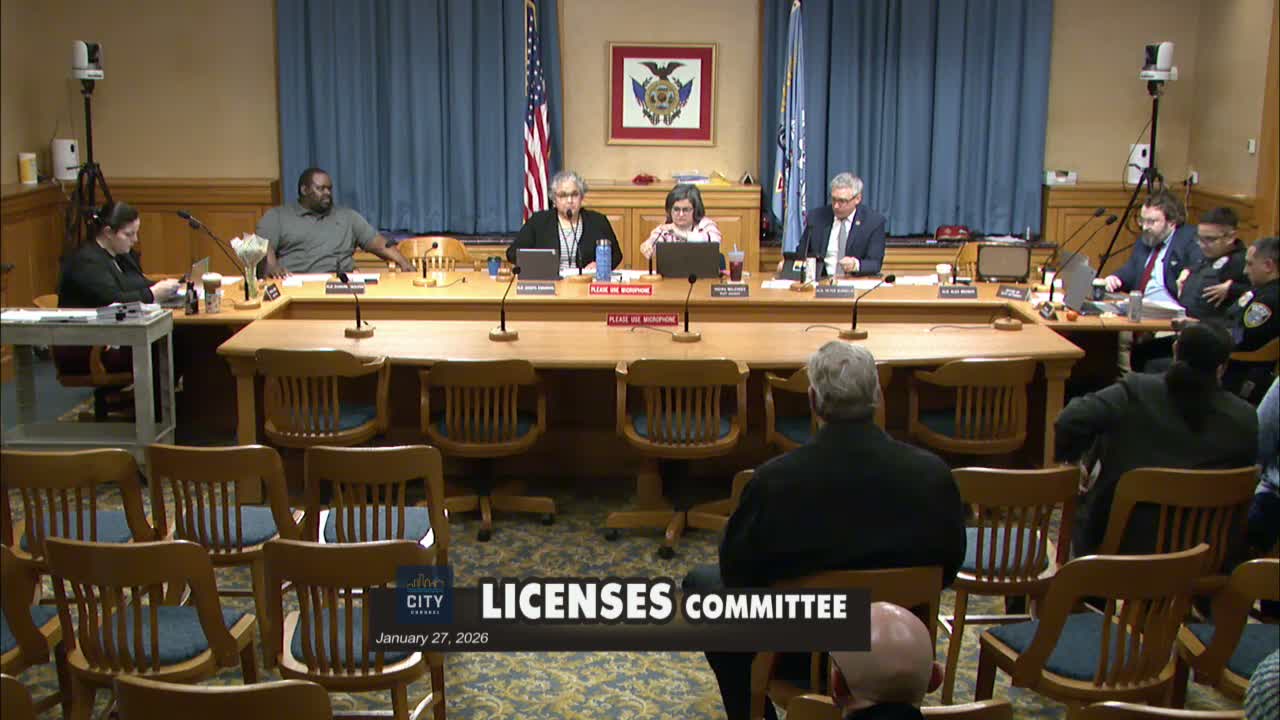
The Licenses Committee on Feb. 18 approved dozens of license renewals and new permits, required changes to several operators’ plans, held a few contentious applications and accepted withdrawals; neighbors repeatedly raised noise, safety and litter concerns at several sites.
The Milwaukee Common Council’s Licenses Committee met Feb. 18 and handled more than 50 license matters ranging from bartender renewals to public entertainment permit applications. Chair Alderman Jocasta Samaripa presided over a busy agenda that included approvals, holds, withdrawals and a handful of contested outcomes.
Several routine renewals were approved after staff and police reports. The committee renewed a bartender license for Parminder Kaur with a formal warning following two separate underage‑sale convictions; the applicant and counsel said the incidents involved two different temporary employees who were subsequently disciplined and retrained. A federal‑probation check cleared Victoriano Botello’s Class D operator application and the panel approved it. Steven R. Atkins and a number of food‑dealer applicants were approved after probation or DOC checks showed no violations.
Businesses asked for mitigation plans when police logs showed recurring problems. Leon’s Frozen Custard (3131 S. 27th St.) faced a long police ledger of loitering, panhandling and large “vehicle takeover” gatherings; counsel and the business pledged extra‑duty patrols, no‑loitering signage and coordination with the South 27th Street Business Improvement District and police. The committee approved Leon’s renewal after representatives described proposed gating of an overflow lot and a BID grant for security.
The panel also handled several withdrawals and holds. Anthony Weiss told the committee MyO My had closed effective Jan. 31, 2026, and the committee accepted his withdrawal and directed licensing staff to provide a partial refund form. Target’s renewal was held for follow‑up after aldermanic concerns about winterized landscaping, sidewalks and stormwater; licensing said a provisional license remains in force until April.
A small but important cluster of contested hearings produced notable outcomes. Falcon Bowl’s renewal generated sustained neighborhood testimony about repeated noisy late‑night events and one night with a recorded gunshot nearby; after neighbors, police records and the applicant’s mitigation commitments were heard, the committee renewed the Falcon Bowl licenses with expectations the operators continue soundproofing and to coordinate directly with neighbors and MPD. In one of the meeting’s most consequential votes, the committee recommended non‑renewal of a Class A fermented‑malt (alcohol) license and imposed a 90‑day suspension on the food‑dealer license for a different operator where police reports and neighborhood testimony demonstrated repeated public‑safety incidents; the full Common Council will receive the committee’s finding and may be asked to take final action.
Other items: several food‑truck operators were renewed with warning letters after the Health Department reported water and hand‑sink problems; seafood and grocery applicants were reaffirmed after neighborhood support; and a number of small tavern or hookah‑service applications were approved as food dealers or PEPs with limits on hours and conditions about indoor smoking and plan amendments. Where neighbors reported litter or late‑night noise, the committee commonly required amended plans of operation (for instance, twice‑daily sidewalk and lot cleanup) or warning letters.
What’s next: several decisions require follow‑up. Applicants denied or recommended for non‑renewal will receive the committee’s written findings, may file written exceptions and can appear when the matter reaches Common Council on its scheduled date. Licensing staff, aldermanic offices and neighborhood groups agreed to connect applicants, BID representatives and enforcement agencies to track compliance with mitigation commitments.