
San Angelo ISD board rejects adopting Senate Bill 11 prayer requirement after community concerns
Get AI-powered insights, summaries, and transcripts
Subscribe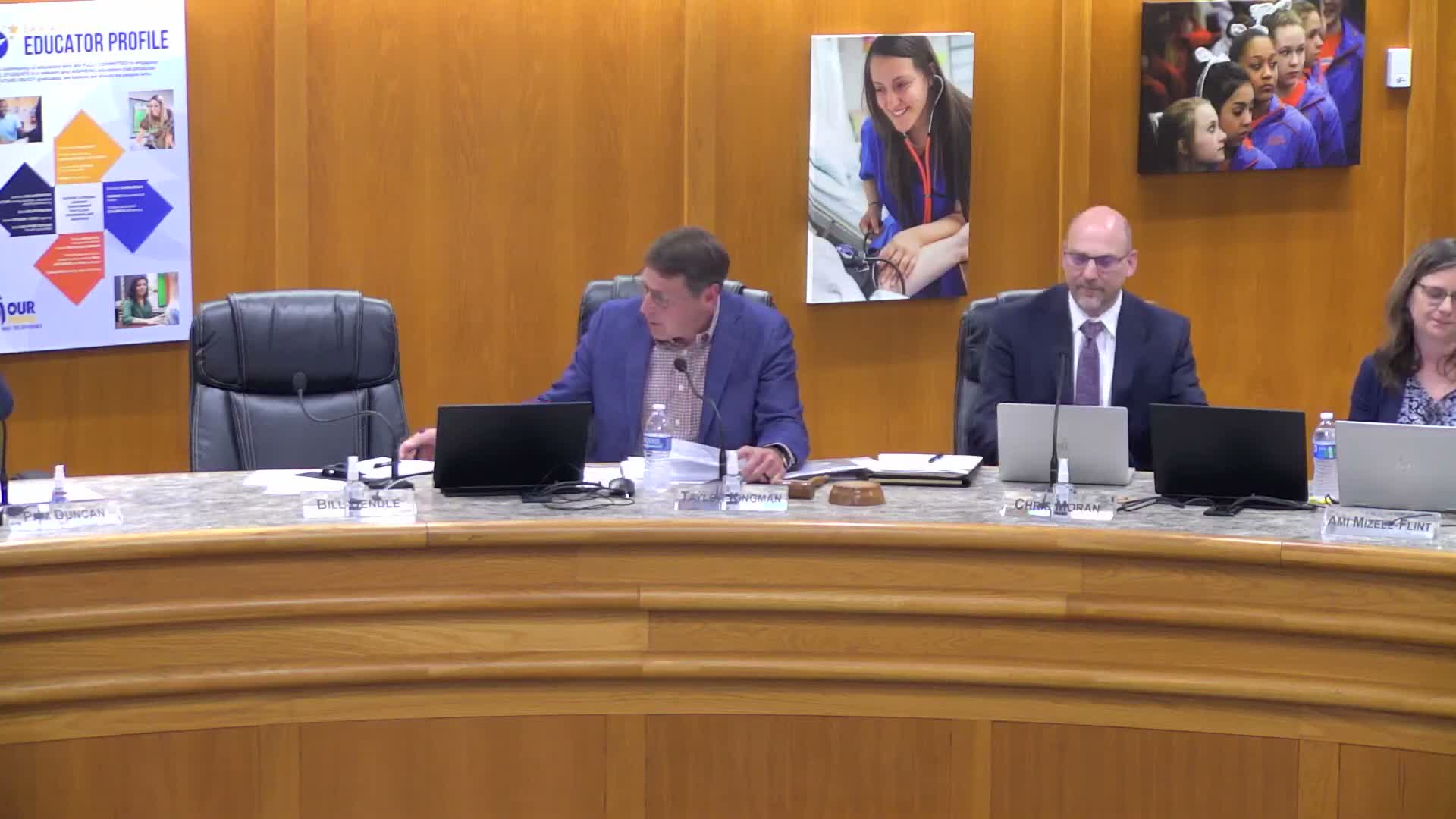
Summary
After public comment from teachers and community members raising legal and logistical concerns, the San Angelo ISD Board voted 6–0 on Feb. 16 to reject adopting the statutory resolution that would require a daily period of prayer or religious reading on every campus under section 25.0823 of the Education Code.
The San Angelo ISD Board of Trustees voted 6–0 on Feb. 16 to decline adopting the statutory resolution that would require every campus to provide a daily period for prayer or the reading of religious texts as set out in section 25.0823 of the Education Code.
Several members of the public urged the board not to adopt the policy during the public-comment portion of the meeting. Gretchen Smith, a teacher at Glenn Middle School and an elder at Saint Paul Presbyterian Church, said the proposal risked infringing instructional time and imposing religious content: "There are no minutes that we are in our classroom that are not instructional time," Smith said, adding that schools should not be a place where beliefs are "pushed upon" students. China Young, a Central High School graduate and occasional substitute, told trustees the district already has policies and student-led clubs that protect religious exercise and that the bill’s opt-in and monitoring requirements would impose an unreasonable administrative burden.
Angela Bible, a high-school science teacher, described additional concerns about timing and student safety, saying the law could require announcements or activities to be moved outside the instructional day and could inadvertently create opportunities for emotional manipulation in vulnerable family situations.
Board discussion focused less on the underlying right to pray and more on the practical requirements the state law would impose. Board members and district staff noted that adopting the statutory resolution would require collecting and tracking parental consent forms, establishing monitored spaces and times (most likely before the school day), and assigning staff to monitor participation. Trustee Mazel Flint moved to reject adopting the statutory resolution; Trustee Mister Gallegos seconded the motion. The motion passed 6–0.
The board’s rejection leaves current district practices unchanged: student-organized religious clubs and existing accommodations for students’ religious expression may continue under established policies and constitutional protections. The board did not adopt any alternative policy at the meeting and provided no timetable for revisiting the issue.
Provenance: The public comments on SB11 began with Gretchen Smith and continued through speakers China Young and Angela Bible (public comment period). The board’s discussion and vote on whether to adopt the statutory resolution occurred later in the meeting during the action-item discussion on Senate Bill 11.