
House passes 'truth in sentencing' measure to clarify parole eligibility and credit for time served
Get AI-powered insights, summaries, and transcripts
Subscribe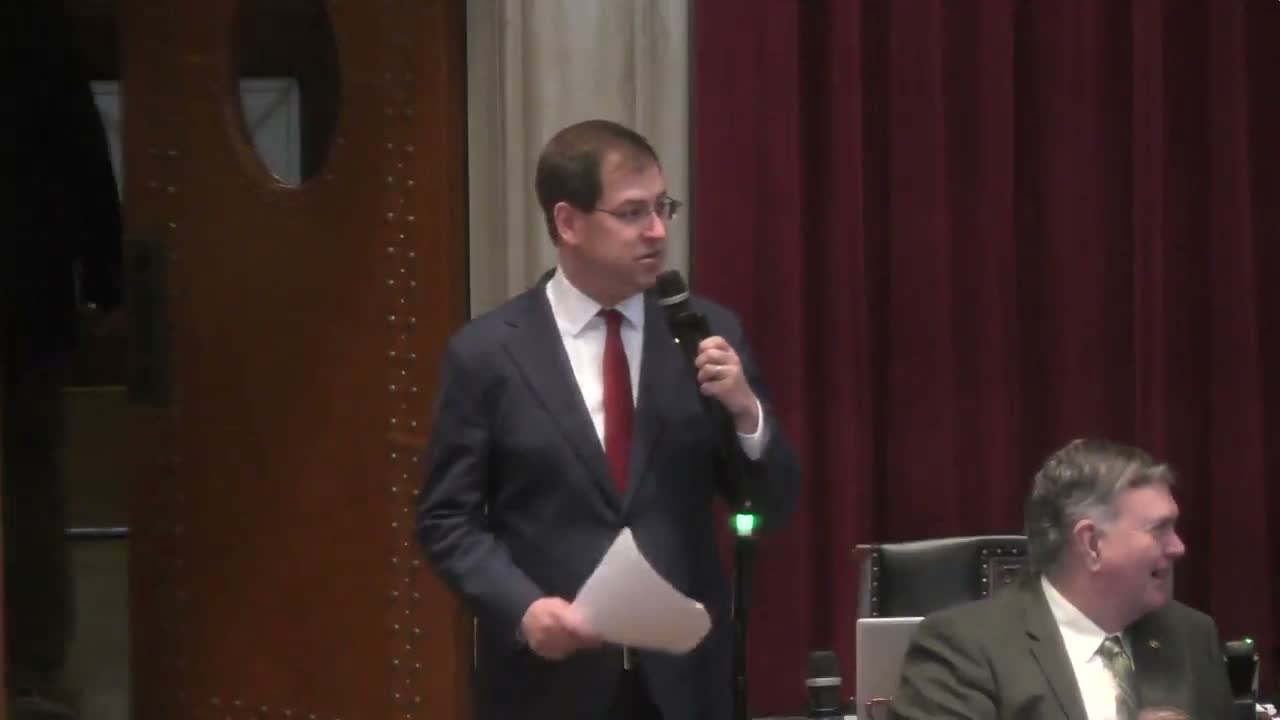
Summary
A committee substitute combining HB2637 and HB3155 passed the House after debate over whether it raises mandatory time served for some offenses. Sponsors said it improves transparency for victims and communities; critics warned it increases sentencing for nonviolent offenses. Final vote: 102-45-2.
The Missouri House on Feb. 18 approved a committee substitute for House Bills 2637 and 3155 intended to clarify sentencing terms and parole eligibility, a package sponsors characterized as “truth in sentencing.” Supporters said the measure tells victims and communities precisely how long someone will serve before parole eligibility. Critics said parts of the package raise mandatory minimum time served for certain offenses, particularly lower-grade felonies, and could expand long-term incarceration for nonviolent offenses.
Representative (Gentleman from Webster), sponsor of the committee substitute, said the bill makes sentencing clearer for victims and communities by specifying how much time an offender must serve before parole consideration. Advocates including prosecutors and law enforcement associations supported the measure; opponents in floor debate argued it increases sentencing ranges and may have unintended public-safety consequences.
The floor recorded passage of the House Committee Substitute for HB2637 and HB3155 by a recorded vote of 102 yeas, 45 nays and 2 present.
Proponents said the bill cleans up sentencing credit rules, clarifies credit for time served (including in juvenile contexts when certified), and intends to avoid surprises in communities when offenders are released earlier than expected. Opponents urged carve-outs for lower-grade drug offenses and cautioned against automatic increases in mandatory time served without additional reforms or resources.
The bill will move on to the next steps in the legislative process following House passage.