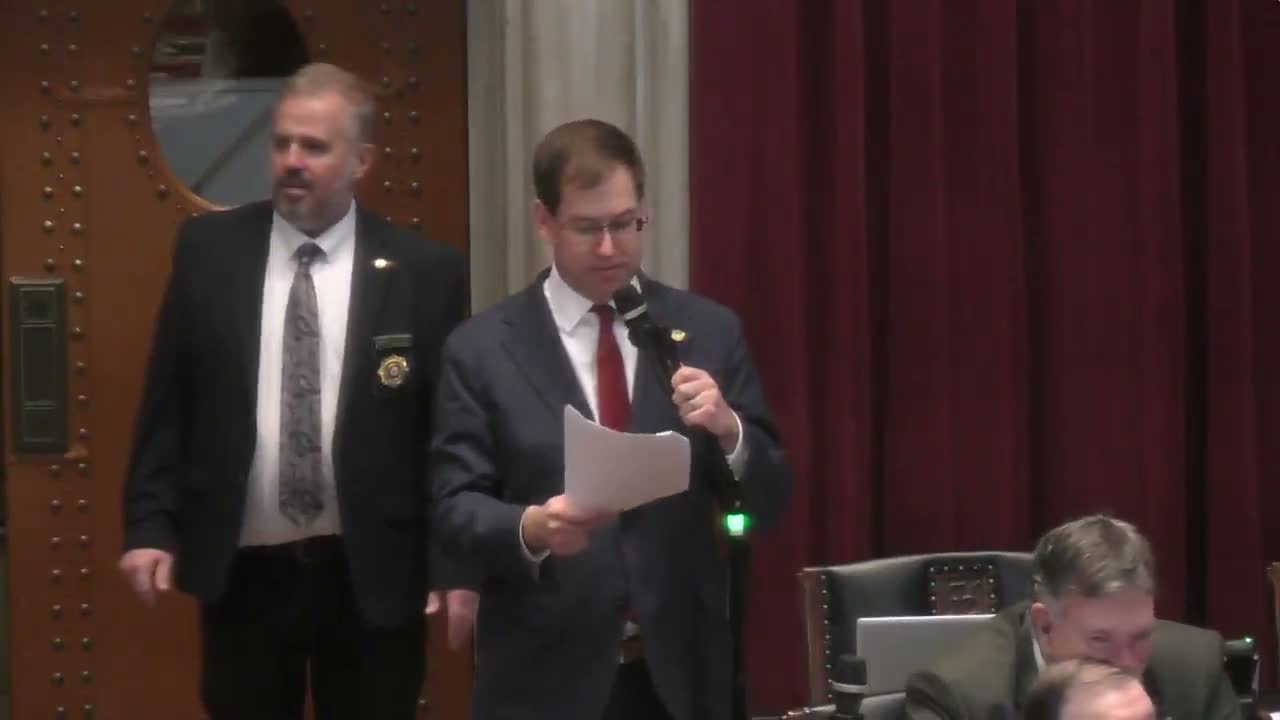
House approves juvenile justice reform after extensive debate over prosecutors' role and record-keeping
Loading...
Summary
The House passed House Bill 2498 after a lengthy floor debate over shifting referral authority for juvenile certification toward prosecutors, concerns about adding juvenile records to the MULES database, facility capacity, and potential disparate impacts. Final recorded vote: 100-44-3.
The Missouri House on Feb. 18 passed House Bill 2498, a juvenile justice reform measure that drew extensive floor debate over procedural and policy changes to how juveniles may be certified for trial as adults.
Proponents, including the bill sponsor (Gentleman from Saint Louis County), argued the bill helps clean up repeat juvenile offending, creates accountability and aids communities affected by juvenile crime. Supporters cited the need to streamline serious cases to judges and asserted that judges retain ultimate decision-making authority.
Opponents warned the bill injects politics into juvenile certification by increasing the prosecutor’s role in referrals. Several members said involving elected prosecutors risks politicizing decisions that currently begin with juvenile officers who have daily contact with young people. Concerns were also raised about adding juvenile records to the statewide MULES database and whether expungement protections would be adequate.
Members noted capacity constraints at juvenile treatment facilities and warned the bill could overburden an already stretched system. Witnesses and representatives described facility conditions and the potential for disparate impact on youth.
During debate, a member highlighted a family in the gallery and appealed to the human consequences of access to treatment versus further criminalization. The sponsor and supporters said judges remain the final decision-makers; the bill changes who makes a referral to the court rather than who decides certification.
The House recorded final passage of the bill by a vote of 100 yeas, 44 nays and 3 present. Supporters said the bill is intended to target the most grievous crimes and give communities a clearer pathway to hold repeat offenders accountable; opponents urged further study and alternative interventions such as mentorship and prevention programs.
The bill moves forward in the legislative process following House passage.