
Missouri House passes bill aligning state law with federal ban on intoxicating hemp-derived products amid controversy over beverage carve-out
Get AI-powered insights, summaries, and transcripts
Subscribe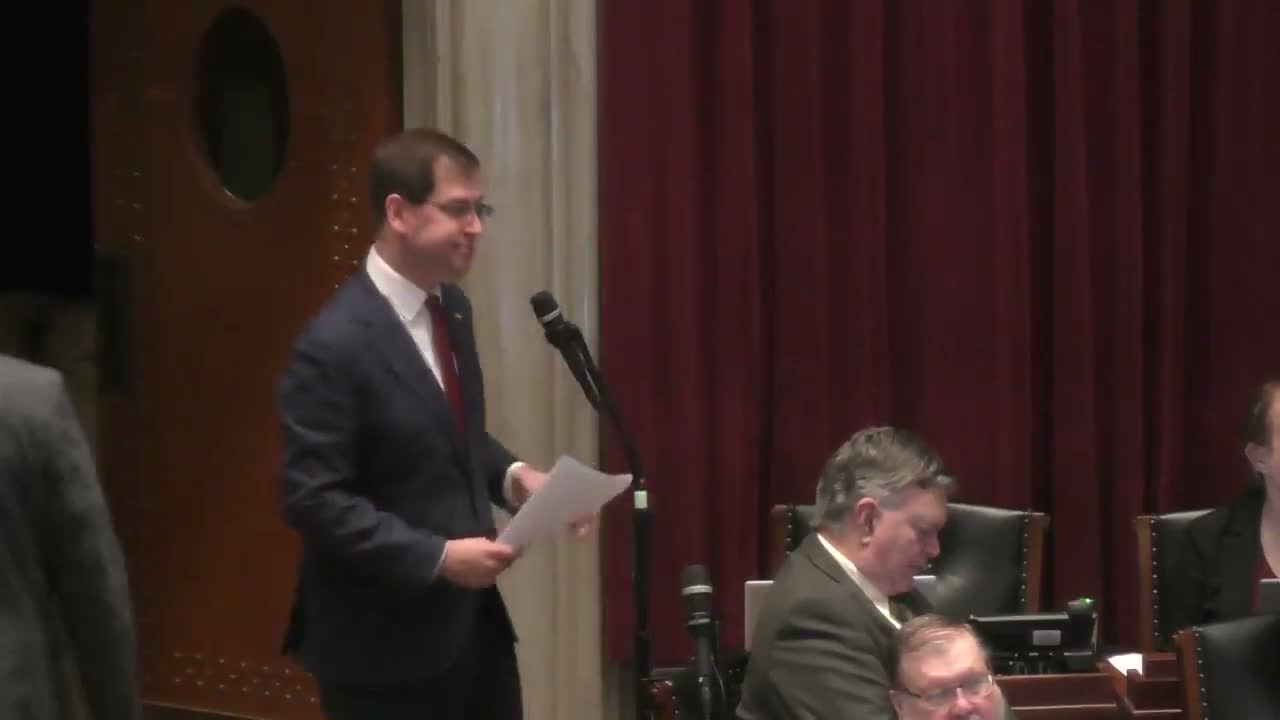
Summary
The Missouri House passed House Committee Substitute for HB2641 to mirror federal limits on intoxicating hemp-derived cannabinoid products, but debate focused on an amendment that exempts beverage products — a change opponents called an unfair carve-out and supporters said targeted problem products. The bill passed 109-34-6.
The Missouri House on Feb. 18 approved a committee substitute for House Bill 2641, a measure sponsors say aligns state law with a recent federal action that would prohibit intoxicating hemp-derived cannabinoid products after Nov. 12, 2026. The floor vote for the committee substitute was 109 yeas, 34 nays and 6 present, and the bill was third read and passed.
Sponsor Representative (Gentleman from Saint Charles County) told colleagues the measure adopts the federal definition and timeline so state law enforcement and prosecutors can work with federal partners. He said the change is intended to close loopholes that have allowed synthetic cannabinoids and chemically converted products to be marketed in forms attractive to children.
Opponents took aim at an amendment that carves out certain beverage products from the ban. Representative (Lady from Saint Louis City) and others said the carve-out exempts an entire industry and risks creating a monopoly, leaving smaller “mom-and-pop” hemp producers unable to compete. “It’s unfair to carve out one industry,” the member said on the floor.
Sponsor and backers responded that the amendment was designed to remove problem products — such as synthetics, gummies and similarly packaged items — while preserving regulated beverage products that have existing age-verification systems. The sponsor said the amendment retains the federal intent by banning problematic products and that, if federal law ultimately deems beverages intoxicating, those products would also become illegal.
The debate included repeated questions about stakeholder involvement. The Missouri Hemp Association’s participation in negotiations was disputed on the floor; the sponsor said hemp trade groups had been engaged throughout much of the process but acknowledged that some language amendments arrived late.
Members also raised personal and procedural issues on the floor. Representative (Gentleman from Douglas) recounted constituent concerns and disclosed a previously filed journal letter about a potential equity opportunity involving a Minnesota-based hemp beverage company, saying he did not have a disqualifying conflict and would vote. Other members gave personal testimony about medical uses: one lawmaker described a family in the gallery whose child, Bodhi, relied on hemp-derived therapies after other treatments failed.
Supporters argued the bill protects children and public safety by removing products that have been linked to public-health concerns, while opponents warned the legislation would cut access for families and small businesses and give preferential treatment to certain sectors.
The bill’s passage sends it to the next procedural steps in the legislative process. As sponsors noted on the floor, federal rules scheduled to take effect on Nov. 12, 2026, will already prohibit many intoxicating hemp-derived products; the state measure aims to ensure no state-level loopholes remain in the interim.
Votes at a glance: final recorded tally for the committee substitute was 109 yeas, 34 nays, 6 present. The House third read and passed House Committee Substitute for House Bill 2641.